
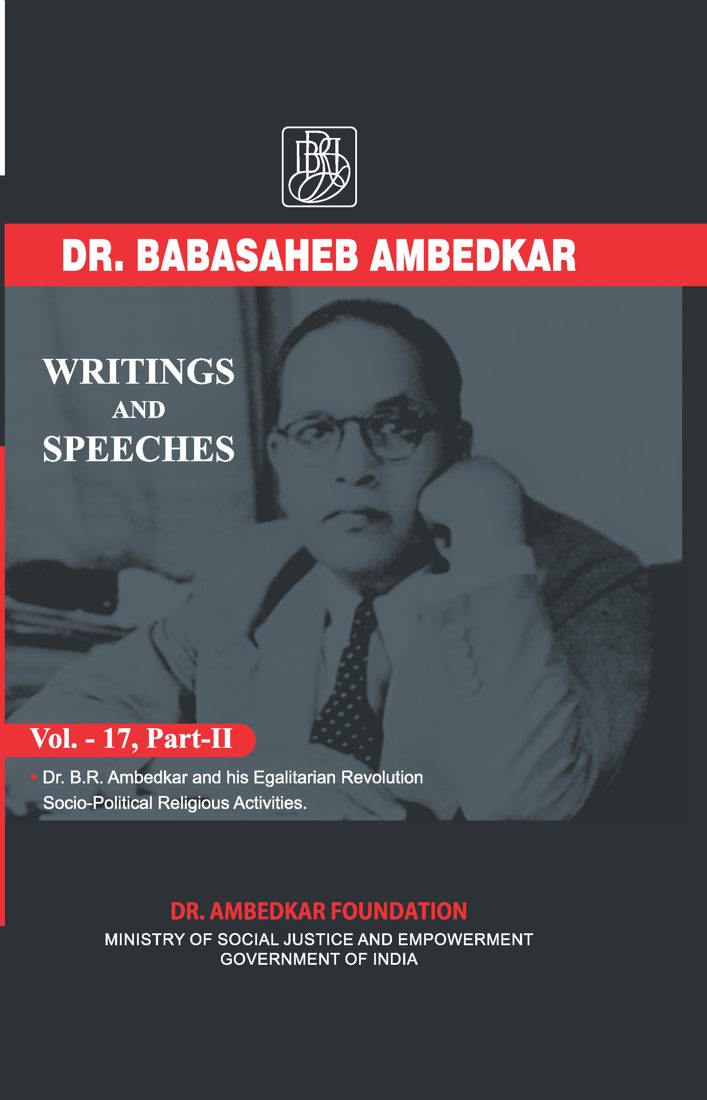
Dr. Babasaheb Ambedkar: Writings and Speeches
Vol. 17, Part II
Dr. B. R. Ambedkar and His Egalitarian Revolution — Socio-political and Religious Activities
112 chapters · 578 pages
Contents
- Front matterpp. 1–23
- Section—I ARTICLES, MESSAGES, PREFACES ETC. 1. Religion and Priest be brought under Proper Controlpp. 24–27
- 2. Thoughts on the Reform of Legal Education in the Bombay Presidencypp. 28–41
- 3. Dr. Ambedkar’s reply to Sir S. Radhakrishnanpp. 42–42
- 4. And the Lord said Untopp. 43–86
- 5. Untouchable Workers of Bombay Citypp. 87–88
- 6. Is Gandhi a Mahatma ?pp. 89–93
- 7. Appeal for Purse to Marathi Scholarpp. 94–94
- 8. Knowledge is Power in every Field of Lifepp. 95–95
- 9. Congress Attempts to Bypass Untouchablespp. 96–100
- 10. I do not share Defeatist Mentalitypp. 101–101
- 11. Our Students should Learn and Lead Mandir ’pp. 102–105
- 13. Not to stop until the Untouchables recover Manhoodpp. 106–108
- 14. Preface to ‘The Essence of Buddhism’—Third Editionpp. 109–111
- 15. India’s Ancient past gave place to Pessimismpp. 112–112
- 16. The meaning of the word ‘Receipt’ Section—I ARTICLES, MESSAGES, PREFACES ETCpp. 113–119
- 17. Buddha and Future of His Religionpp. 120–131
- 18. The Rise and Fall of the Hindu Woman Who was responsible for it ?pp. 132–152
- 19. Saints’ Literature can help to Moral Rearmament of Manpp. 153–153
- 20. Out line-A People at Baypp. 154–159
- 21. The Mahars. Who were they and how they became the Untouchables ?pp. 160–173
- 22. Republican Party stands for Liberty, Equality, Fraternity and Justicepp. 174–180
- 23. ‘Buddha and His Dhamma’ One of the Threepp. 181–181
- 24. Training School for Entrance to Politicspp. 182–187
- Section—II Dr. B. R. Ambedkar on Cabinet Mission and Transfer of Power—Editorial Notepp. 188–189
- 1. Proposal for Representation of Scheduled Castes in the Executive Councilpp. 190–193
- 2. Memorandum submitted to the Cabinet Missionpp. 194–209
- 3. Dr. Ambedkar’s Interview with Cabinet Missionpp. 210–211
- 4. A Note on the Meeting between Dr. B. R Ambedkar and Field Marshal Viscount Wavellpp. 212–216
- 5. Separate Settlements for Untouchablespp. 217–217
- 6. Protest letter against the Proposals of Cabinetpp. 218–221
- Mission. 7. Letter to A. V. Alexander about the Proposals of Cabinet Missionpp. 222–229
- 8. Letter to Lord Pethick-Lawrence regarding Statement issued by Cabinet Missionpp. 230–231
- 9. Clarification by Lord Pethick-Lawrence to Dr. B. R. Ambedkarpp. 232–232
- 10. Ambedkar finds Champion in Churchillpp. 233–233
- 11. Hindu-Scheduled Castes Clashes in Bombaypp. 234–237
- 12. Federation Executive resolves on Direct Actionpp. 238–245
- 13. Reactions to the British Cabinet Plan Dr. Ambedkar’s protest to Churchillpp. 246–246
- 14. I am fighting for Rights of Scheduled Castespp. 247–247
- 15. Does the Indian National Congress represent the Untouchables of India ?pp. 248–260
- 16. I am a Greater Nationalist than Anybody elsepp. 261–272
- 17. Letter by Mr. Attlee to Dr. B. R. Ambedkarpp. 273–275
- 18. Protest letter of Dr. Ambedkar to Mr. Attleepp. 276–278
- 19. We may be conquered but we shall not Capitulatepp. 279–280
- 20. Letters by Lord Pethick-Lawrence to Mr. Attlee, Prime Ministerpp. 281–285
- 21. The Cabinet Mission and the Untouchablespp. 286–299
- 22. Dr. Ambedkar’s Memorandumpp. 300–300
- 23. Demand for “Political Independence”pp. 301–301
- 24. Churchill-Ambedkar Talkspp. 302–302
- 25. Restore the Separate Electoratespp. 303–303
- 26. Dr. Ambedkar feels British will do Justicepp. 304–305
- 27. Ascertain wishes of Minoritiespp. 306–307
- 28. “Dawn” on Ambedkar’s Political Mission to England Section—III ON BUILDING OF NATION AND ITS DEMOCRACYpp. 308–311
- 1. Provincial Autonomy without responsibility would be unwisepp. 312–312
- 2. Joint Vs. Separate Electorates : Dr. Ambedkar’s Via Mediapp. 313–316
- 3. Assurance will not be loss to Governor ; nor it will be Gain to Congresspp. 317–321
- 4. It is Purely a Party Move, No National Purposepp. 322–322
- 5. We shall Wage relentless war to Introduce Adult Franchisepp. 323–326
- 6. Mobilise against Federation Turning Point in History of Nationpp. 327–329
- 7. Distributive System of Votingpp. 330–330
- 8. Great Britain must be supportedpp. 331–338
- 9. Wisdom and Statesmanship will dawn to Prevent India from being Divided into Two Partspp. 339–340
- 10. Very Nebulous Planpp. 341–342
- 11. We can be a Nation only through Social Amalagamationpp. 343–343
- 12. Subhas Chandra Bose meets Dr. B. R. Ambedkarpp. 344–344
- 13. Meaning of the Congress Decisionpp. 345–349
- 14. Dr. Ambedkar’s Plan to solve Indian Crisis Muslim demand Criticisedpp. 350–352
- 15. Indians Destiny is bound up with the Victory of Democracypp. 353–357
- 16. How to end Indian Political Impassepp. 358–359
- 17. Jinnah’s Fears will have to be Allayedpp. 360–361
- 18. First Proposal on Central Irrigation and Waterways Advisory Boardpp. 362–363
- 19. Both are making Serious Mistakepp. 364–367
- 20. Sapru in the wrongpp. 368–369
- 21. Control and utilise the Mahanadi to the Best Advantagepp. 370–371
- 22. We must work in India for creating Co-operative Spirit among all Partiespp. 372–373
- 23. Unless these points were cleared no lead on Partition Issuepp. 374–374
- 24. Government of India will not recognise any Princely State as Sovereign Independentpp. 375–377
- 25. Berar will revert to Nizam on August 15pp. 378–379
- 26. If Boundary drawn is not Natural it will put the Safety and Security of the People of India in great jeopardypp. 380–382
- 27. Indian Citizens have equal Rights before the Lawpp. 383–384
- 28. One Official Language for Centre and Provincespp. 385–385
- 29. India and the British Commonwealthpp. 386–398
- 30. Constitution and Constitutionalismpp. 399–402
- 31. People in India would know their Fundamental Rightspp. 403–405
- 32. What I say is that be Firm and Sincerepp. 406–407
- 33. No use about Independent Foreign Policy without Striking Powerpp. 408–408
- 34. U. S. A. inclined towards Pakistanpp. 409–409
- 35. Retain English at any costpp. 410–410
- 36 One man’s Traffic in Public Affairspp. 411–411
- 37. Flood-Control : Use of Atomic Powerpp. 412–414
- 38. Strongly object creation of Monolithic Monstrous Statespp. 415–415
- 39. Ambedkar’s Recipe for Maharashtra Section—IV INSTITUTIONS, ORGANISATIONS AND THEIR CONSTITUTIONSpp. 416–419
- 1. Bahishkrit Hitkarini Sabhapp. 420–431
- 2. Depressed Classes Institutepp. 432–437
- 3. Independent Labour Partypp. 438–444
- 4. Independent Labour Party : Wide Supportpp. 445–447
- 5. I have chosen Bombay as a Place for the College for Three Reasonspp. 448–453
- 6. The People’s Education Society Mumbaipp. 454–466
- 7. Appeal by the Hon’ble Dr. B. R. Ambedkar on behalf of the People’s Education Societypp. 467–469
- 8. A Social Centre for the Untouchables in Bombaypp. 470–479
- 9. Constitution of All India Scheduled Castes Federationpp. 480–502
- 10. The Buddhist Society of Indiapp. 503–511
- ( 1 ) (2) (3) APPENDICES Appendix—I : Constitution of the All Indiapp. 512–517
- Scheduled Castes Students’ Federation. Appendix—II : The Position of women inpp. 518–523
- Hinduism and Buddhism. Appendix—III : The Cabinet Missionpp. 524–529
- Appendix—IV : Interviews of Jagjiwan Ram,pp. 530–544
- Appendix—VI : Gandhi Dis-franchisedpp. 545–553
- to oppressors. Appendix—VIII : The Bihar Provincialpp. 554–557
- Depressed Classes League. Appendix—IX : What about the States ?pp. 558–560
- Appendix X : Ambedkar Urges States to joinpp. 561–564
- Indian Union. Appendix XI : Activities of the Bahishkritpp. 565–568
- Hitkarini Sabha at Bombay. Appendix XII : People’s Education Society’spp. 569–571
- Institutions. Appendix XIII : A letter to H. H. Sayajiraopp. 572–578