
225 moments, one life
001 / 225
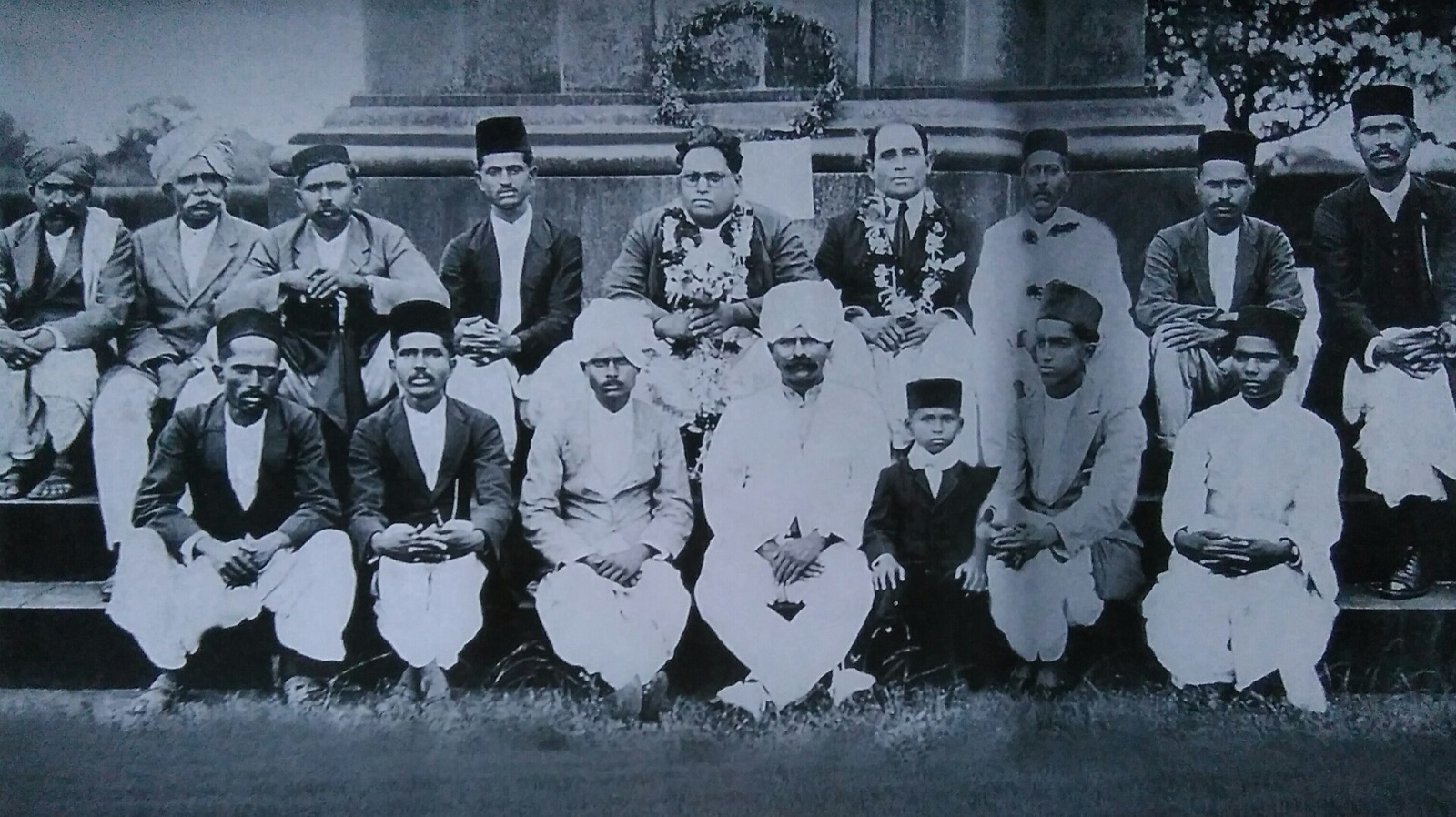
At the Bhima Koregaon pillar, 1 January 1927 · Photo: Unknown photographer (1927); uploaded to Commons by Sandesh Hiwale (संदेश हिवाळे) · CC BY-SA 4.0 · Wikimedia Commons Roots and childhoodBattle of Koregaon near Pune, fought largely by a Bombay Native Infantry battalion in which many Mahars served
On 1 January 1818, near the village of Koregaon on the Bhima river, about sixteen miles from Pune, a small Company force fought the army of Baji Rao II, the Peshwa (the Brahmin chief minister who ruled the Maratha state from Pune).
From the chapter Before Bhimrao · Before 1891
Ramji Maloji Sakpal, Ambedkar's father · Photo: Unknown author · Public domain (PD-India) · Wikimedia Commons Roots and childhoodDate carved on the English inscription of the Koregaon obelisk (other sources say it was built in 1819 or 1821)
The 1885 Gazetteer records an English inscription dated 1822 and a height of 65 feet. Kumbhojkar cites a British officer who saw a 60-foot obelisk being built the year after the battle.
From the chapter Before Bhimrao · Before 1891
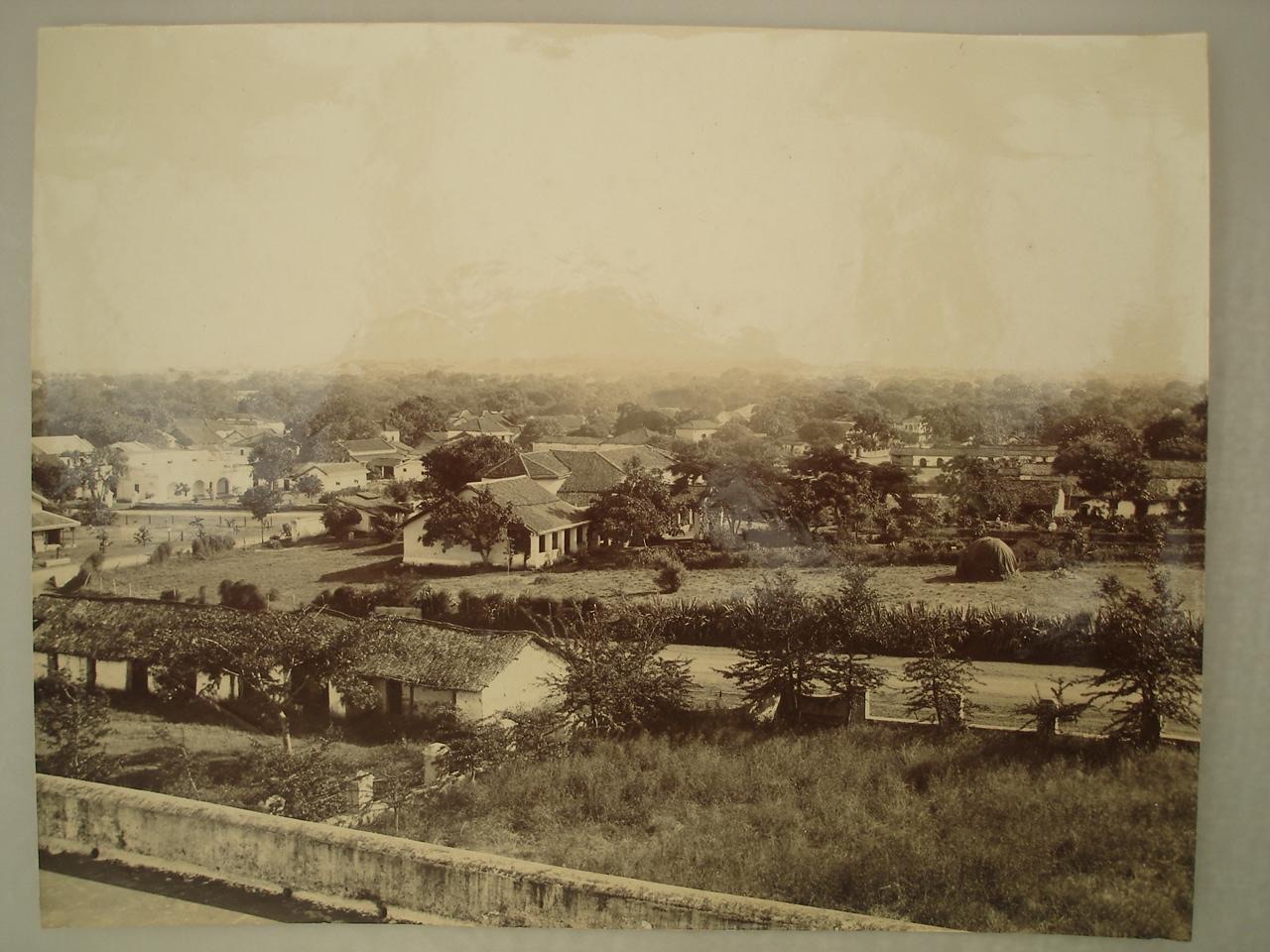
Army quarters at Mhow, around 1900 · Photo: Unknown author · Public domain (PD-Art, PD-old) · Wikimedia Commons Roots and childhoodJotirao Phule is born
In Pune, Jotirao Phule (born 1827) and his wife Savitribai Phule started a school for girls in 1848. In 1873 Jotirao published Gulamgiri (Slavery) and founded the Satyashodhak Samaj (Truth-Seekers' Society) to fight caste.
From the chapter Before Bhimrao · Before 1891
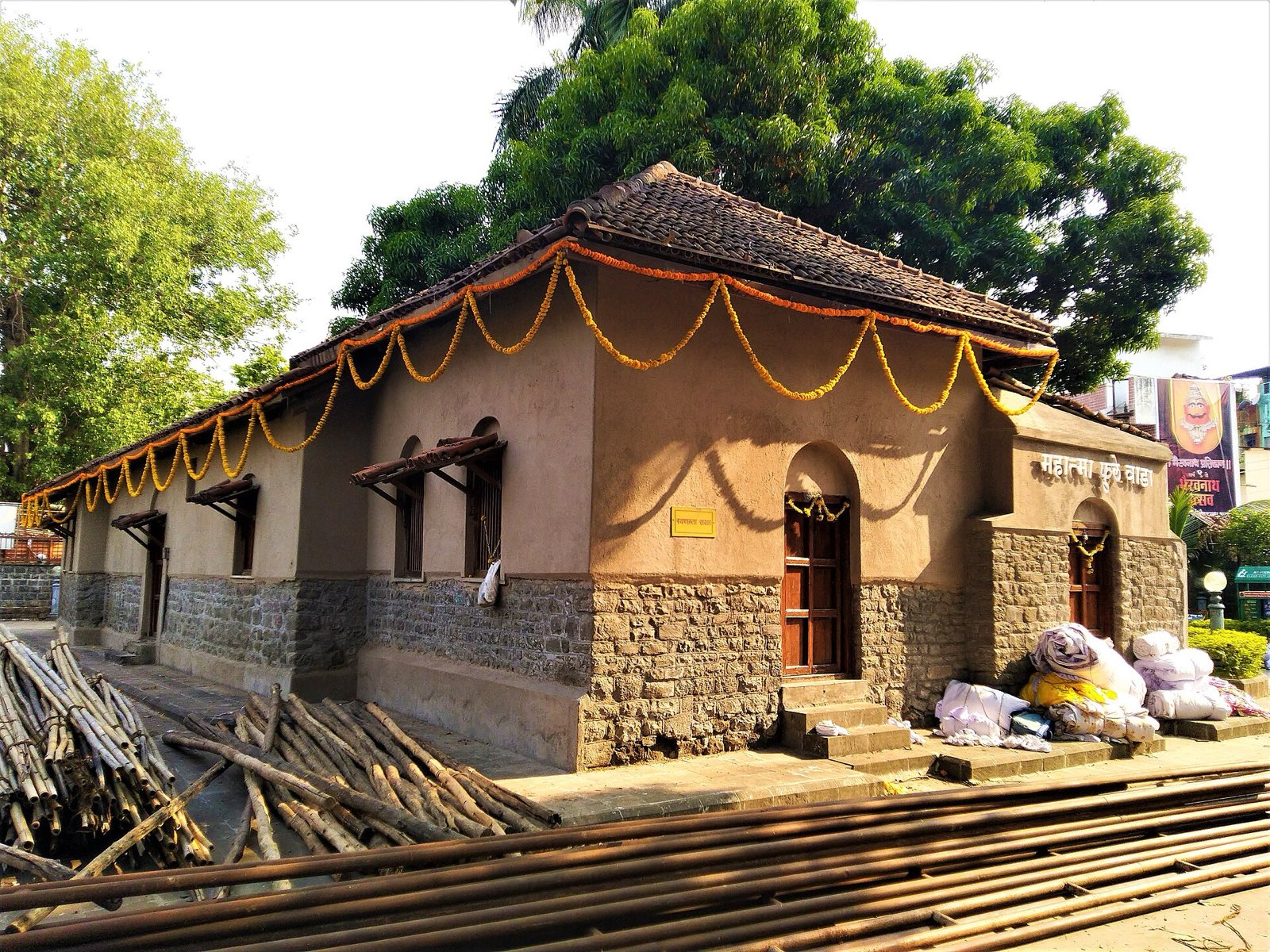
Mahatma Phule Wada, Pune · Photo: DesiBoy101 · CC BY-SA 4.0 · Wikimedia Commons Roots and childhoodJotirao and Savitribai Phule start a school for girls in Pune
In Pune, Jotirao Phule (born 1827) and his wife Savitribai Phule started a school for girls in 1848. In 1873 Jotirao published Gulamgiri (Slavery) and founded the Satyashodhak Samaj (Truth-Seekers' Society) to fight caste.
From the chapter Before Bhimrao · Before 1891
Ramji Maloji Sakpal, Ambedkar's father · Photo: Unknown author · Public domain (PD-India) · Wikimedia Commons Roots and childhoodRamji Sakpal, Bhimrao's father, joins the Bombay Army at about 18 (approximate date)
Bhimrao's father, Ramji Maloji Sakpal, joined the Bombay Army around 1866, when he was about 18. Army records list him as "Ramnak Malnak".
From the chapter Before Bhimrao · Before 1891
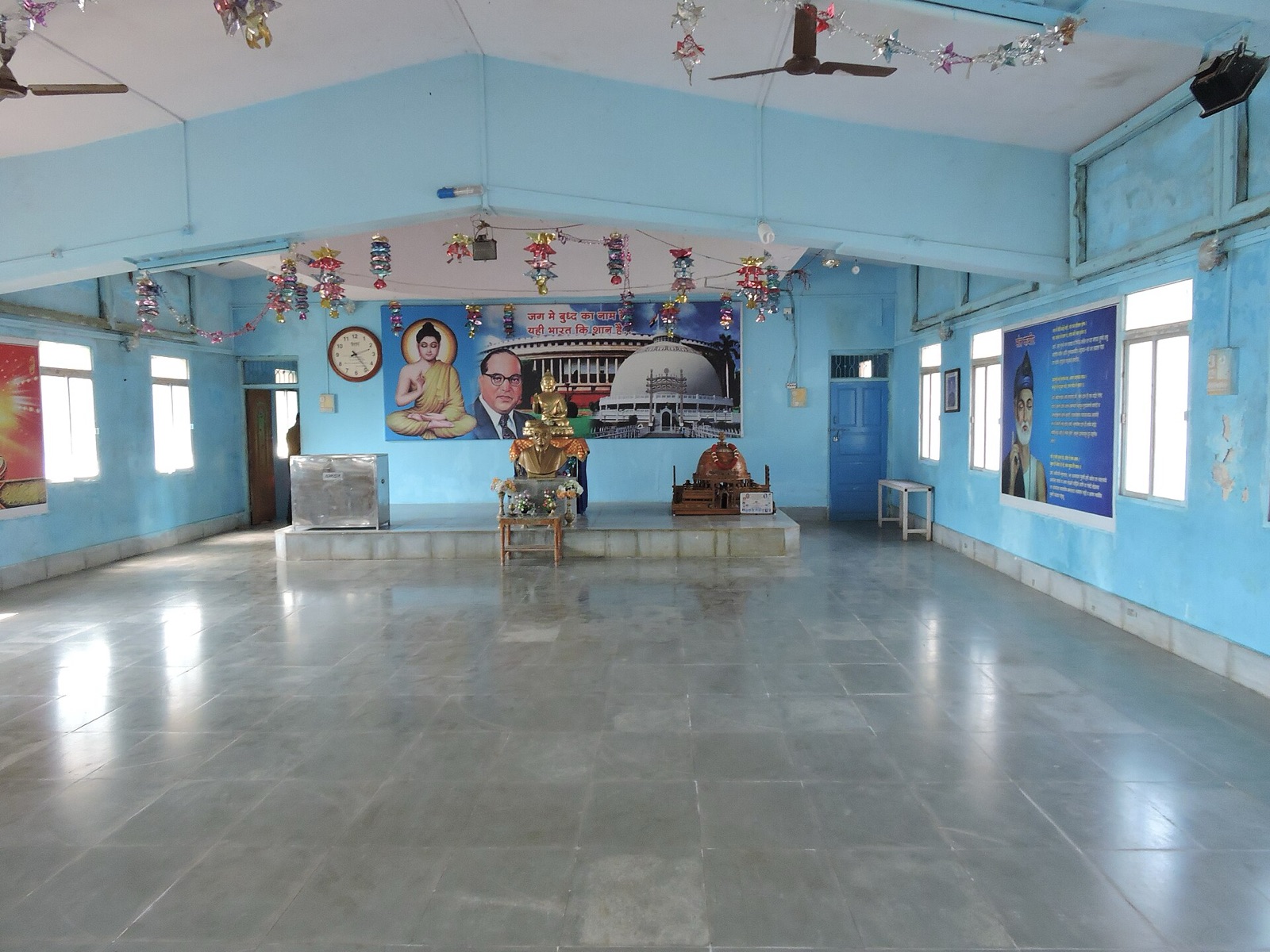
Buddha Vihara on the site of Ramji Sakpal's old house · Photo: Kailash70 · CC BY-SA 4.0 · Wikimedia Commons Roots and childhoodRamji Sakpal marries Bhimabai Murbadkar at Murbad
In 1867 Ramji married Bhimabai, from the Murbadkar family of Murbad in Thane district, whose father was a senior soldier in his regiment. They would have fourteen children.
From the chapter Before Bhimrao · Before 1891
Army quarters at Mhow, around 1900 · Photo: Unknown author · Public domain (PD-Art, PD-old) · Wikimedia Commons Roots and childhoodJotirao Phule founds the Satyashodhak Samaj (Truth-Seekers' Society)
In 1873 Jotirao published Gulamgiri (Slavery) and founded the Satyashodhak Samaj (Truth-Seekers' Society) to fight caste. Savitribai was the school's first teacher.
From the chapter Before Bhimrao · Before 1891
Ramji Maloji Sakpal, Ambedkar's father · Photo: Unknown author · Public domain (PD-India) · Wikimedia Commons Roots and childhoodRamji Sakpal's posting at the Mhow army cantonment begins
From 1888 the family lived in the army town of Mhow. Bhimrao was not the first to challenge caste.
From the chapter Before Bhimrao · Before 1891
Army quarters at Mhow, around 1900 · Photo: Unknown author · Public domain (PD-Art, PD-old) · Wikimedia Commons Roots and childhoodJotirao Phule dies, less than five months before Bhimrao's birth
Jotirao Phule died on 28 November 1890, less than five months before Bhimrao was born. His ideas reached the Mahar soldiers: Gopal Baba Walangkar had joined Phule's Satyashodhak Samaj.
From the chapter Before Bhimrao · Before 1891
Ramji Maloji Sakpal, Ambedkar's father · Photo: Unknown author · Public domain (PD-India) · Wikimedia Commons Roots and childhoodBhimrao is born at Mhow, an army cantonment near Indore
Bhimrao was born on 14 April 1891 in Mhow, a town near Indore in central India that the British had built as a military base. He was the fourteenth and last child of Ramji Sakpal and Bhimabai.
From the chapter Childhood · 1891–1904
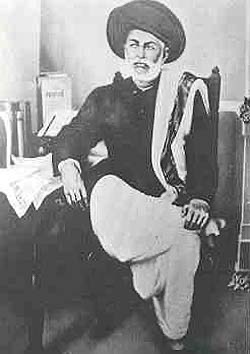
Jyotirao Phule · Photo: Unknown author · Public domain (PD-India, PD-US-expired) · Wikimedia Commons Roots and childhoodArmy orders stop the recruitment of Mahars (Ambedkar elsewhere says 'about 1890')
Ambedkar later remembered finding, among his father's papers, a petition against "the orders issued in 1892 banning the recruitment of the Mahars in the Army". Retired Mahar soldiers did not stay silent.
From the chapter Before Bhimrao · Before 1891
Ramji Maloji Sakpal, Ambedkar's father · Photo: Unknown author · Public domain (PD-India) · Wikimedia Commons Roots and childhoodRamji Sakpal retires from the army; the family moves to Dapoli (some sources say 1894)
Bhimrao was still a toddler when his father retired from the army, probably in 1893. The family moved to Dapoli, a small town in Ratnagiri district, where retired Mahar and Chambhar soldiers had set up a colony.
From the chapter Childhood · 1891–1904
Army quarters at Mhow, around 1900 · Photo: Unknown author · Public domain (PD-Art, PD-old) · Wikimedia Commons Roots and childhoodThe family moves to Satara; Bhimabai Sakpal dies (some sources say 1897)
Around 1896 the family moved to Satara, and Ramji found work with the Public Works Department. Soon after the move, Bhimabai died.
From the chapter Childhood · 1891–1904
Buddha Vihara on the site of Ramji Sakpal's old house · Photo: Kailash70 · CC BY-SA 4.0 · Wikimedia Commons Roots and childhoodRamji Sakpal marries again
From the chapter Childhood · 1891–1904
Army quarters at Mhow, around 1900 · Photo: Unknown author · Public domain (PD-Art, PD-old) · Wikimedia Commons Roots and childhoodBhimrao joins the first English standard of the Government High School, Satara
On 7 November 1900 he joined the first English standard of the Government High School. Maharashtra now marks 7 November as Students' Day in memory of that first day.
From the chapter Childhood · 1891–1904
Ramji Maloji Sakpal, Ambedkar's father · Photo: Unknown author · Public domain (PD-India) · Wikimedia Commons Roots and childhoodThe journey to Koregaon (Khatav taluka) described in 'Waiting for a Visa' ('in about 1901')
In about 1901, Bhim's father was working as a cashier at Koregaon, a village in Khatav taluka of Satara district. The government was digging a water tank there to give work to people starving in a famine.
From the chapter Childhood · 1891–1904
Army quarters at Mhow, around 1900 · Photo: Unknown author · Public domain (PD-Art, PD-old) · Wikimedia Commons Roots and childhoodSchool closes for M. G. Ranade's death; Bhimrao is in the first standard at Satara
Ambedkar later recalled being "a student in the first standard in the Satara High School" when the school closed on 16 January 1901 because the reformer M. At about nine, he had no idea who Ranade was, and like the other boys he was simply happy to have a holiday.
From the chapter Childhood · 1891–1904
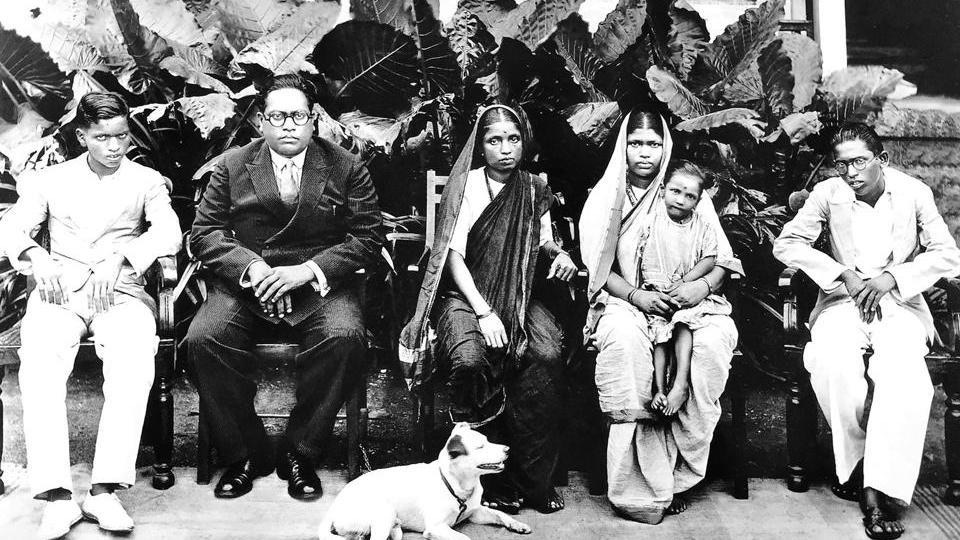
The Ambedkar family at Rajgriha, 1934 · Photo: Unknown author · Public domain (PD-India, PD-1996) · Wikimedia Commons Roots and childhoodThe family leaves Satara for Bombay
In 1904 the family left Satara for Bombay, and a new chapter of Bhimrao's education began. Most sources give 14 April 1891, which Khairmode found in school records.
From the chapter Childhood · 1891–1904
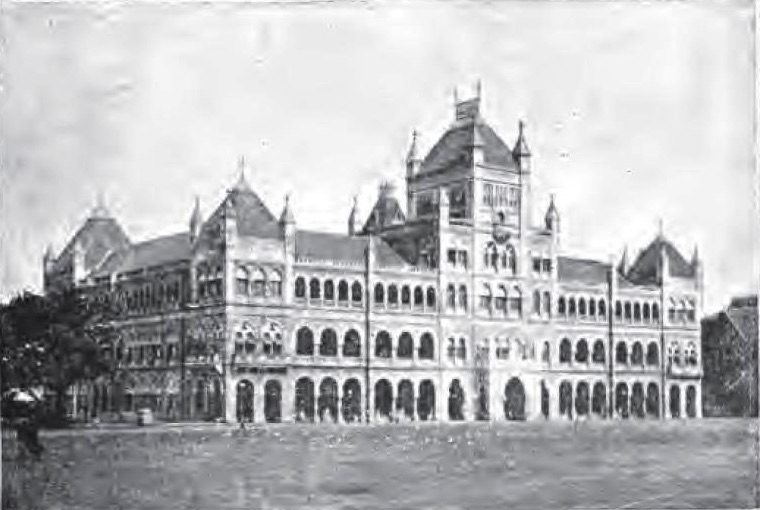
Elphinstone College, 1904 · Photo: Unknown photographer (from D. A. Pinder, Visitor's Illustrated Guide to Bombay, 1904) · Public domain (PD-old) · Wikimedia Commons Roots and childhoodThe family moves from Satara to Bombay; Bhimrao joins Elphinstone High School
In 1904 the family left Satara for Bombay (today's Mumbai), the capital of the Bombay Presidency. Over the next nine years, Bhimrao did something almost no one from his community had done before: he finished school and earned a university degree.
From the chapter School and College Years · 1904–1913
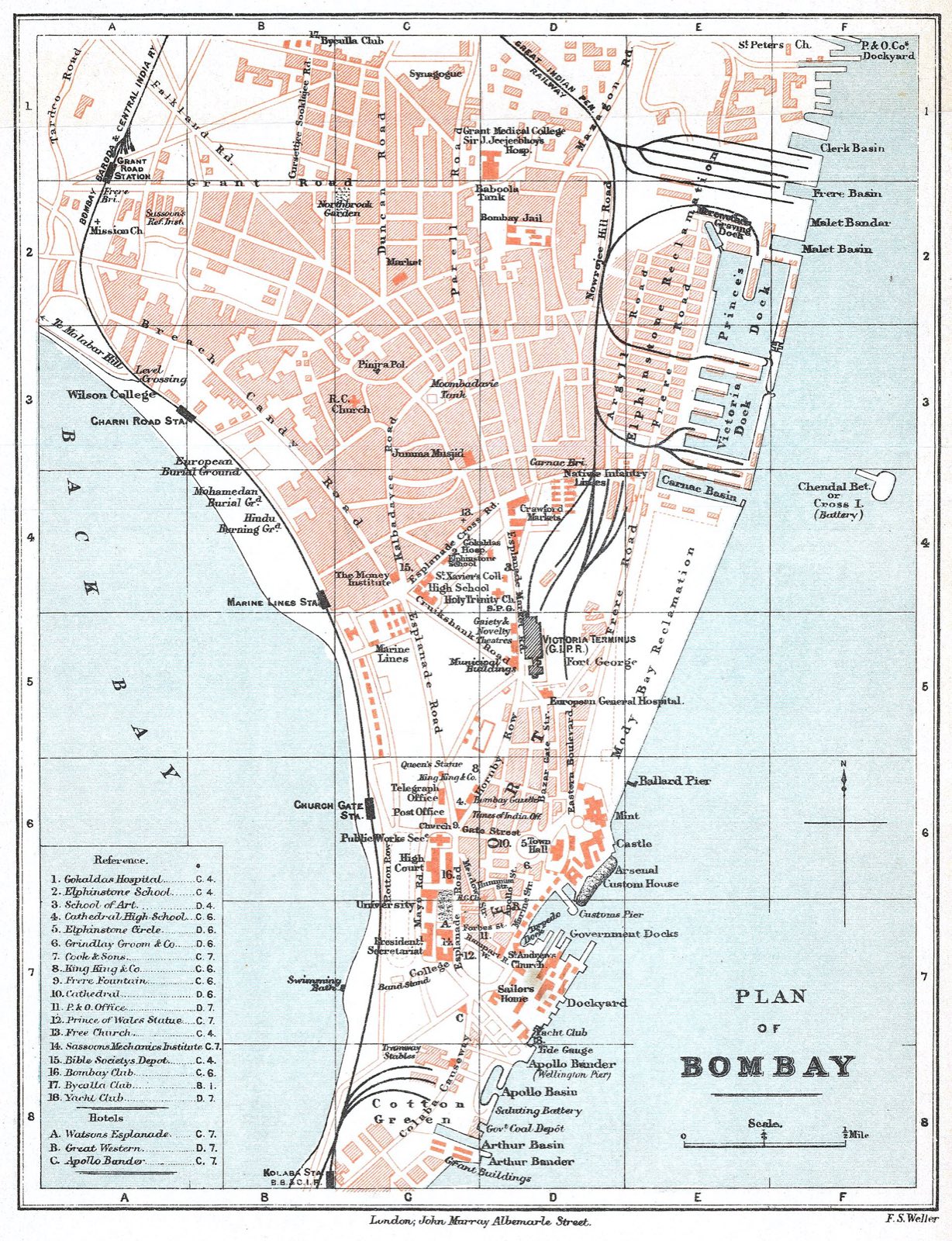
Map of Bombay, 1903 · Photo: John Murray (publisher), A Handbook for Travellers in India, Burma and Ceylon · Public domain (PD-old-70-expired) · Wikimedia Commons EducationMarriage to Ramabai at the Byculla market, Bombay (some sources say 1907)
In 1906 Bhimrao's marriage was arranged with Ramabai, a nine-year-old girl from Wanand, near Dapoli. Her father had worked as a porter, and after her parents died she lived with an uncle in Bombay.
From the chapter School and College Years · 1904–1913
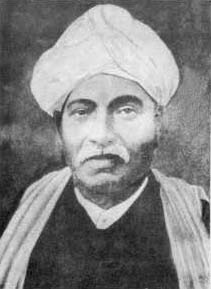
Krishnaji Arjun Keluskar · Photo: Unknown author · Public domain (PD-India) · Wikimedia Commons EducationPasses the Matriculation Examination from Elphinstone High School (one source says 1908)
In 1907 Bhimrao passed the Matriculation Examination, the final school exam that allowed a student to enter university. His marks were average, and his best subject was Persian.
From the chapter School and College Years · 1904–1913
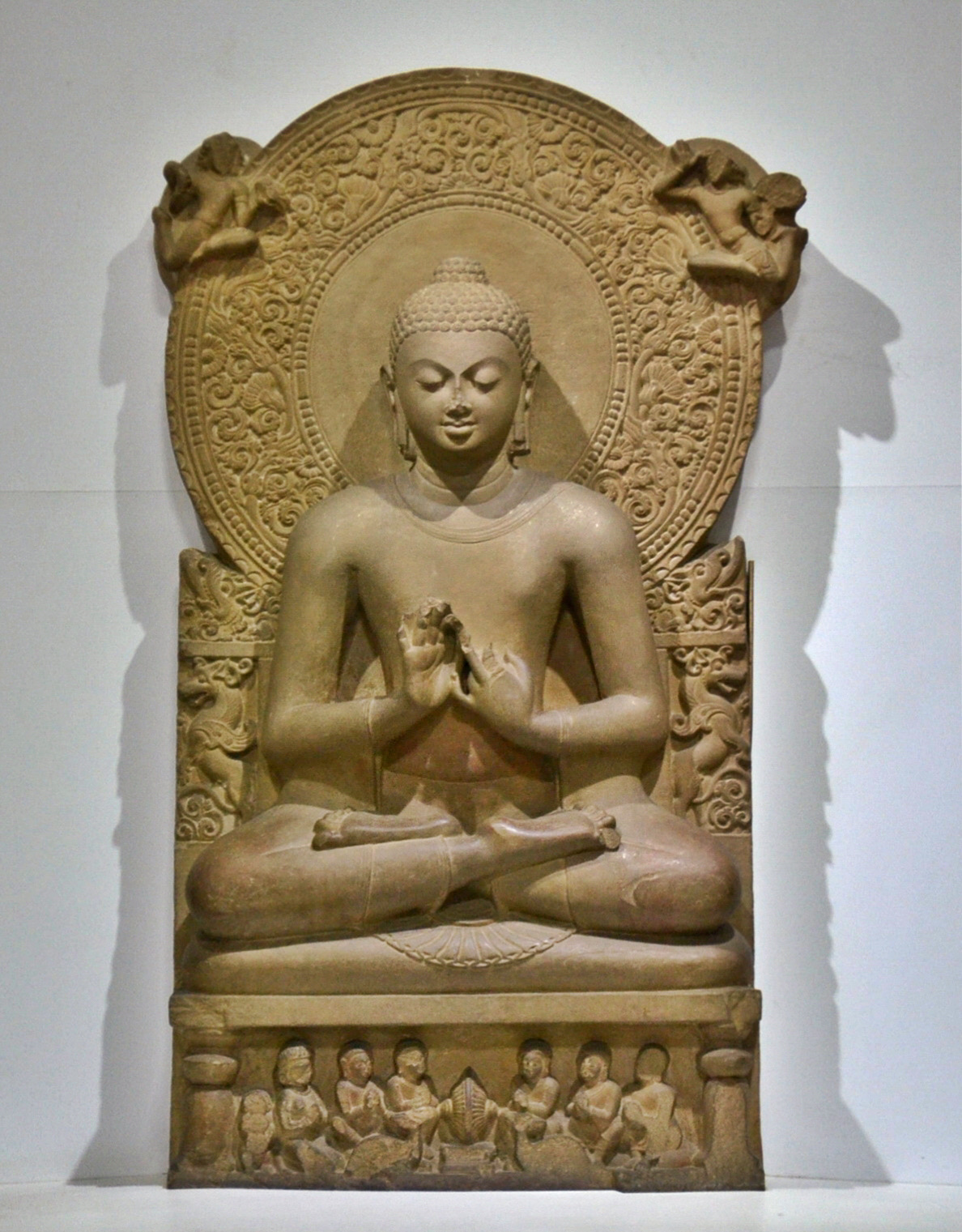
Seated Buddha from Sarnath · Photo: Tevaprapas Makklay · CC BY-SA 3.0 · Wikimedia Commons EducationKrishnaji Arjun Keluskar gives young Bhimrao his Marathi book on the life of the Buddha
Keluskar had published this biography in Marathi in 1898, and gave it to Bhimrao after he passed the Matriculation examination of Bombay University in 1907. Ambedkar remembered how it affected him:
From the chapter The Road to Buddhism · 1935–1956
Elphinstone College, 1904 · Photo: Unknown photographer (from D. A. Pinder, Visitor's Illustrated Guide to Bombay, 1904) · Public domain (PD-old) · Wikimedia Commons EducationEnrols at Elphinstone College, Bombay
On 3 January 1908 Bhimrao enrolled at Elphinstone College, which was affiliated to Bombay University. Columbia University's Pritchett timeline calls his admission "a unique feat" for a Mahar of his time and place.
From the chapter School and College Years · 1904–1913
Map of Bombay, 1903 · Photo: John Murray (publisher), A Handbook for Travellers in India, Burma and Ceylon · Public domain (PD-old-70-expired) · Wikimedia Commons EducationPasses the BA examination of Bombay University
In 1912 Bhimrao passed the BA examination of Bombay University. In December 1912 his first son, Yashwant, was born.
From the chapter School and College Years · 1904–1913
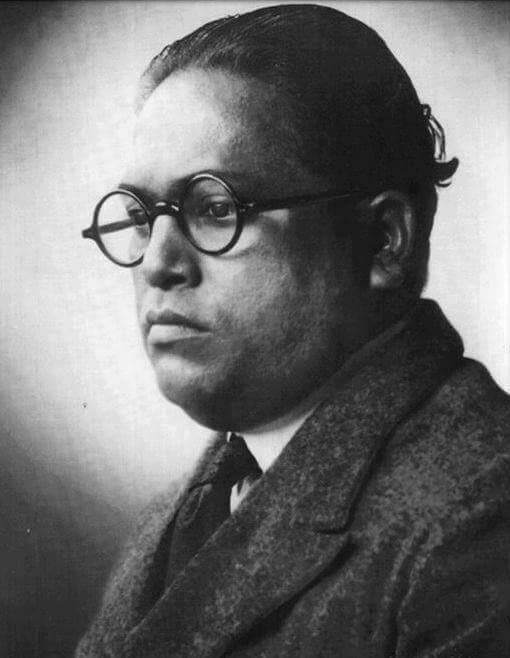
Ambedkar as a young man · Photo: Unknown author · Public domain (PD-India) · Wikimedia Commons EducationSon Yashwant is born
In December 1912 his first son, Yashwant, was born. After graduating he took a job in Baroda State, even though his father was against it.
From the chapter School and College Years · 1904–1913
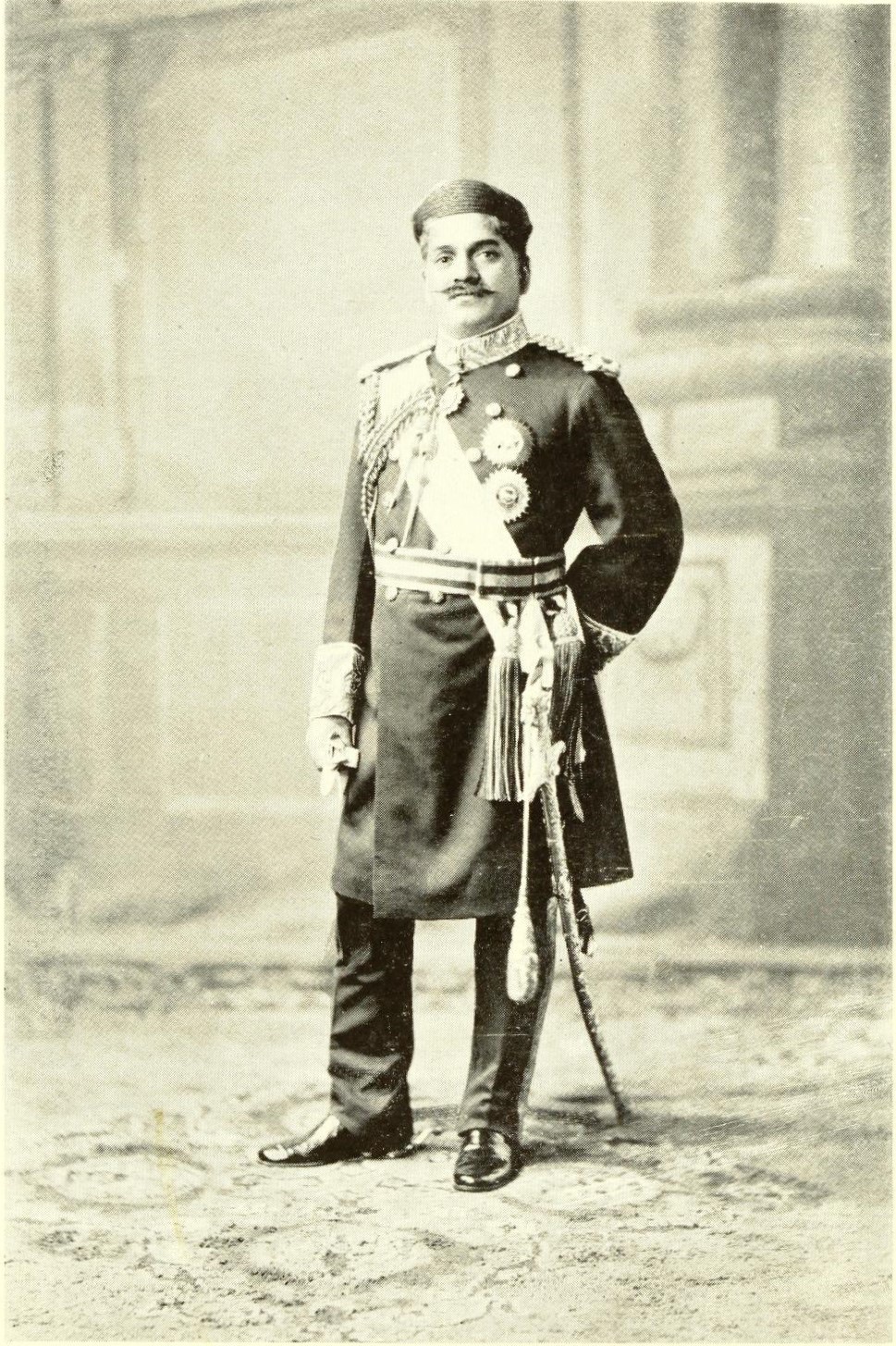
Sayajirao Gaekwad III, Maharaja of Baroda · Photo: Unknown author · Public domain (PD-India) · Wikimedia Commons EducationJoins the service of Baroda State (Keer says for about fifteen days)
He had been in Baroda for only about fifteen days in January 1913 when a telegram arrived: his father was seriously ill. On the way home he got off the train at Surat to buy sweets for his father and missed his train.
From the chapter School and College Years · 1904–1913
Ramji Maloji Sakpal, Ambedkar's father · Photo: Unknown author · Public domain (PD-India) · Wikimedia Commons EducationDeath of his father, Ramji Maloji Sakpal, in Bombay
He had been in Baroda for only about fifteen days in January 1913 when a telegram arrived: his father was seriously ill. On the way home he got off the train at Surat to buy sweets for his father and missed his train.
From the chapter School and College Years · 1904–1913
Sayajirao Gaekwad III, Maharaja of Baroda · Photo: Unknown author · Public domain (PD-India) · Wikimedia Commons EducationBaroda scholarship of £11.50 a month for three years begins (dates as given by The Beacon)
Khairmode, the agreement asked for ten years of service and the scholarship ran from 15 June 1913 to 14 June 1916. The historian Eleanor Zelliot noted that the stipend came through Baroda's Education Department, and that it is not clear whose idea the American plan was.
From the chapter Columbia University · 1913–1916
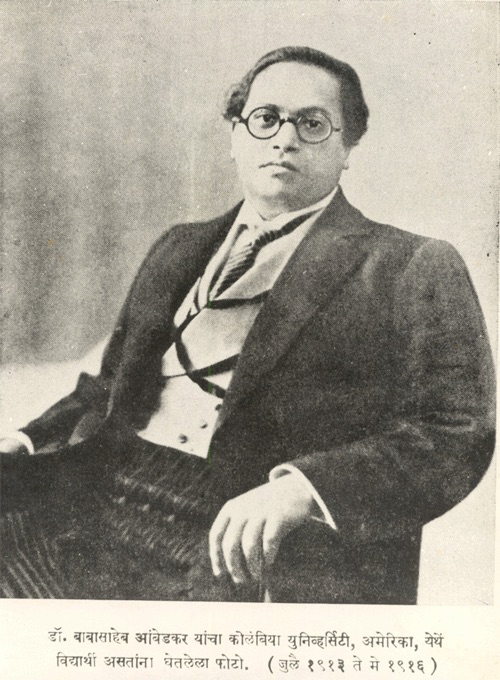
Ambedkar during his Columbia years · Photo: Unknown author · Public domain (PD-India) · Wikimedia Commons EducationSigns the Baroda agreement to study at Columbia University
On 4 June 1913 he signed an agreement to study at Columbia University in New York. On 15 June he sailed from Bombay on the S.S.
From the chapter School and College Years · 1904–1913
Elphinstone College, 1904 · Photo: Unknown photographer (from D. A. Pinder, Visitor's Illustrated Guide to Bombay, 1904) · Public domain (PD-old) · Wikimedia Commons EducationSails from Bombay for America on the S.S. Sardegna
On 4 June 1913 he signed an agreement to study at Columbia University in New York. On 15 June he sailed from Bombay on the S.S.
From the chapter School and College Years · 1904–1913
Ambedkar during his Columbia years · Photo: Unknown author · Public domain (PD-India) · Wikimedia Commons EducationArrives in New York in the third week of July
He reached New York in the third week of July 1913. He first stayed in Hartley Hall, a university dormitory, but disliked the food and left after a week.
From the chapter Columbia University · 1913–1916
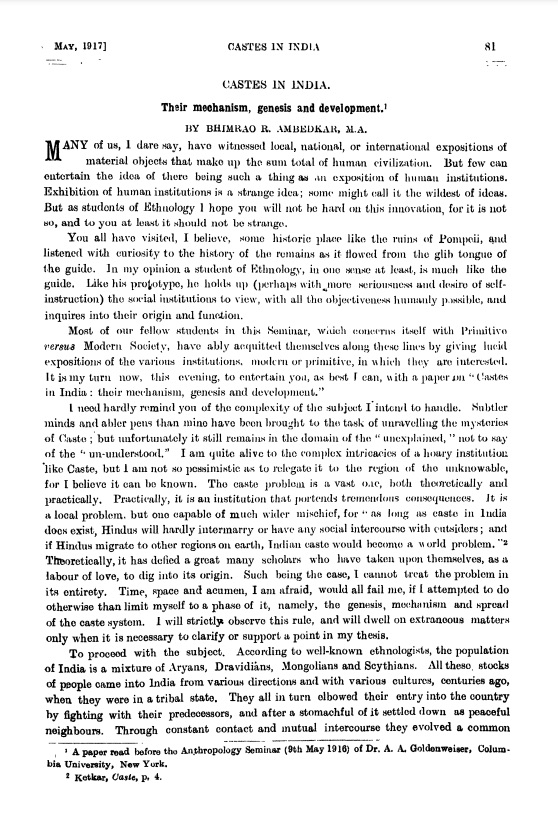
"Castes in India" (1917), first page · Photo: B. R. Ambedkar (text); The Indian Antiquary (publisher) · Public domain (PD-India, PD-US-expired) · Wikimedia Commons EducationSubmits MA thesis 'Administration and Finance of the East India Company'
Columbia's catalogue and his collected works give "Administration and Finance of the East India Company" (1915). Dhananjay Keer's biography names "Ancient Indian Commerce".
From the chapter Columbia University · 1913–1916
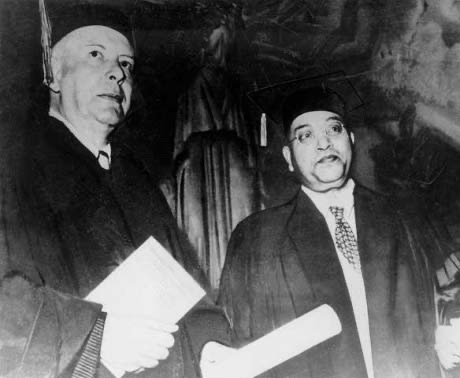
At Columbia University with Wallace Stevens, 1952 · Photo: Unknown author · Public domain (PD-India) · Wikimedia Commons EducationPasses his MA examination; MA awarded in June 1915 (2 June 1915 in a 1951 career note)
He passed the MA examination in June 1915, with economics as his main subject. The thesis was never published in his lifetime.
From the chapter Columbia University · 1913–1916
"Castes in India" (1917), first page · Photo: B. R. Ambedkar (text); The Indian Antiquary (publisher) · Public domain (PD-India, PD-US-expired) · Wikimedia Commons EducationReads 'Castes in India: Their Mechanism, Genesis and Development' at Alexander Goldenweiser's seminar
BAWS Vol. 1 – "Castes in India" — the full text of the 1916 seminar paper. BAWS Vol. 6 – his economics theses — the MA thesis and The Evolution of Provincial Finance in British India.
From the chapter Columbia University · 1913–1916
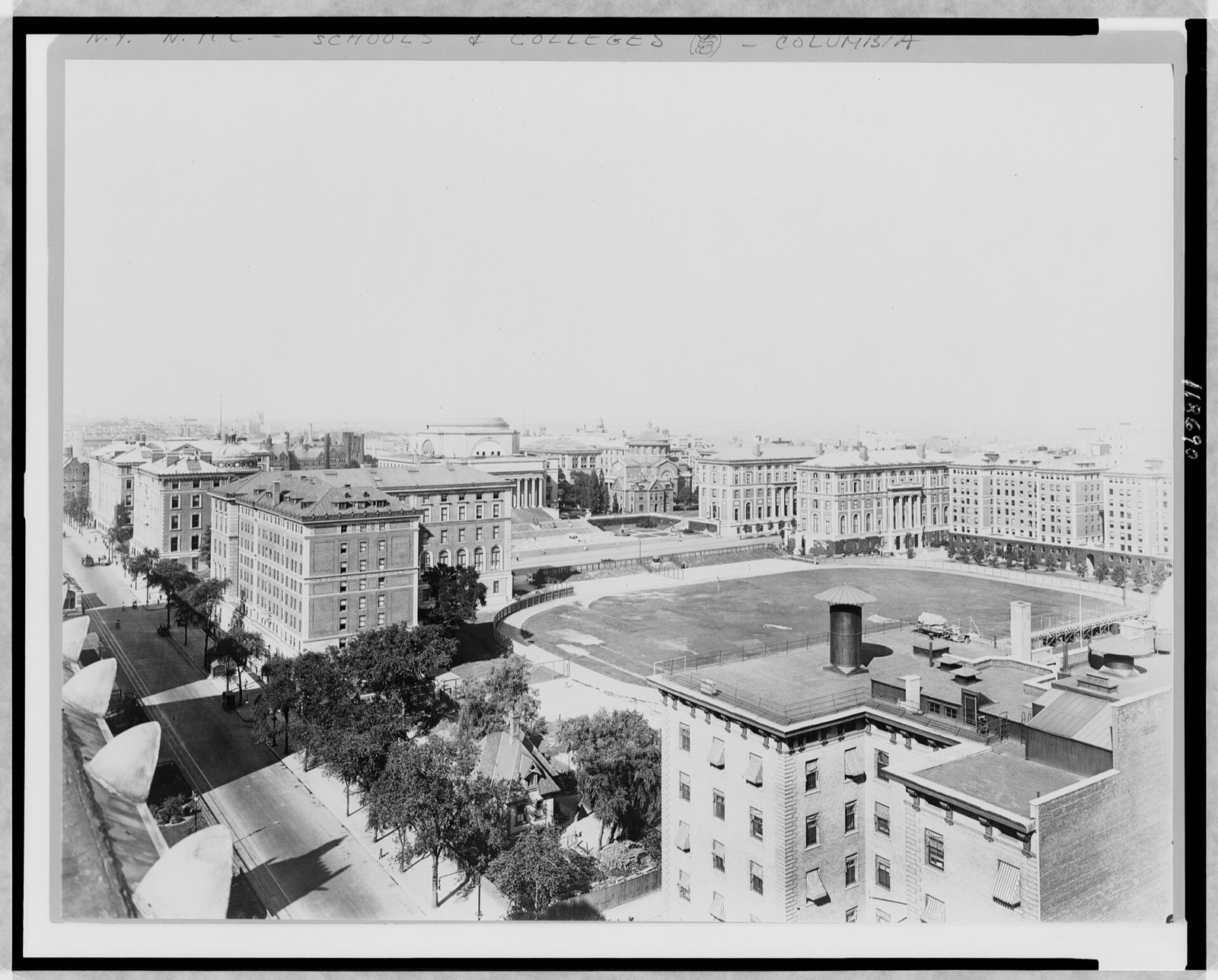
Bird's-eye view of Columbia University, 1916 · Photo: Unknown photographer (Library of Congress, Prints and Photographs Division) · Public domain (PD-old-70-expired) · Wikimedia Commons EducationLeaves New York and reaches London
Khairmode, the agreement asked for ten years of service and the scholarship ran from 15 June 1913 to 14 June 1916. The historian Eleanor Zelliot noted that the stipend came through Baroda's Education Department, and that it is not clear whose idea the American plan was.
From the chapter Columbia University · 1913–1916
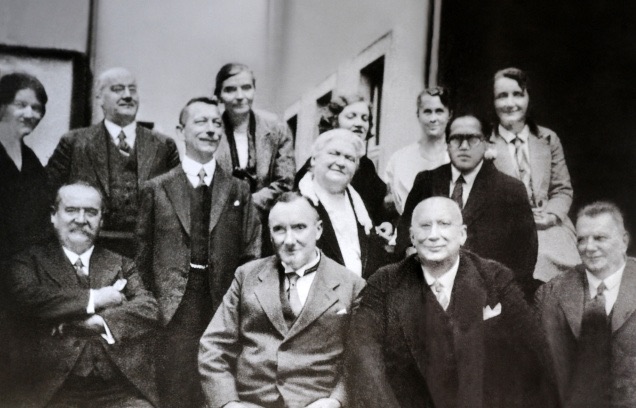
With professors and friends at the London School of Economics · Photo: Unknown author · Public domain (PD-India) · Wikimedia Commons EducationRegisters at LSE for the MSc (Econ)
In October 1916 he registered at the London School of Economics (LSE), part of the University of London, to work for an MSc (Econ), a master's degree in economics. He attended lectures in geography, political ideas, social evolution and social theory.
From the chapter London, Baroda and London Again · 1916–1923
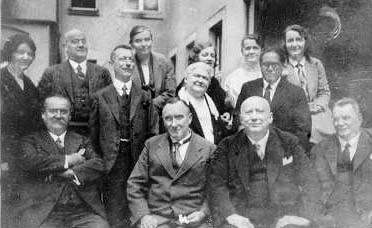
With students and professors at the LSE · Photo: Unknown author · Public domain (PD-India) · Wikimedia Commons EducationEntered in Gray's Inn's Index of Admission
Gray's Inn still keeps his entry in its Index of Admission, dated November 1916. Called home, and a ship that sank (1917)
From the chapter London, Baroda and London Again · 1916–1923
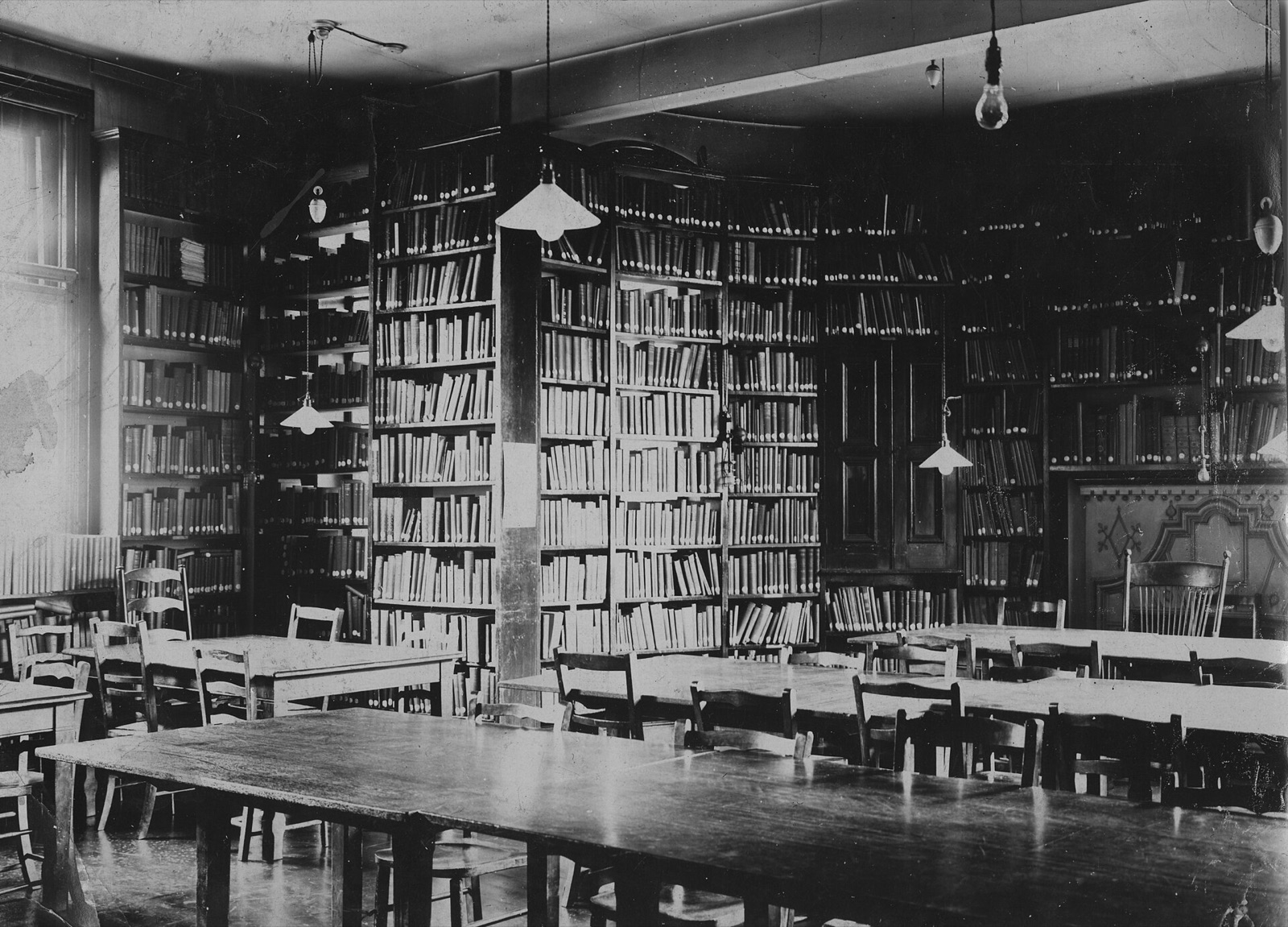
Inside the LSE main building, 1920s · Photo: LSE Library (photographer unknown) · No known copyright restrictions (Flickr Commons) · Wikimedia Commons EducationDriven out of a Parsi inn in Baroda after eleven days
He wrote that he was "driven to leave Baroda and return to Bombay after a stay of only eleven days". Eighteen years later, he wrote that he still could not recall the scene without tears.
From the chapter London, Baroda and London Again · 1916–1923
"Castes in India" (1917), first page · Photo: B. R. Ambedkar (text); The Indian Antiquary (publisher) · Public domain (PD-India, PD-US-expired) · Wikimedia Commons Education'Castes in India' published in the Indian Antiquary
The paper was printed in the journal Indian Antiquary in May 1917. He stayed proud of it all his life.
From the chapter Columbia University · 1913–1916
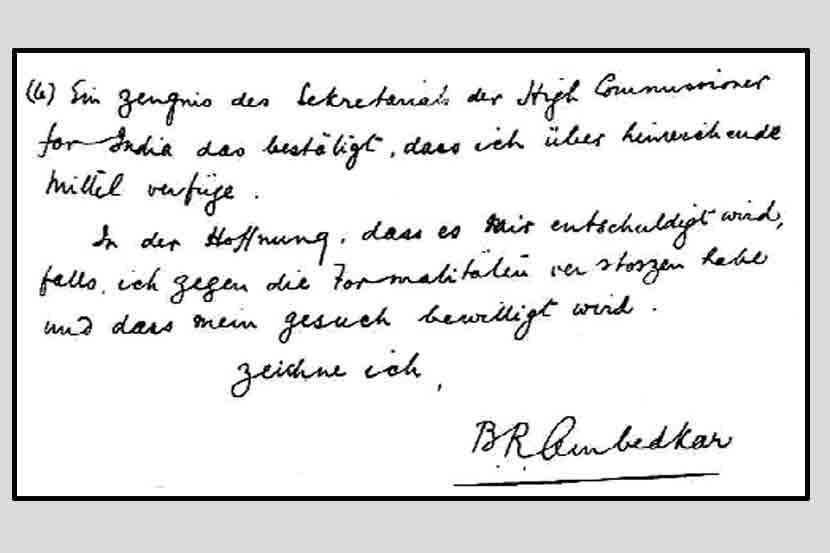
Letter to the University of Bonn, 1921 · Photo: Unknown author · Public domain (PD-India) · Wikimedia Commons EducationLeaves LSE; University of London allows him to break his studies for up to four years
A University of London resolution dated 18 July 1917 allowed him to interrupt his course for up to four years. The First World War was still raging.
From the chapter London, Baroda and London Again · 1916–1923
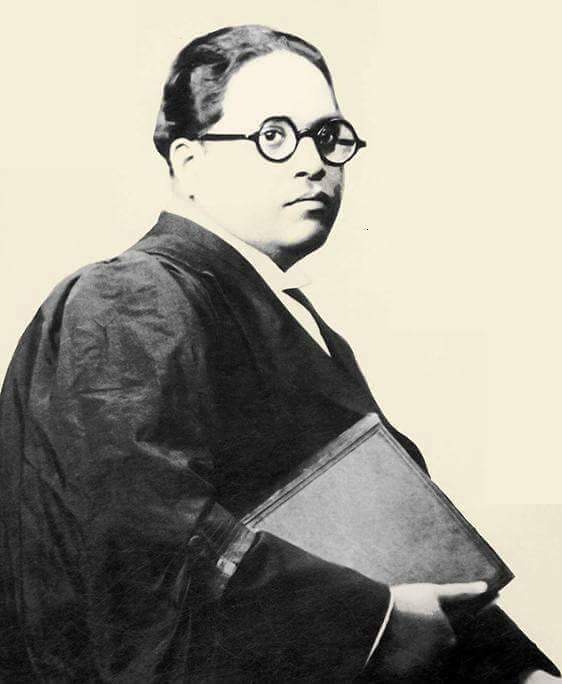
Barrister Ambedkar · Photo: Unknown author · Public domain (PD-India) · Wikimedia Commons EducationSS Salsette, carrying his books and papers, is torpedoed and sunk
The ship carrying them, the SS Salsette, was torpedoed by the German submarine UB-40 on 20 July 1917 and sank, killing 15 crew. Among the losses was the manuscript of his Columbia thesis.
From the chapter London, Baroda and London Again · 1916–1923
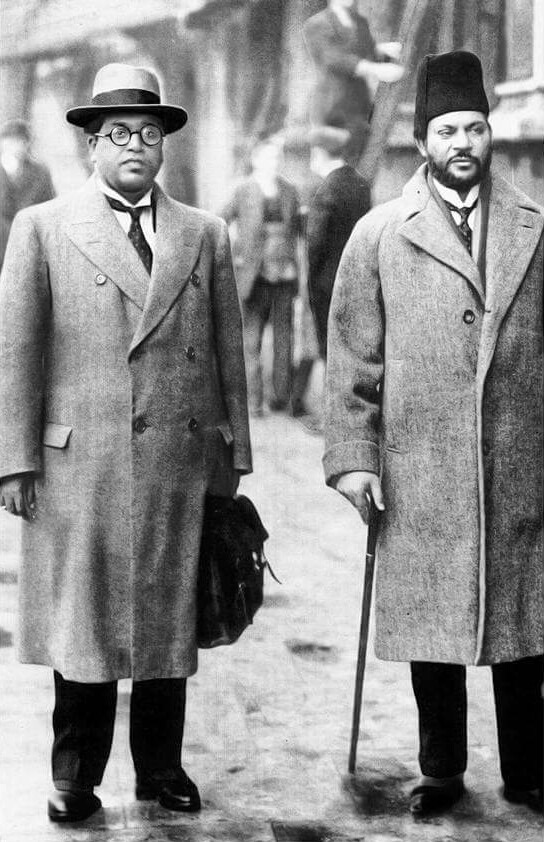
With Zafarullah Khan near the House of Commons, 1931 · Photo: Unknown author · Public domain (PD-India) · Wikimedia Commons EducationReaches Bombay (date given by Aakash Singh Rathore and The Beacon)
He reached Bombay on 21 August 1917. Ambedkar went straight to Baroda to begin the service he had promised.
From the chapter London, Baroda and London Again · 1916–1923
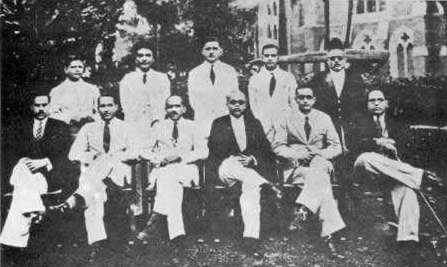
With colleagues at the Government Law College, 1928 · Photo: Unknown author · Public domain (PD-India) · Wikimedia Commons EducationBecomes Professor of Political Economy at Sydenham College, Bombay
In November 1918 he became Professor of Political Economy at Sydenham College of Commerce and Economics in Bombay. Keer reports that some colleagues objected to him drinking from their water jug.
From the chapter London, Baroda and London Again · 1916–1923
Inside the LSE main building, 1920s · Photo: LSE Library (photographer unknown) · No known copyright restrictions (Flickr Commons) · Wikimedia Commons EducationGives evidence to the Southborough Committee on the franchise
On 27 January 1919 he gave evidence to the Southborough Committee, which was deciding who could vote under new British reforms. He argued that the "untouchable" communities must have their own representatives in the legislature.
From the chapter London, Baroda and London Again · 1916–1923
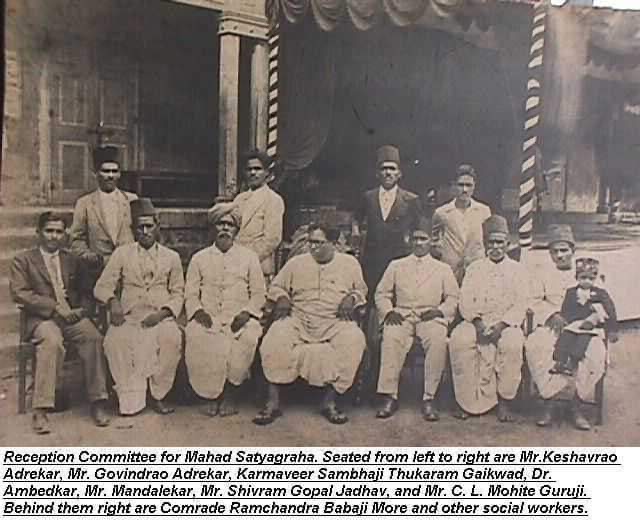
Reception committee for the Mahad Satyagraha, 1927 · Photo: Unknown (from the uploader's family archive) · CC BY-SA 4.0 · Wikimedia Commons The struggleGives evidence to the Southborough (Franchise) Committee
Ambedkar, on how many seats untouchables should have, evidence to the Southborough Committee (1919) Mooknayak: a voice for the voiceless (1920)
From the chapter Awakening · 1919–1929
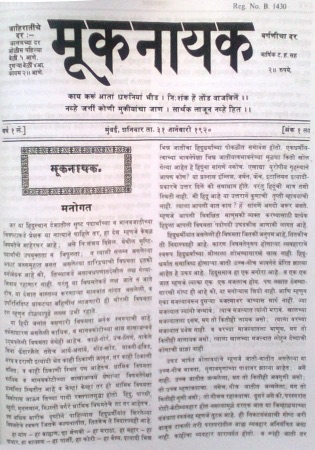
Mooknayak, 1920 · Photo: Unknown author · Public domain (PD-India) · Wikimedia Commons The struggleFirst issue of the Marathi paper Mooknayak
On 31 January 1920 he started a Marathi fortnightly paper called Mooknayak, "Leader of the Voiceless". Shahu Maharaj, ruler of Kolhapur and a supporter of lower-caste education, gave Rs 2,500 to help launch it.
From the chapter Awakening · 1919–1929
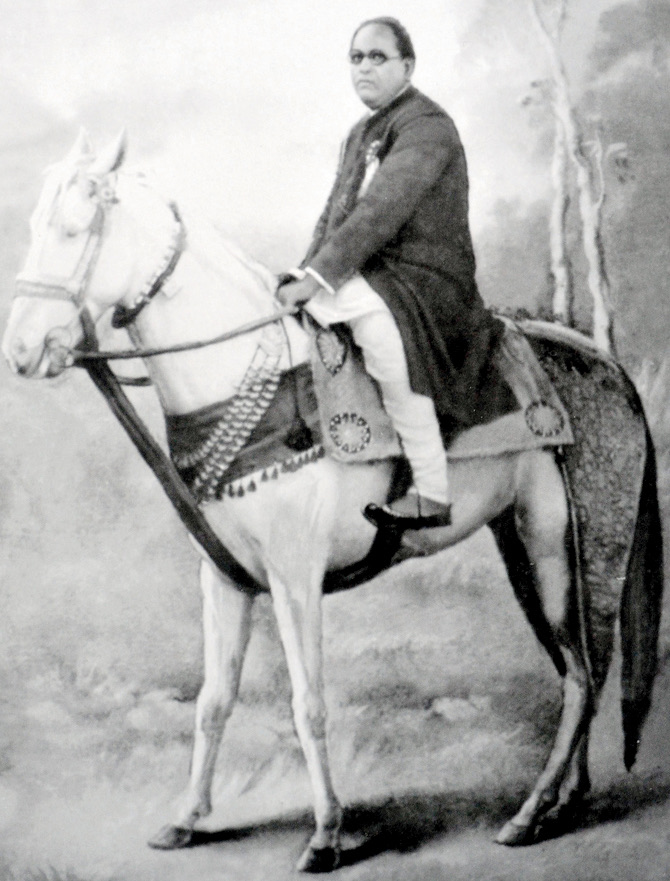
Ambedkar at Nipani, 1925 · Photo: Unknown author · Public domain (PD-India) · Wikimedia Commons The strugglePresides over the Depressed Classes conference at Mangaon, attended by Shahu Maharaj
In March 1920 he presided over a Depressed Classes conference at Mangaon, a village near Kolhapur. Shahu Maharaj attended and, according to Keer's biography, said:
From the chapter Awakening · 1919–1929
Opening of the First Round Table Conference, 1930 · Photo: Unknown author · Public domain (PD-India) · Wikimedia Commons EducationLeaves for London again (5 July 1920 according to The Beacon)
He added loans from his Columbia friend Naval Bhathena and from the Maharaja of Kolhapur, and in July 1920 he left again for London. One account gives Bhathena's loan as Rs. 5,000.
From the chapter London, Baroda and London Again · 1916–1923
Letter to the University of Bonn, 1921 · Photo: Unknown author · Public domain (PD-India) · Wikimedia Commons EducationSigns his new LSE admission form; living at 95 Brook Green, Hammersmith
He signed his new LSE form on 30 September 1920, giving his address as 95 Brook Green, Hammersmith. By February 1921 he had moved to 10 King Henry's Road, near Chalk Farm and Primrose Hill.
From the chapter London, Baroda and London Again · 1916–1923
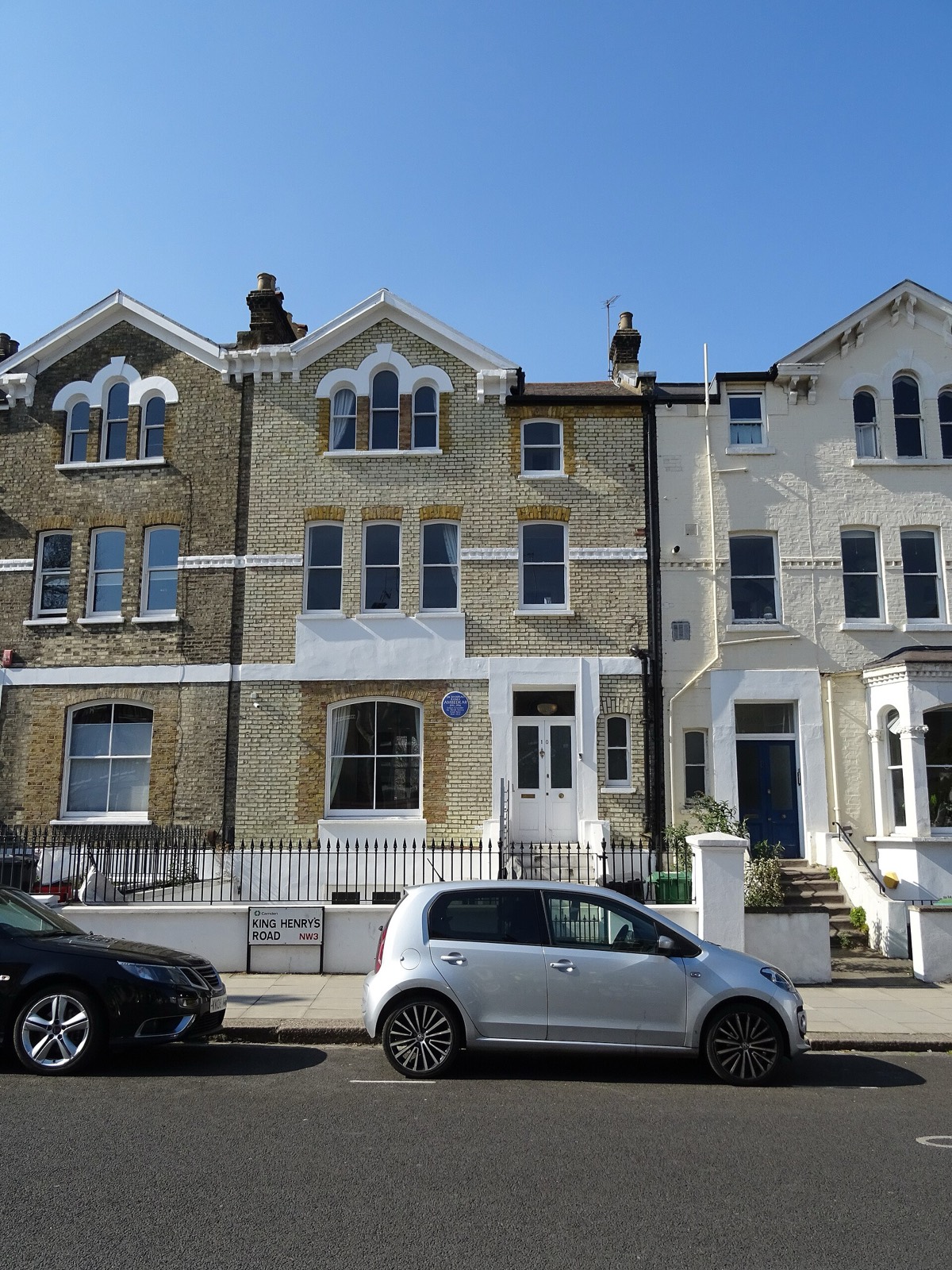
10 King Henry's Road, London · Photo: Spudgun67 · CC BY-SA 4.0 · Wikimedia Commons EducationWrites from 10 King Henry's Road to apply to study at the University of Bonn
By February 1921 he had moved to 10 King Henry's Road, near Chalk Farm and Primrose Hill. He was still writing letters from there in February 1922.
From the chapter London, Baroda and London Again · 1916–1923
Barrister Ambedkar · Photo: Unknown author · Public domain (PD-India) · Wikimedia Commons EducationAwarded the MSc (Econ) for 'Provincial Decentralisation of Imperial Finance in British India'
In June 1921 the University of London awarded him the MSc (Econ). His thesis was "Provincial Decentralisation of Imperial Finance in British India".
From the chapter London, Baroda and London Again · 1916–1923
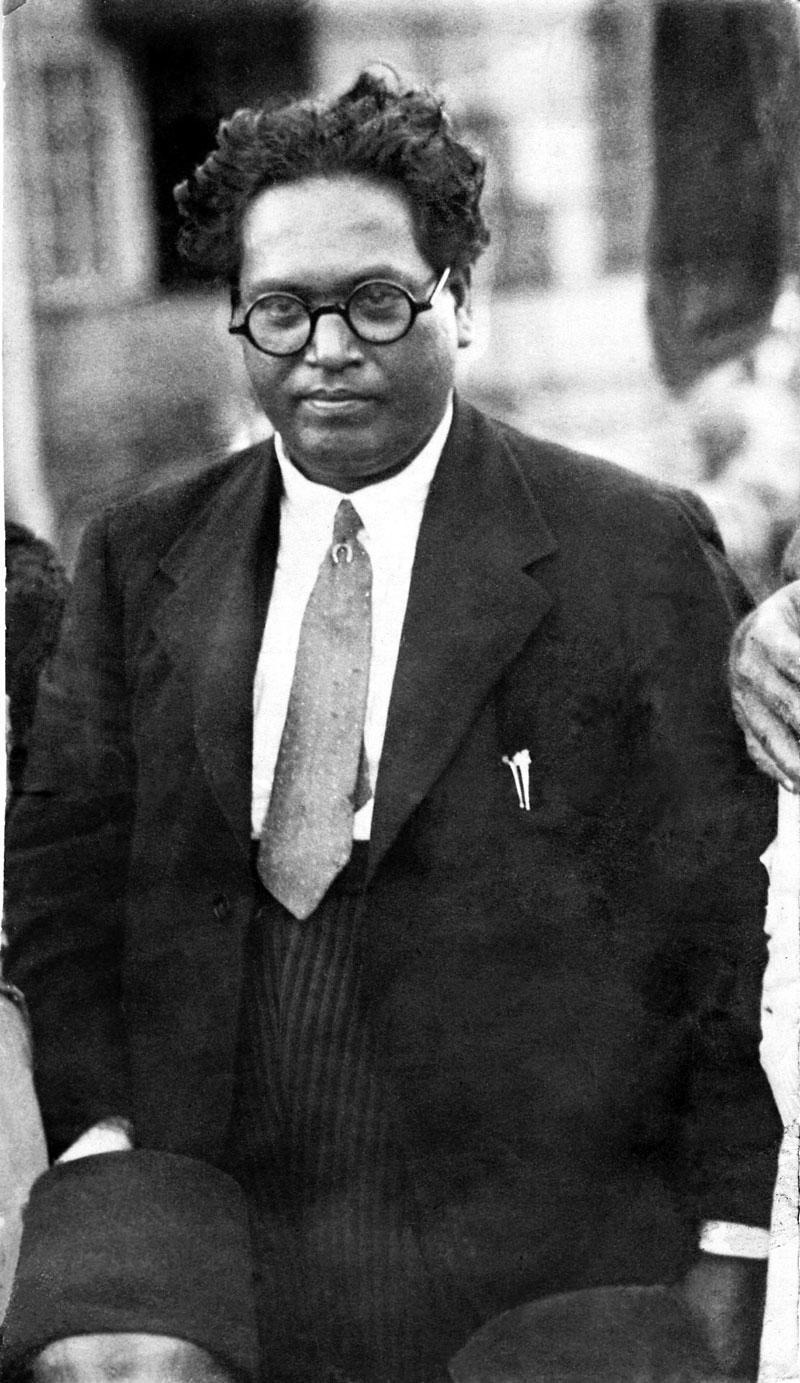
Ambedkar as a lawyer at the Bombay High Court · Photo: Unknown author · Public domain (PD-India) · Wikimedia Commons EducationCalled to the Bar by Gray's Inn (year given by Gray's Inn via the Supreme Court of India; some records say 1923)
According to Gray's Inn records cited by the Supreme Court of India, he was called to the Bar in 1922. This means he qualified as a barrister-at-law.
From the chapter London, Baroda and London Again · 1916–1923
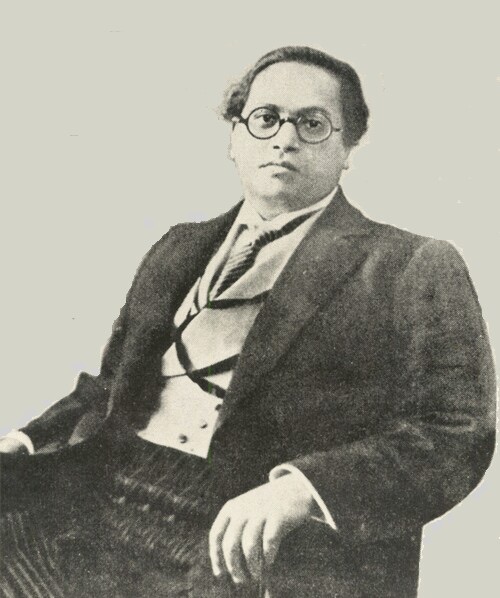
Ambedkar at Columbia University · Photo: Unknown author · Public domain (PD-India) · Wikimedia Commons EducationWrites to Seligman that the manuscript of his original thesis was lost at sea in 1917
In 1922 he wrote to Seligman that he had lost "my manuscript of the original thesis" this way. (The next chapter tells this story.)
From the chapter Columbia University · 1913–1916
With professors and friends at the London School of Economics · Photo: Unknown author · Public domain (PD-India) · Wikimedia Commons EducationSubmits 'The Problem of the Rupee' for the DSc (Econ)
In October 1922 he submitted a thesis called "The Problem of the Rupee", about India's money system. It was examined in March 1923 and "not recommended", but he was allowed to revise it.
From the chapter London, Baroda and London Again · 1916–1923
With students and professors at the LSE · Photo: Unknown author · Public domain (PD-India) · Wikimedia Commons EducationExaminers do not recommend the DSc; he is allowed to resubmit
It was examined in March 1923 and "not recommended", but he was allowed to revise it. He resubmitted it in August 1923, and the DSc was conferred in November 1923.
From the chapter London, Baroda and London Again · 1916–1923
Ambedkar as a lawyer at the Bombay High Court · Photo: Unknown author · Public domain (PD-India) · Wikimedia Commons The struggleGets his licence (sanad) and starts practising as a barrister in Bombay
He got his licence to practise law in June 1923. Many solicitors (lawyers who hand cases to barristers) would not work with him because of untouchability, so he took small cases outside the city at first.
From the chapter Awakening · 1919–1929
With Zafarullah Khan near the House of Commons, 1931 · Photo: Unknown author · Public domain (PD-India) · Wikimedia Commons EducationDSc (Econ) conferred by the University of London
He resubmitted it in August 1923, and the DSc was conferred in November 1923. LSE says he is believed to be the first Indian to receive a doctorate from the School.
From the chapter London, Baroda and London Again · 1916–1923
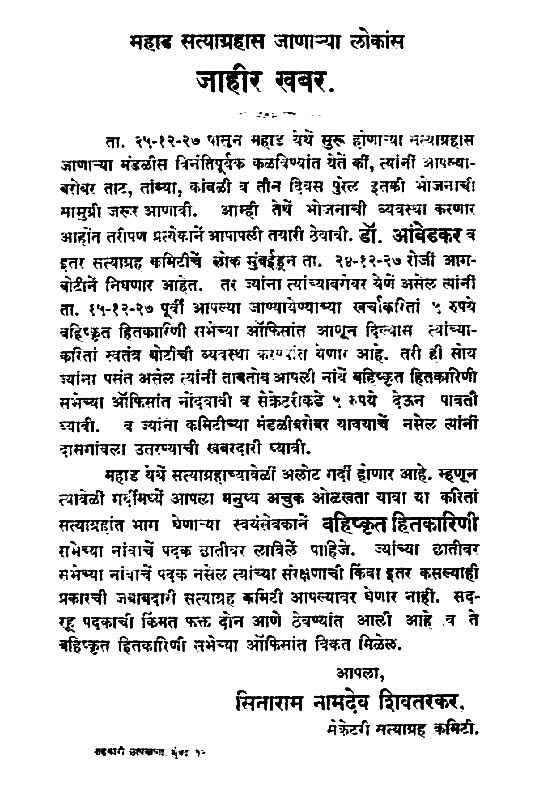
Flyer for the Mahad Satyagraha, 1927 · Photo: Unknown author · Public domain (PD-India) · Wikimedia Commons The struggleBahishkrit Hitakarini Sabha founded
On 20 July 1924 he founded the Bahishkrit Hitakarini Sabha, roughly "Society for the Welfare of the Excluded". It aimed to open hostels, libraries and study circles, improve incomes and present grievances to the government.
From the chapter Awakening · 1919–1929
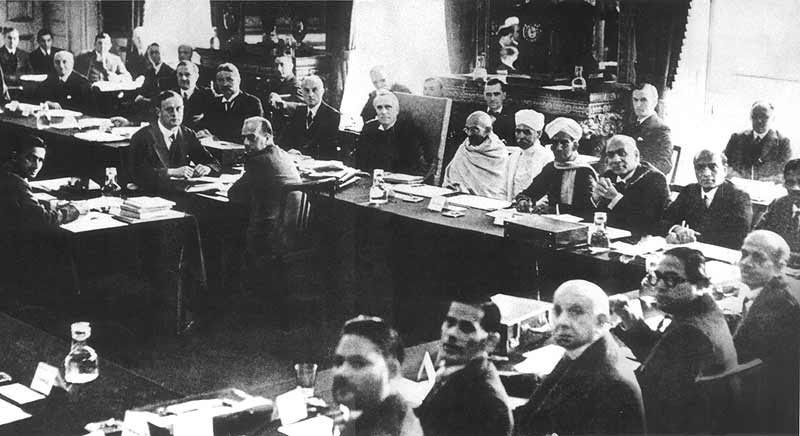
Round Table Conference at St James's Palace, 1931 · Photo: Unknown author · Public domain (PD-India) · Wikimedia Commons The strugglePhD thesis published in London as 'The Evolution of Provincial Finance in British India'
The dissertation finally appeared in London in 1925 as The Evolution of Provincial Finance in British India. It studied how money was shared between the British government of India and the provinces.
From the chapter Columbia University · 1913–1916
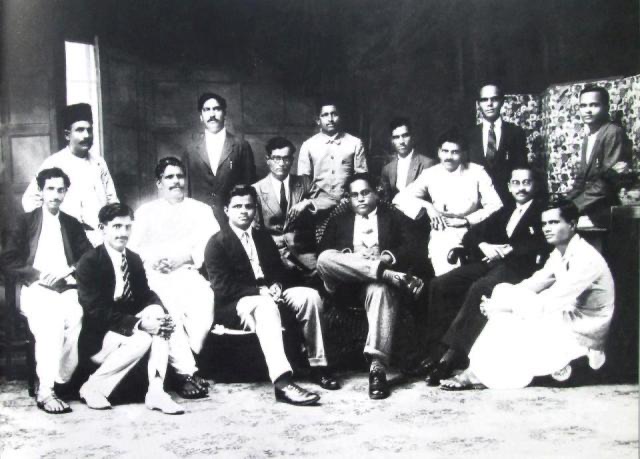
With the Samaj Samata Sangh, 1927 · Photo: Unknown author · Public domain (PD-India) · Wikimedia Commons The struggleSworn in as a nominated member of the Bombay Legislative Council
In the Bombay Legislative Council (1926–1927) The Governor of Bombay nominated him to the Bombay Legislative Council, the province's law-making body.
From the chapter Awakening · 1919–1929
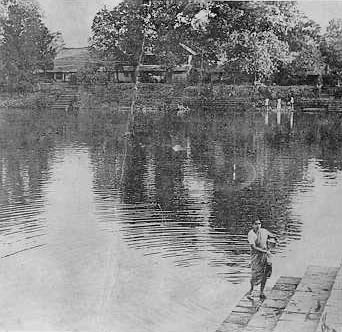
Chavdar Tale, Mahad · Photo: Unknown author · Public domain (PD-India) · Wikimedia Commons The struggleMahad: Dr. Ambedkar and the conference drink water from the Chavdar Tank
Mahad: the right to water (March 1927) In 1923 the Bombay Council resolved that untouchables could use public wells and tanks.
From the chapter Awakening · 1919–1929
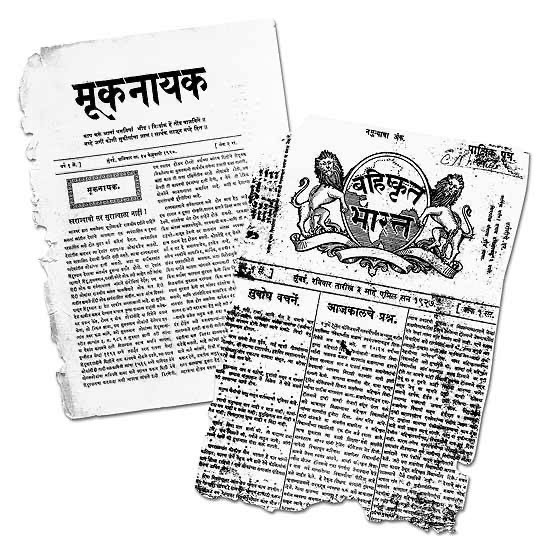
Mooknayak and Bahishkrit Bharat · Photo: Unknown author · Public domain (PD-India) · Wikimedia Commons The struggleFirst issue of the fortnightly Bahishkrit Bharat
On 3 April 1927 he started the Marathi fortnightly Bahishkrit Bharat, "Excluded India". On 26 June 1927 it called for volunteers for a new satyagraha (non-violent protest) at Mahad.
From the chapter Awakening · 1919–1929
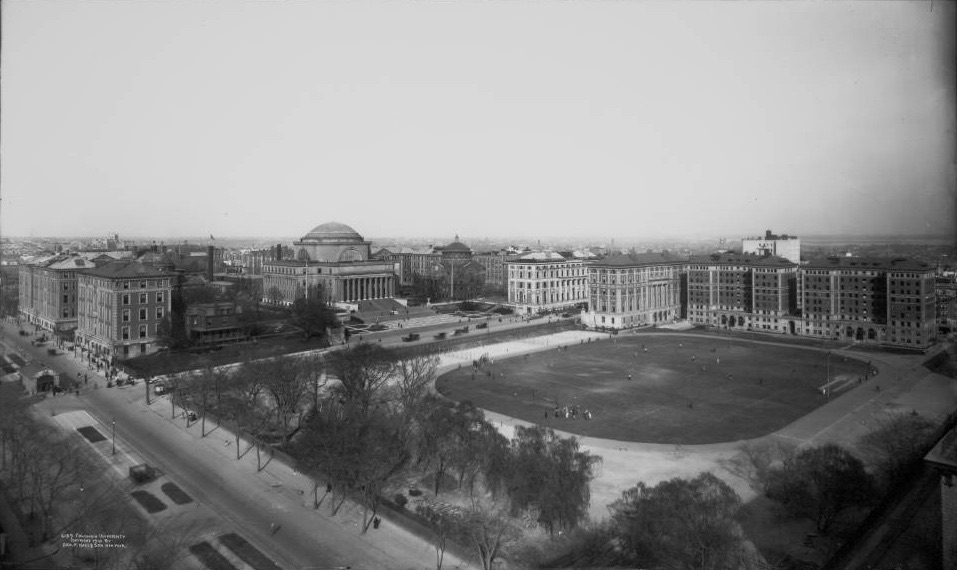
Columbia University campus, 1910 · Photo: Unknown photographer (George Eastman House collection) · Public domain (PD-US) · Wikimedia Commons The struggleColumbia formally confers the PhD (date on his official transcript)
His official transcript gives the date as 8 June 1927. The sources point to three reasons:
From the chapter Columbia University · 1913–1916
Chavdar Tale, Mahad · Photo: Unknown author · Public domain (PD-India) · Wikimedia Commons The struggleMahad court grants a temporary injunction barring Untouchables from the tank
Ambedkar, Mahad, 25 December 1927, as reported in The Indian National Herald Sahasrabuddhe, a Brahmin colleague, read out passages of the Manusmriti about Shudras.
From the chapter Awakening · 1919–1929
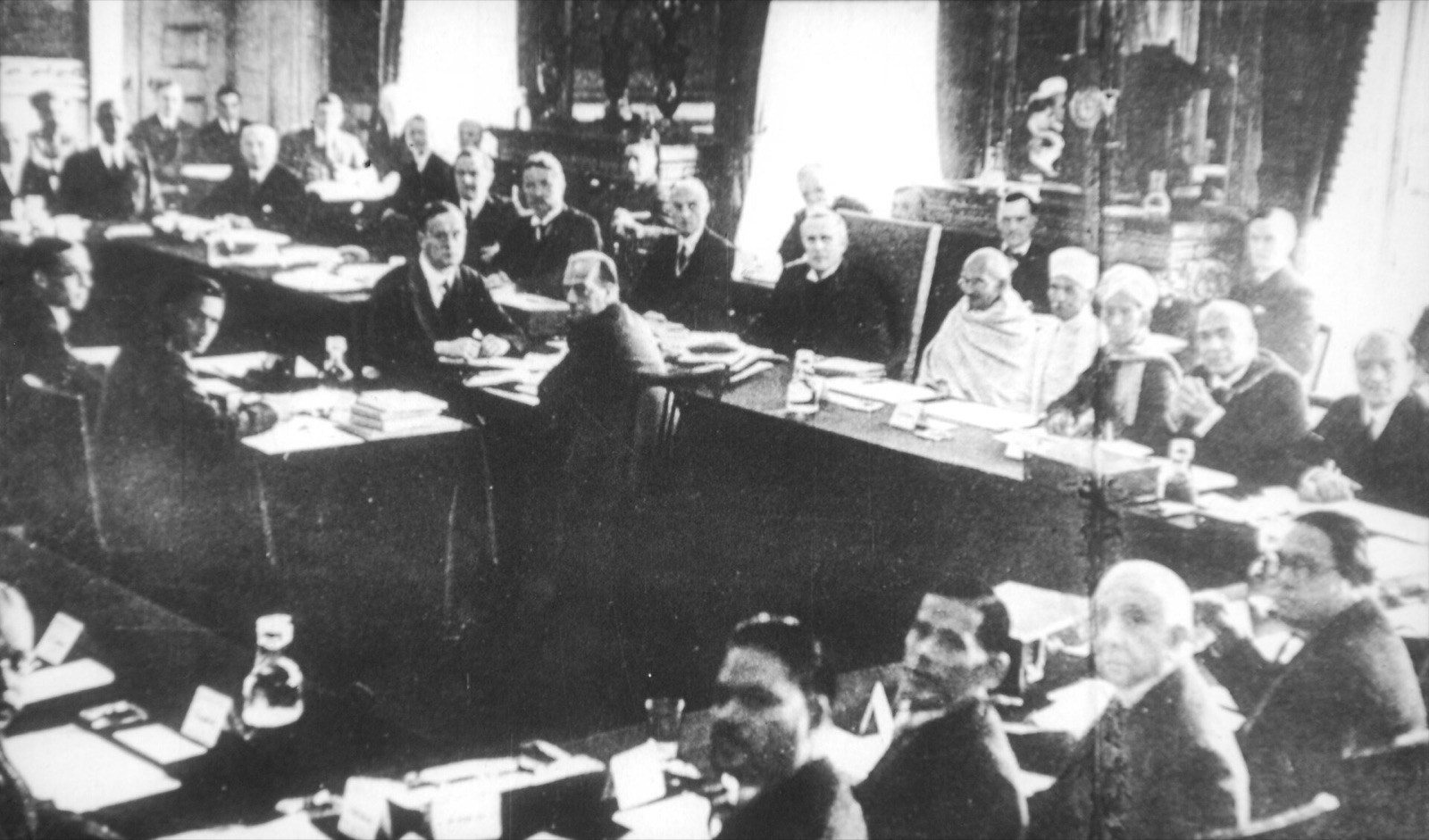
Second Round Table Conference, London, 1931 · Photo: Unknown author · Public domain (PD-1996, PD-UK-unknown) · Wikimedia Commons The struggleSecond Mahad conference; the Manusmriti is publicly burned
The second conference met anyway on 25 December 1927, with about 15,000 people. "We are resorting to this Satyagraha not because we believe that the water of this particular tank has any exceptional qualities, but to establish our natural rights as citizens and human beings."
From the chapter Awakening · 1919–1929
Chavdar Tale, Mahad · Photo: Unknown author · Public domain (PD-India) · Wikimedia Commons The struggleMahad sub-judge dissolves the injunction, calling the tank public property
On 23 February 1928 the same judge cancelled his order. He found the tank was public property and regretted "heaping one more wrong" on an injured community.
From the chapter Awakening · 1919–1929
With colleagues at the Government Law College, 1928 · Photo: Unknown author · Public domain (PD-India) · Wikimedia Commons The struggleBegins teaching at the Government Law College, Bombay
From June 1928 he also taught at the Government Law College, Bombay. Some students boycotted his class because he worked with the Simon Commission.
From the chapter Awakening · 1919–1929
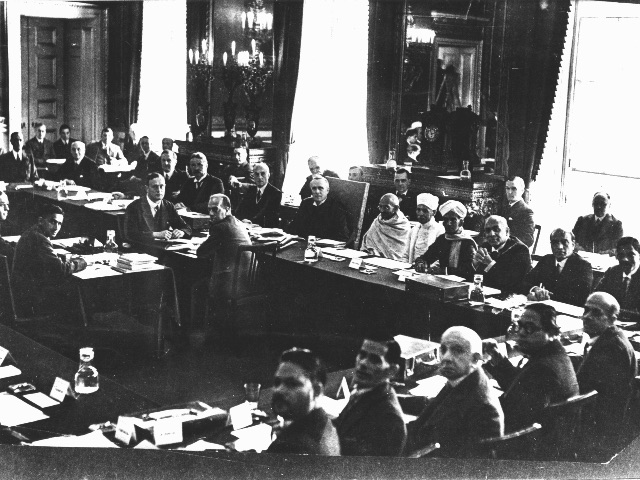
Second Round Table Conference, October 1931 · Photo: Unknown author · Public domain (PD-1996, PD-UK-unknown) · Wikimedia Commons The struggleDepressed Classes Education Society established
On 14 June 1928 he set up the Depressed Classes Education Society. In October the government agreed to fund five hostels for secondary-school students.
From the chapter Awakening · 1919–1929
With the Samaj Samata Sangh, 1927 · Photo: Unknown author · Public domain (PD-India) · Wikimedia Commons The struggleFirst issue of Samata, paper of the Samaj Samata Sangh
Its paper Samata ("Equality") ran from 29 June 1928 to March 1929, edited by Devrao Naik. The Samata Sainik Dal ("Soldiers for Equality") was a volunteer corps that taught discipline and protected meetings.
From the chapter Awakening · 1919–1929
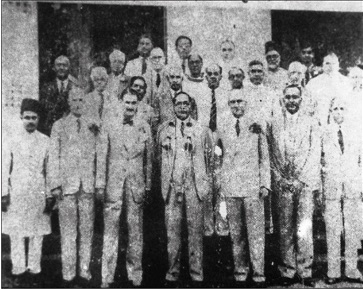
With members of the Simon Commission, 1928 · Photo: Unknown photographer (1928) · CC BY-SA 4.0 · Wikimedia Commons The struggleOral evidence before the Simon Commission at Poona
Ambedkar, evidence to the Simon Commission, 23 October 1928 Adult franchise means every adult may vote.
From the chapter Awakening · 1919–1929
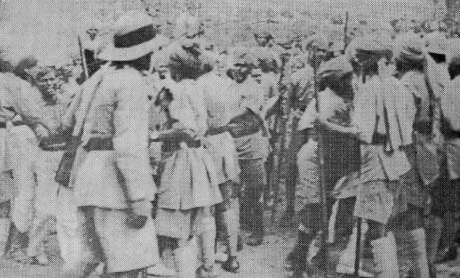
Kalaram Temple Satyagraha, Nashik, 1930 · Photo: Unknown author · Public domain (PD-India) · Wikimedia Commons The struggleSigns his separate report on the Bombay constitution for the Simon Commission
He disagreed with his colleagues and signed his own report on 17 May 1929. On 14 June 1928 he set up the Depressed Classes Education Society.
From the chapter Awakening · 1919–1929
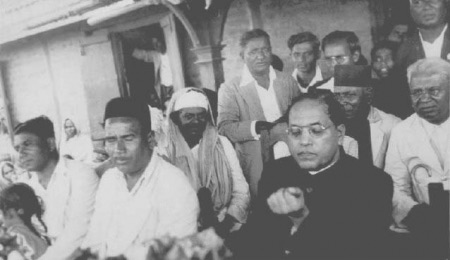
Kalaram Temple Satyagraha leaders, 1930 · Photo: Unknown author · Public domain (PD-India) · Wikimedia Commons The struggleKalaram Temple satyagraha conference at Nashik; protest at the gates begins next day
Knocking at the temple door: Kalaram, Nashik (1930) The Kalaram Temple in Nashik is a famous temple of the god Rama.
From the chapter The Round Table · 1930–1935
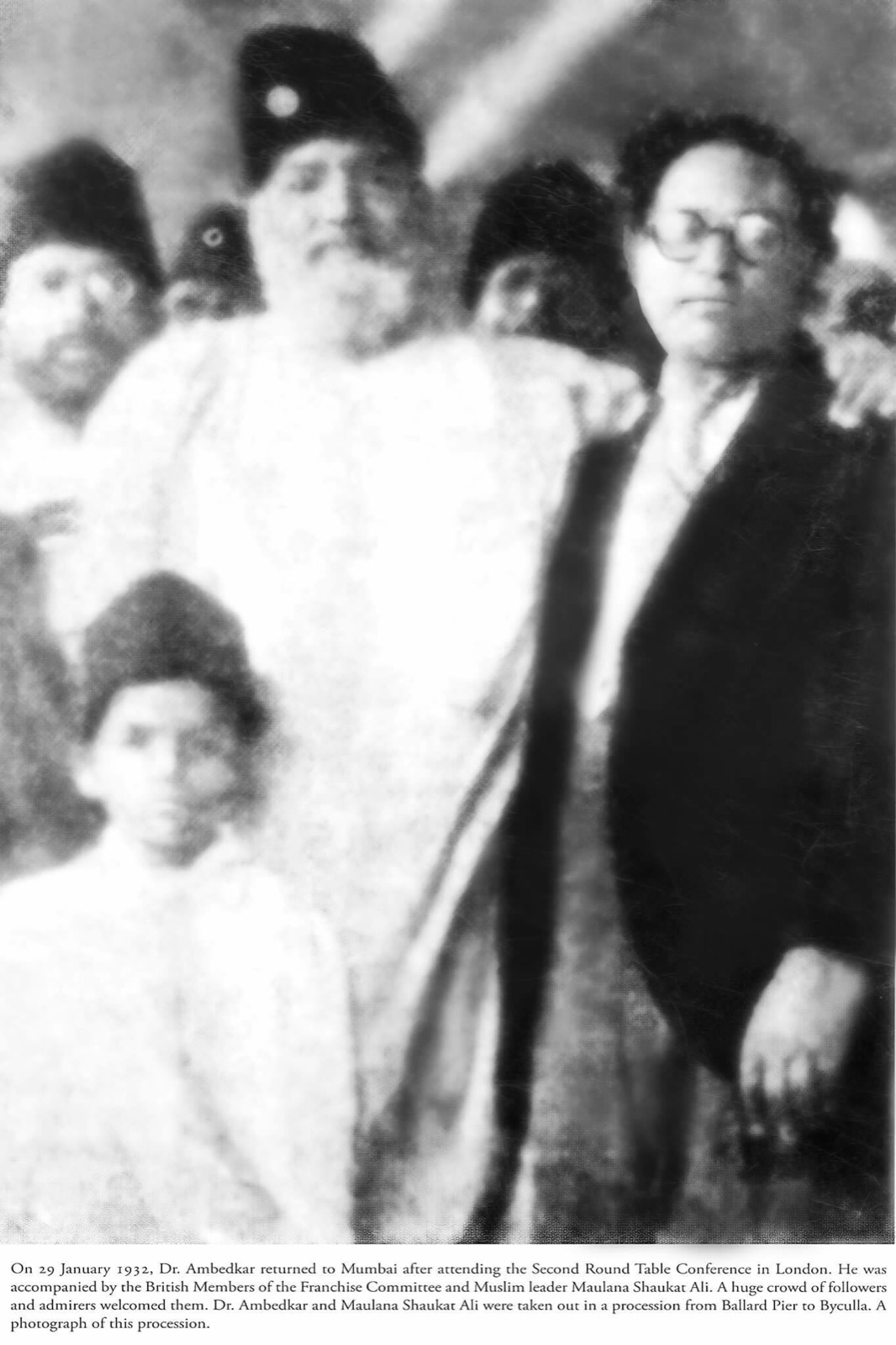
Return to Bombay, January 1932 · Photo: Unknown author · Public domain (PD-India) · Wikimedia Commons The struggleClash at the Ram Navami chariot procession in Nashik
On 9 April, at the Ram Navami chariot procession, a deal to let both sides pull the chariot broke down. He wrote to the Governor that caste-Hindu constables had joined the attack.
From the chapter The Round Table · 1930–1935
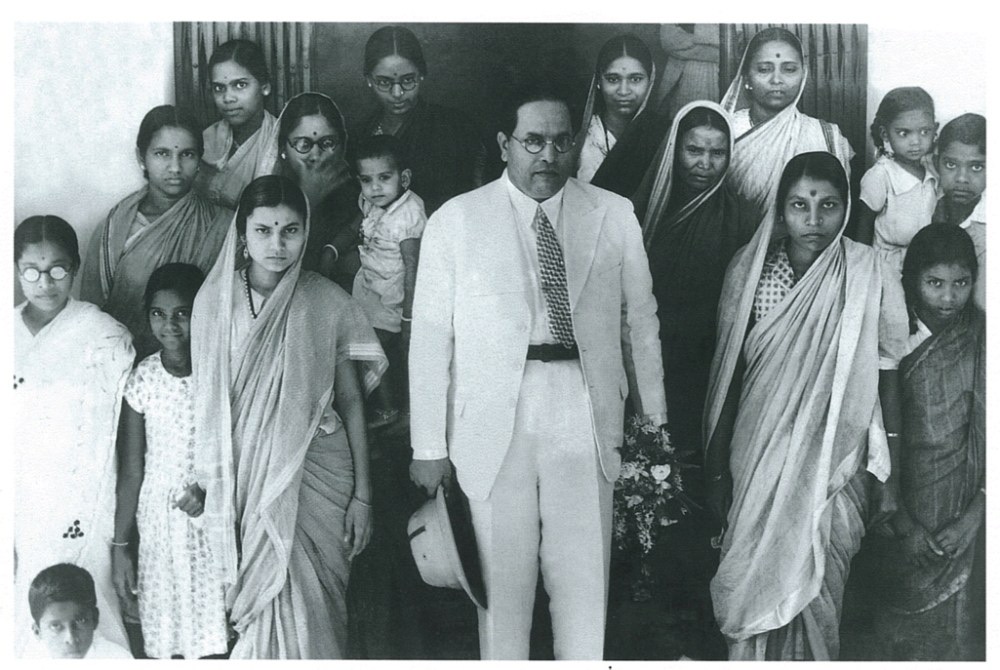
Women's conference at Nagpur, 1942 · Photo: Unknown author · Public domain (PD-India) · Wikimedia Commons The strugglePresides over the All-India Depressed Classes Congress at Nagpur (8–9 August)
On 8–9 August 1930 he presided over the All-India Depressed Classes Congress at Nagpur. He said his people should stay independent of both the British and the Congress.
From the chapter The Round Table · 1930–1935
Return to Bombay, January 1932 · Photo: Unknown author · Public domain (PD-India) · Wikimedia Commons The struggleJanata starts in Bombay while he is in London
The first opened on 12 November 1930 and ended on 19 January 1931. Gandhi and the Congress, then leading a civil disobedience campaign against British rule, did not attend it.
From the chapter The Round Table · 1930–1935
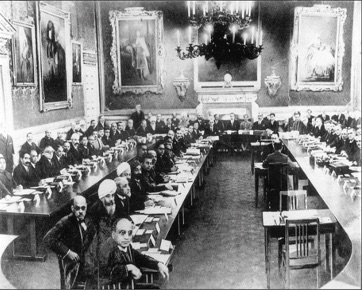
Opening of the First Round Table Conference, 1930 · Photo: Unknown author · Public domain (PD-India) · Wikimedia Commons The struggleFirst Round Table Conference opens in London
Ambedkar, Round Table Conference, 20 November 1930 With Srinivasan he set out written conditions.
From the chapter The Round Table · 1930–1935
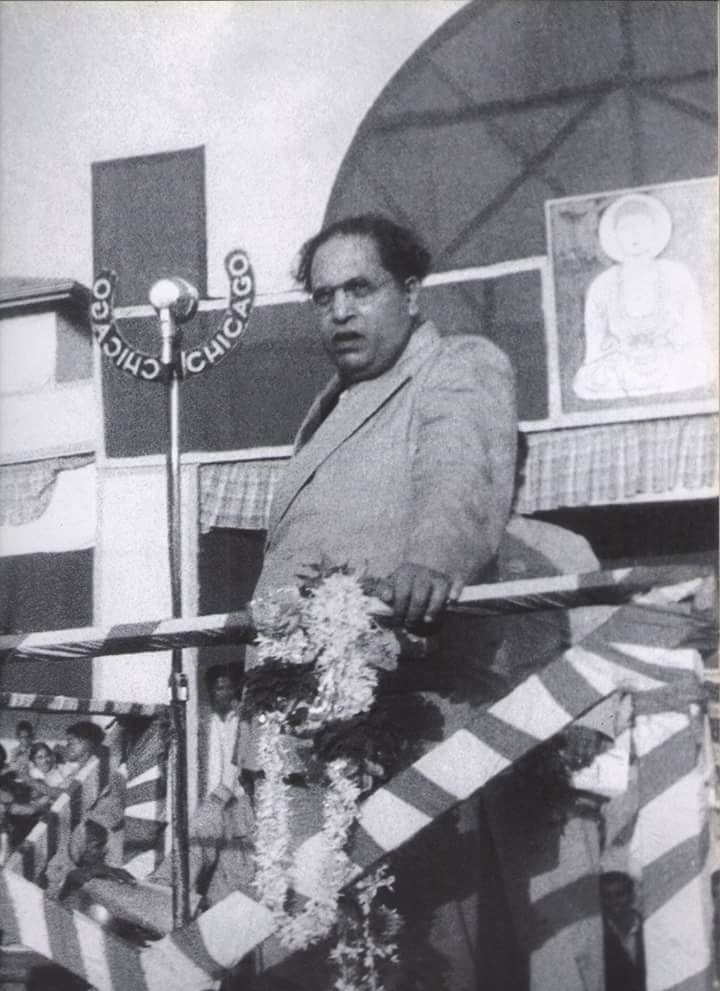
Speech at Yeola, 13 October 1935 · Photo: Unknown author · Public domain (PD-India) · Wikimedia Commons The struggleHis first speech to the full conference
On 20 November 1930 he told the conference that 150 years of British rule had not ended untouchability, and that the Depressed Classes wanted self-government, but with a share of power.
From the chapter The Round Table · 1930–1935
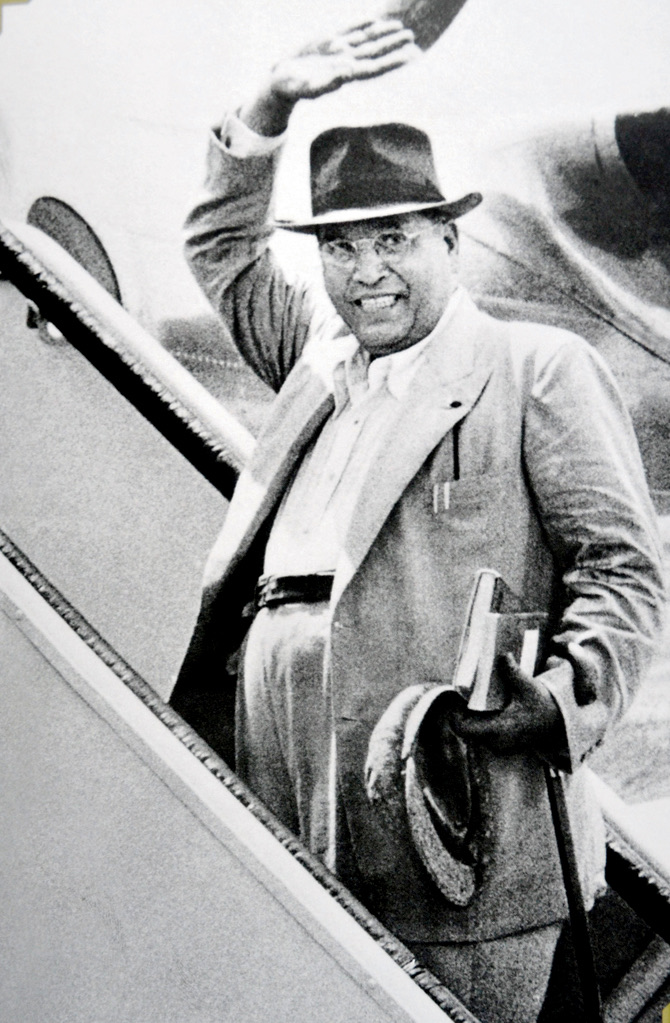
Leaving for Columbia University, 1952 · Photo: Unknown author · Public domain (PD-India) · Wikimedia Commons The struggleColumbia Alumni News prints his praise of his Columbia classmates and professors
Ambedkar, quoted in Columbia Alumni News, 19 December 1930 His first Columbia degree: an MA in 1915
From the chapter Columbia University · 1913–1916
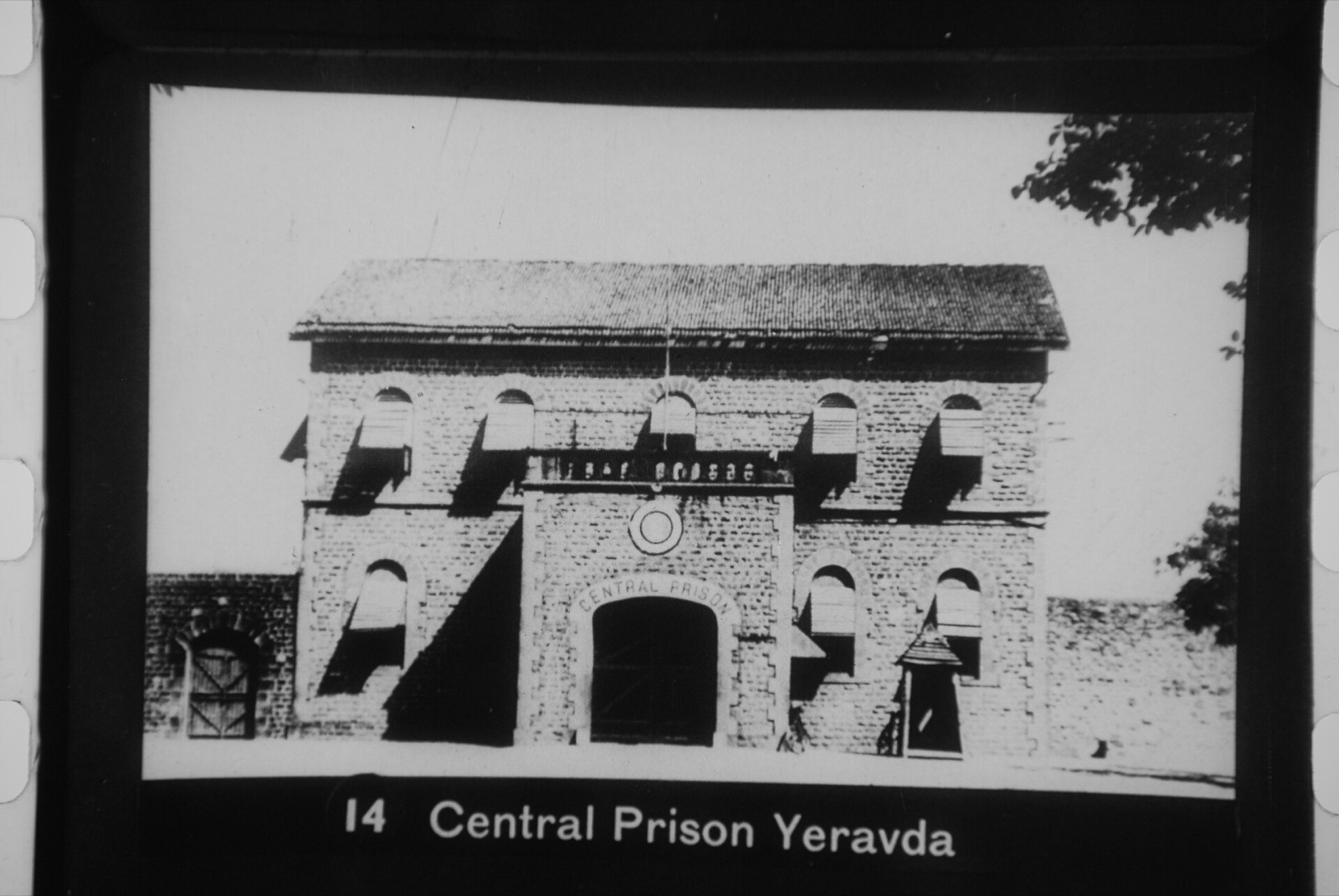
Yerwada Central Prison, Pune · Photo: Unknown author · Public domain (PD-India) · Wikimedia Commons The struggleFirst meeting with Gandhi, at Mani Bhavan, Bombay
Ambedkar first met on 14 August 1931 at Mani Bhavan in Bombay. Ambedkar spoke with passion and bitterness about how little had changed, according to Keer and Columbia's timeline.
From the chapter The Round Table · 1930–1935
Second Round Table Conference, London, 1931 · Photo: Unknown author · Public domain (PD-1996, PD-UK-unknown) · Wikimedia Commons The struggleSecond Round Table Conference opens; Gandhi attends for the Congress
The second conference ran from 7 September to 1 December 1931, and this time Gandhi came to represent the Congress. The third began on 17 November 1932, without the Congress.
From the chapter The Round Table · 1930–1935
Round Table Conference at St James's Palace, 1931 · Photo: Unknown author · Public domain (PD-India) · Wikimedia Commons The struggleGandhi tells the Minorities Committee he will resist separate representation for untouchables 'with my life'
Gandhi, Minorities Committee, 13 November 1931, quoted by Dr. In the same speech Gandhi said he would resist separate rights for untouchables "with my life".
From the chapter The Round Table · 1930–1935
Second Round Table Conference, October 1931 · Photo: Unknown author · Public domain (PD-1996, PD-UK-unknown) · Wikimedia Commons The struggleBritish 'Communal Award' announced (some sources say 16 August)
His "Communal Award" was announced on 17 August 1932. Depressed Classes voters would vote in general constituencies like other Hindus.
From the chapter The Round Table · 1930–1935
Yerwada Central Prison, Pune · Photo: Unknown author · Public domain (PD-India) · Wikimedia Commons The struggleGandhi begins his fast in Yerwada jail, Poona
Gandhi's fast and the Poona Pact (September 1932) Gandhi, then a prisoner in Yerwada jail in Poona, wrote on 18 August that he would fast unto death unless the separate electorates for the Depressed Classes were withdrawn.
From the chapter The Round Table · 1930–1935
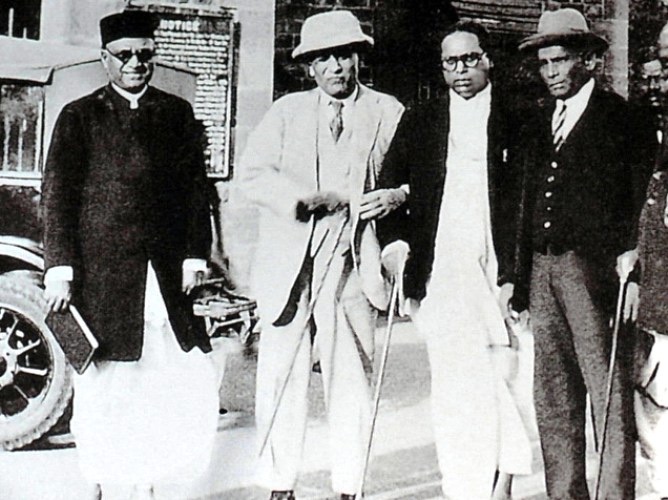
At Yerwada at the time of the Poona Pact, 1932 · Photo: Unknown author · Public domain (PD-India) · Wikimedia Commons The strugglePoona Pact signed
Gandhi's fast and the Poona Pact (September 1932) Gandhi, then a prisoner in Yerwada jail in Poona, wrote on 18 August that he would fast unto death unless the separate electorates for the Depressed Classes were withdrawn.
From the chapter The Round Table · 1930–1935
Return to Bombay, January 1932 · Photo: Unknown author · Public domain (PD-India) · Wikimedia Commons The struggleThird Round Table Conference opens
The third began on 17 November 1932, without the Congress. Ambedkar first met on 14 August 1931 at Mani Bhavan in Bombay.
From the chapter The Round Table · 1930–1935
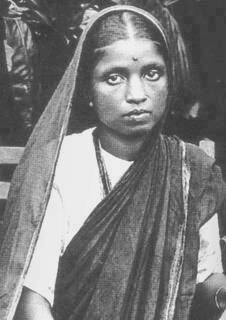
Ramabai Ambedkar · Photo: Unknown author · Public domain (PD-India) · Wikimedia Commons The struggleDeath of Ramabai Ambedkar
His wife Ramabai died on 27 May 1935 after a long illness. She had wished to visit the temple at Pandharpur, which would not have admitted her.
From the chapter The Round Table · 1930–1935
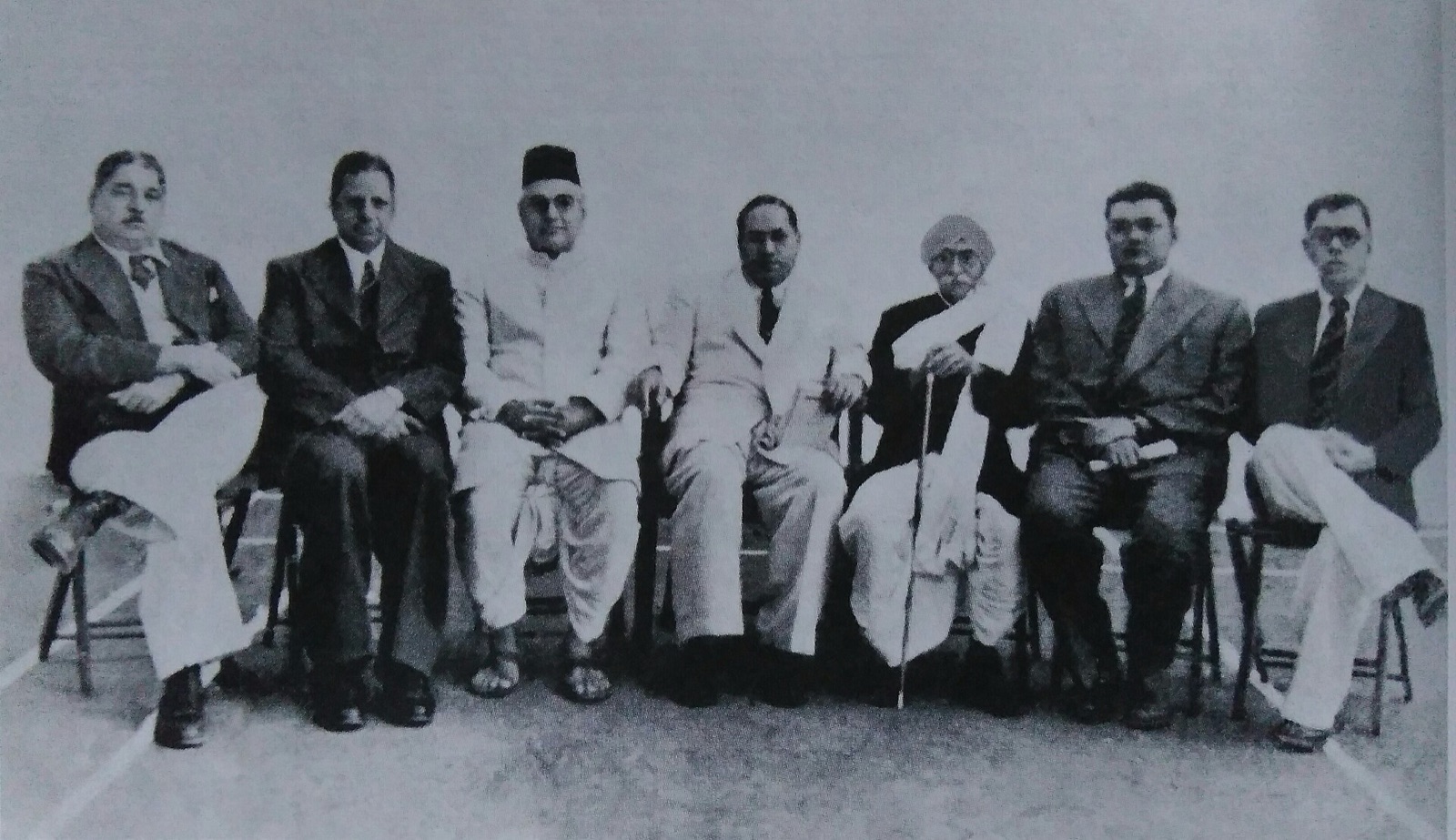
With the People's Education Society, 1945 · Photo: Unknown author · Public domain (PD-India) · Wikimedia Commons The struggleAppointed Principal of the Government Law College, Bombay
The Bombay government made him its Principal from 1 June 1935. A January 1936 article signed "Principal, Government Law College, Bombay" shows his ideas for better legal education.
From the chapter The Round Table · 1930–1935
Speech at Yeola, 13 October 1935 · Photo: Unknown author · Public domain (PD-India) · Wikimedia Commons The struggleYeola conference: 'I will not die a Hindu'
"I will not die a Hindu": Yeola (1935) On 13 October 1935 about 10,000 people met at Yeola, in Nashik district.
From the chapter The Round Table · 1930–1935
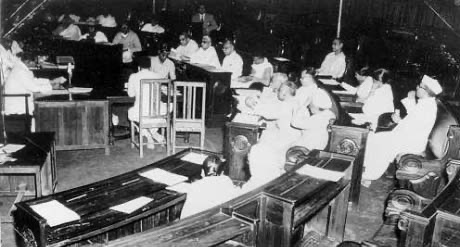
Conference on the Hindu Code Bill, 1950 · Photo: Unknown author · Public domain (PD-India) · Wikimedia Commons The struggleYeola conference: Dr. Ambedkar declares he will not die a Hindu
At a conference of the "Depressed Classes" (the official name then for communities treated as "untouchable") at Yeola, near Nashik, on 13 October 1935, he spoke for about an hour and a half to around 10,000 people.
From the chapter The Road to Buddhism · 1935–1956
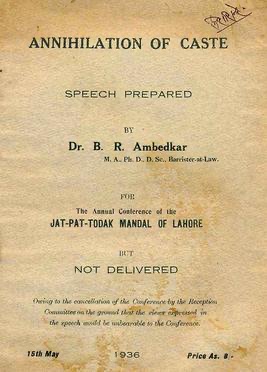
Annihilation of Caste, first edition · Photo: B. R. Ambedkar · Public domain (PD-ineligible) · Wikimedia Commons The strugglePublishes Annihilation of Caste after the Lahore conference is cancelled
He refused, the conference was cancelled, and on 15 May 1936 he published the speech himself as Annihilation of Caste. Put simply, the speech makes three arguments.
From the chapter Party, Parliament and the Labour Ministry · 1936–1946
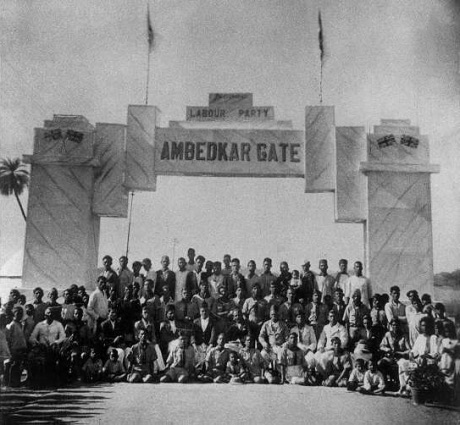
"Ambedkar Gate" at an Independent Labour Party gathering · Photo: Unknown author · Public domain (PD-India) · Wikimedia Commons The struggleFounds the Independent Labour Party
In August 1936 he founded the Independent Labour Party (ILP) to fight the first elections under the Government of India Act, 1935. He told The Times of India that he chose the word "labour" because labour included the Depressed Classes and others too.
From the chapter Party, Parliament and the Labour Ministry · 1936–1946
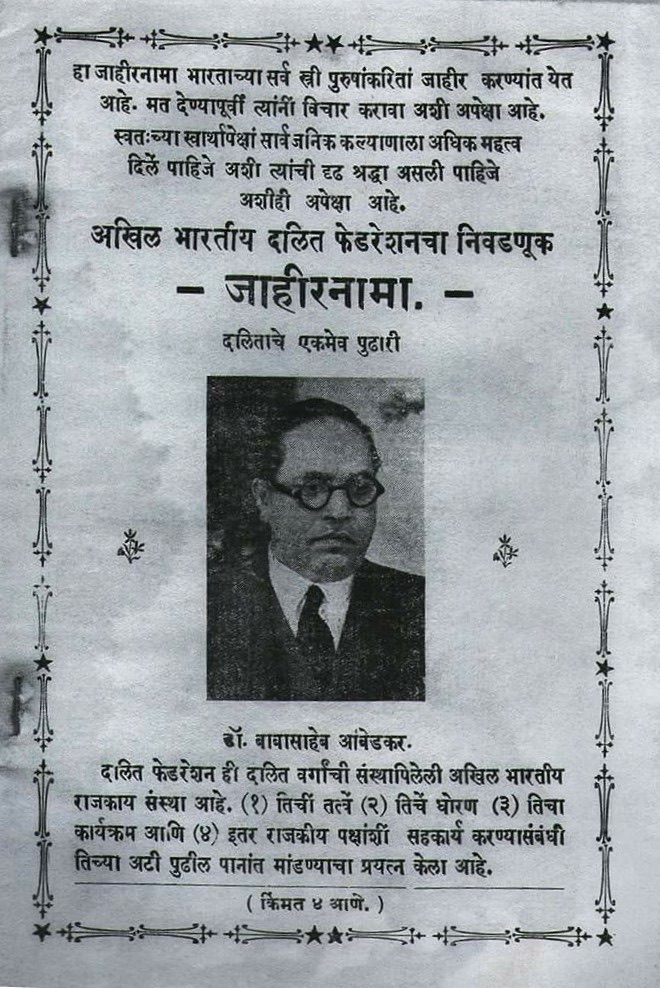
Scheduled Castes Federation election manifesto, 1946 · Photo: Unknown author · Public domain (PD-India) · Wikimedia Commons The struggleIndependent Labour Party wins 15 of the 17 seats it contests in the Bombay elections
In the 1937 Bombay elections the ILP contested 17 seats and won 15. Ambedkar's own count, that was 13 of the 15 seats reserved for Scheduled Castes in the province, plus 2 general seats.
From the chapter Party, Parliament and the Labour Ministry · 1936–1946
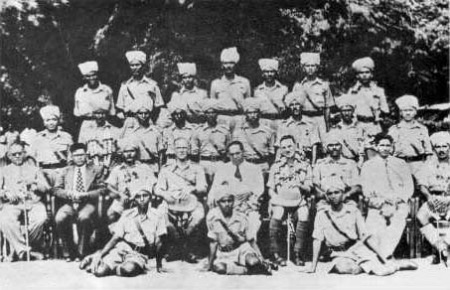
With soldiers of the Mahar Regiment · Photo: Unknown author · Public domain (PD-India) · Wikimedia Commons The struggleIntroduces bills to abolish the Khoti system and to reform the Mahar watan
On 17 September 1937 he introduced two bills in the Bombay Legislative Assembly. The first would abolish the Khoti system.
From the chapter Party, Parliament and the Labour Ministry · 1936–1946
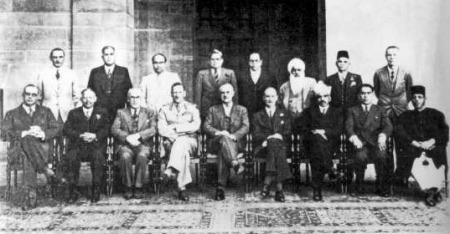
The Governor-General's Executive Council, 1944 · Photo: Unknown author · Public domain (PD-India) · Wikimedia Commons The struggleLeads a peasants' march to the Council Hall in Bombay
On 10 January 1938 he led peasants from Thana, Kolaba, Ratnagiri, Satara and Nasik to the Council Hall in Bombay, carrying posters reading "Down with the Khoti System". In December 1939 he told a conference of Mahar watandars at Haregaon that the watan was "a system of heartless exploitation".
From the chapter Party, Parliament and the Labour Ministry · 1936–1946
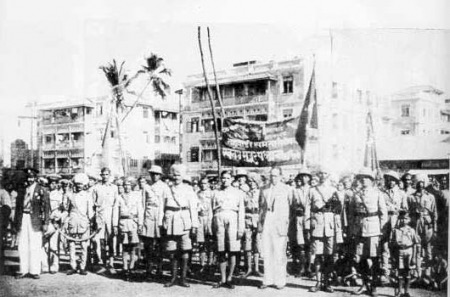
With the Samata Sainik Dal, 1938 · Photo: Unknown author · Public domain (PD-India) · Wikimedia Commons The struggleSpeaks against the Industrial Disputes Bill in the Bombay Assembly
In 1938 the Congress government of Bombay brought the Industrial Disputes Bill, which allowed jail terms for illegal strikes. Ambedkar argued that punishing a strike meant forcing people to work against their will:
From the chapter Party, Parliament and the Labour Ministry · 1936–1946
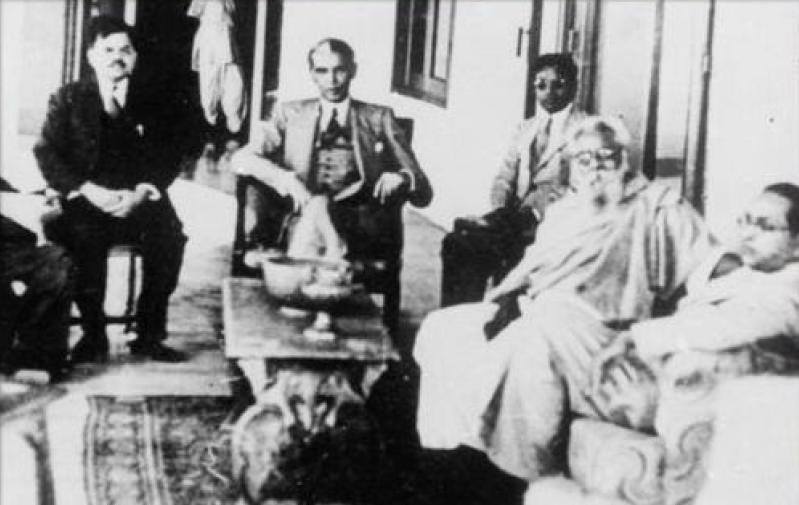
Jinnah, Periyar and Ambedkar, 1940 · Photo: Unknown author · Public domain (PD-India) · Wikimedia Commons The struggleOne-day protest strike in Bombay against the Bill
On 7 November 1938 a one-day protest strike was held in Bombay. Ambedkar condemned police firing and lathi charges on the strikers and demanded a public inquiry.
From the chapter Party, Parliament and the Labour Ministry · 1936–1946
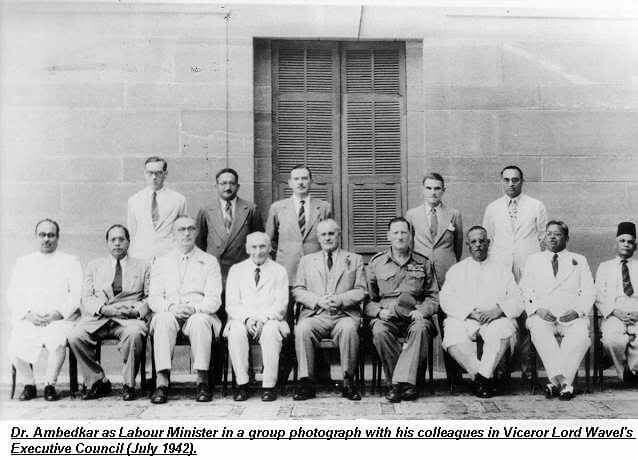
As Labour Member, 1942 · Photo: Unknown author · Public domain (PD-India) · Wikimedia Commons The struggleThoughts on Pakistan is published
His report became Thoughts on Pakistan (December 1940), enlarged in 1945 as Pakistan or the Partition of India. The book lays out the Muslim case for Pakistan, the Hindu case against it, and the alternatives.
From the chapter Party, Parliament and the Labour Ministry · 1936–1946
Scheduled Castes Federation election manifesto, 1946 · Photo: Unknown author · Public domain (PD-India) · Wikimedia Commons The struggleResolution at Nagpur founds the All India Scheduled Castes Federation
At a conference in Nagpur in July 1942, a resolution passed on 19 July founded the All India Scheduled Castes Federation (SCF). Its constitution, as revised in 1955, lists its first aim as "to organise the Scheduled Castes of India".
From the chapter Party, Parliament and the Labour Ministry · 1936–1946
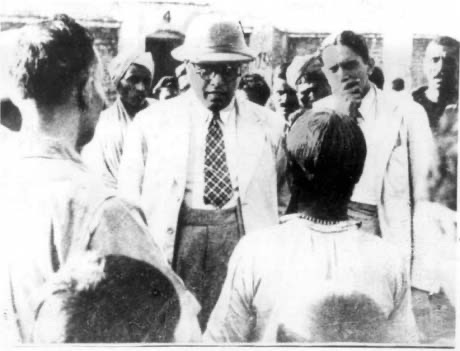
Visiting coal mines at Dhanbad · Photo: Unknown author · Public domain (PD-India) · Wikimedia Commons The struggleJoins the Viceroy's Executive Council as Labour Member
Labour Member in the Viceroy's Council (1942–1946) Ambedkar joined the Viceroy's Executive Council, the British government's cabinet in India, as Labour Member.
From the chapter Party, Parliament and the Labour Ministry · 1936–1946
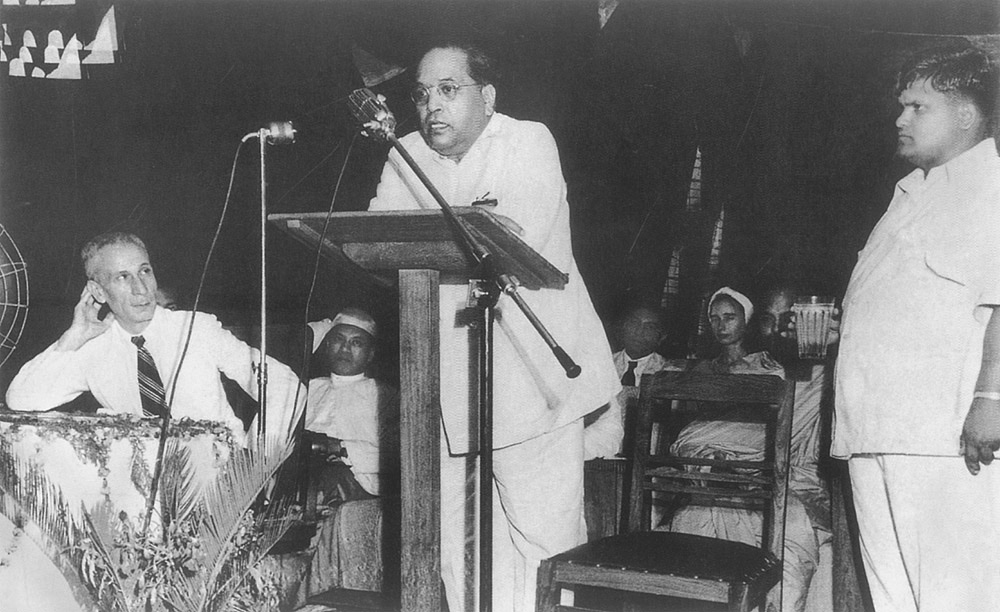
Buddha Jayanti conference at Ambedkar Bhawan, Delhi · Photo: Unknown author · Public domain (PD-India) · Wikimedia Commons The struggleFirst Tripartite Labour Conference meets in Delhi
On 7 August 1942 the government brought provincial governments, employers and workers together in a Tripartite Labour Conference. It became a permanent forum: the Indian Labour Conference and the Standing Labour Committee.
From the chapter Party, Parliament and the Labour Ministry · 1936–1946
Scheduled Castes Federation election manifesto, 1946 · Photo: Unknown author · Public domain (PD-India) · Wikimedia Commons The struggle8⅓ per cent of direct recruitment to central services reserved for Scheduled Castes
Reserved posts for Scheduled Castes in central government recruitment rose from 8⅓ per cent (1943) to 12½ per cent (1946). The Central Water Commission says it began in 1945 as the Central Waterways, Irrigation and Navigation Commission, set up on Dr.
From the chapter Party, Parliament and the Labour Ministry · 1936–1946
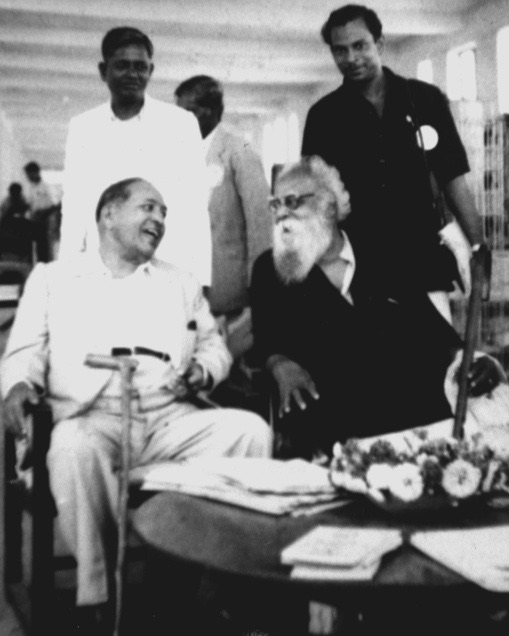
With Periyar in Rangoon, 1954 · Photo: Unknown author · Public domain (PD-India) · Wikimedia Commons The struggleChairs the first Calcutta conference on developing the Damodar Valley
In November 1945 the Indian Labour Conference backed a 48-hour week. On 21 February 1946 he moved a bill cutting the legal week in year-round factories from 54 to 48 hours.
From the chapter Party, Parliament and the Labour Ministry · 1936–1946
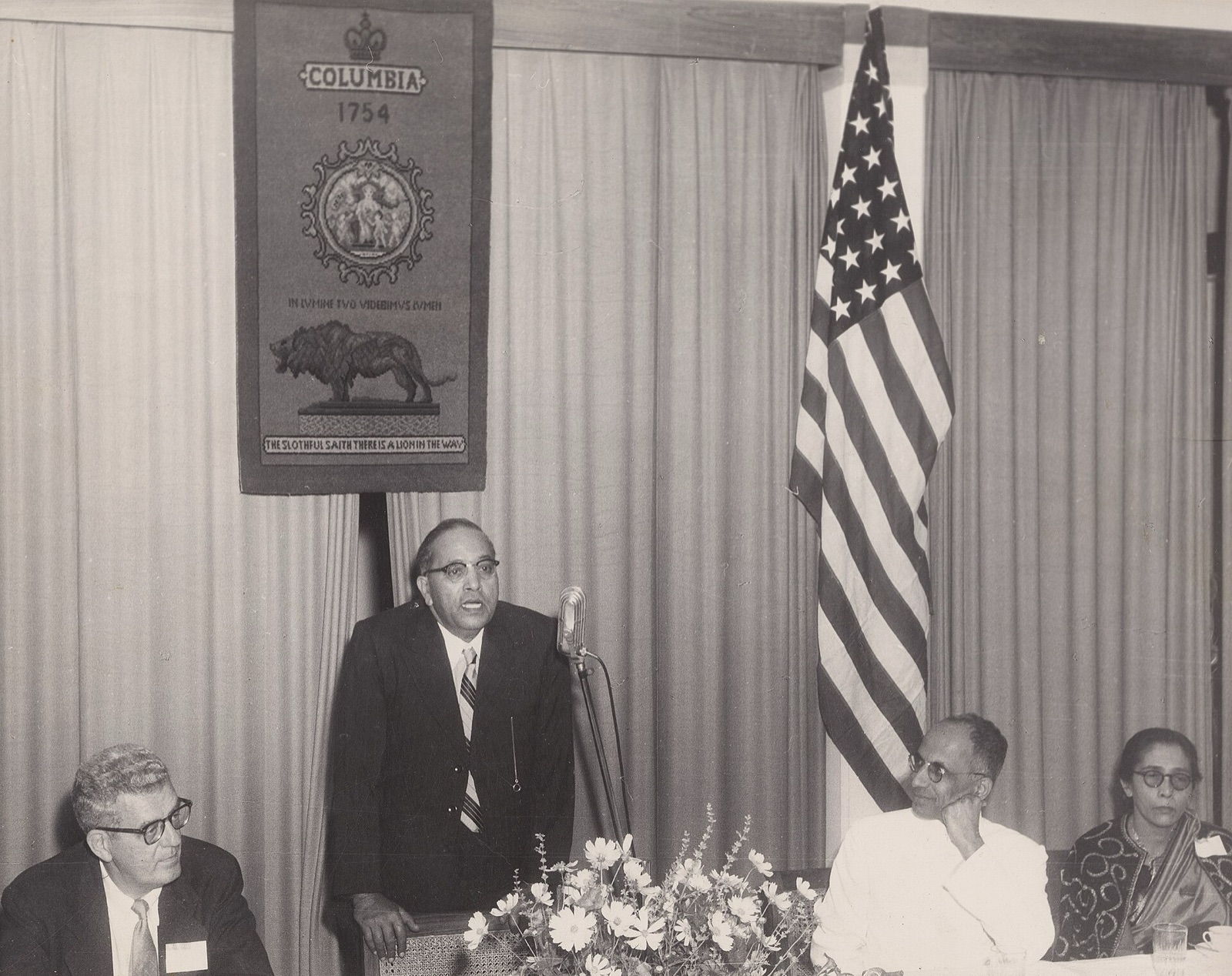
Addressing a seminar in New Delhi, 1954 · Photo: Unknown author · Public domain (PD-India) · Wikimedia Commons The strugglePakistan or the Partition of India (enlarged second edition) is published
His report became Thoughts on Pakistan (December 1940), enlarged in 1945 as Pakistan or the Partition of India. The book lays out the Muslim case for Pakistan, the Hindu case against it, and the alternatives.
From the chapter Party, Parliament and the Labour Ministry · 1936–1946
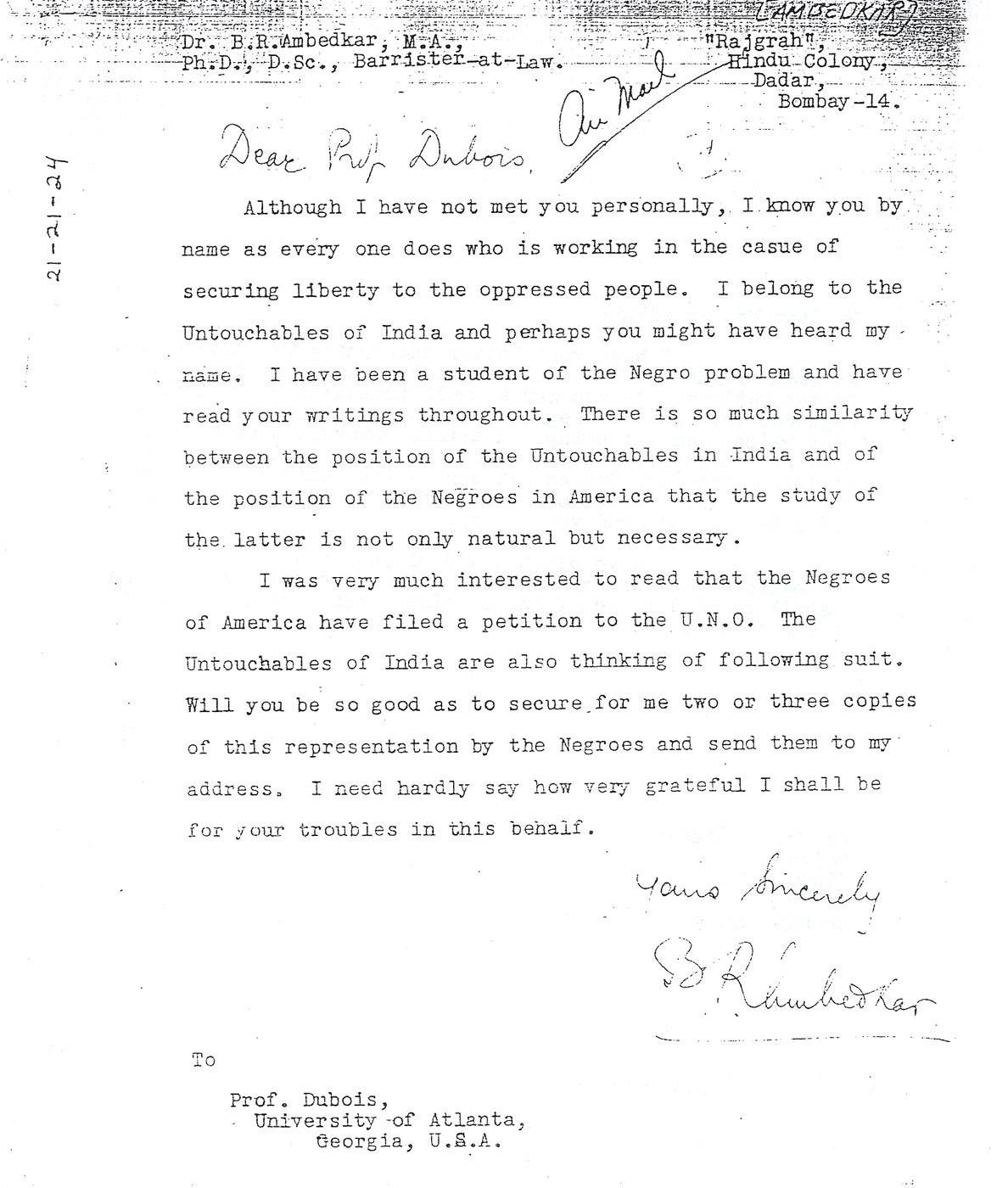
Letter from Ambedkar to W. E. B. Du Bois · Photo: Unknown author · Public domain (PD-India) · Wikimedia Commons The struggleWhat Congress and Gandhi Have Done to the Untouchables is published
What Congress and Gandhi Have Done to the Untouchables (June 1945) began as a study of the 1937 election results. It grew into a sharp critique of how Congress and Gandhi had handled the Untouchables' demands.
From the chapter Party, Parliament and the Labour Ministry · 1936–1946
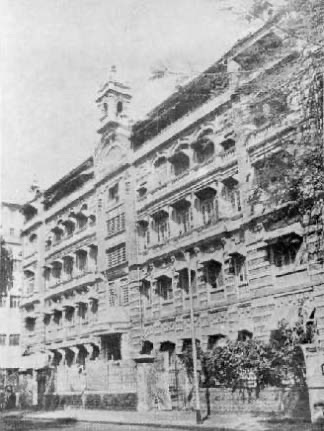
Siddharth College building, 1946 · Photo: Unknown author · Public domain (PD-India) · Wikimedia Commons The strugglePeople's Education Society is established
The People's Education Society was established on 8 July 1945. Its first college, Siddharth College, opened on 20 June 1946.
From the chapter Party, Parliament and the Labour Ministry · 1936–1946
Women's conference at Nagpur, 1942 · Photo: Unknown author · Public domain (PD-India) · Wikimedia Commons The struggleChairs the Cuttack conference on harnessing Orissa's rivers
In November 1945 the Indian Labour Conference backed a 48-hour week. On 21 February 1946 he moved a bill cutting the legal week in year-round factories from 54 to 48 hours.
From the chapter Party, Parliament and the Labour Ministry · 1936–1946
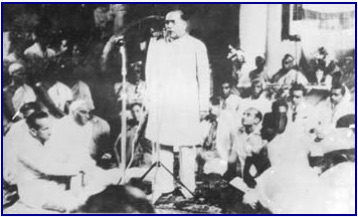
World Buddhist Conference, Rangoon, 1954 · Photo: Unknown author · Public domain (PD-India) · Wikimedia Commons The struggleIndian Labour Conference backs a 48-hour week in factories
In November 1945 the Indian Labour Conference backed a 48-hour week. On 21 February 1946 he moved a bill cutting the legal week in year-round factories from 54 to 48 hours.
From the chapter Party, Parliament and the Labour Ministry · 1936–1946
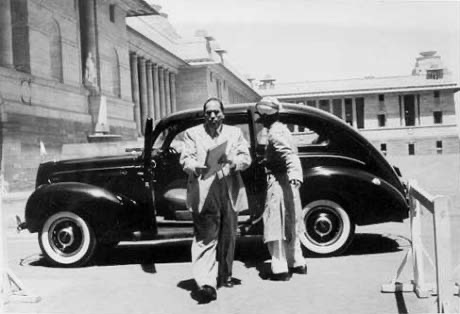
Going to meet the Cabinet Mission, 1946 · Photo: Unknown author · Public domain (PD-India) · Wikimedia Commons The struggleMoves the Factories (Amendment) Bill to cut the week from 54 to 48 hours
On 21 February 1946 he moved a bill cutting the legal week in year-round factories from 54 to 48 hours. He amended the Mines Maternity Benefit Act in 1943 and 1945.
From the chapter Party, Parliament and the Labour Ministry · 1936–1946
Scheduled Castes Federation election manifesto, 1946 · Photo: Unknown author · Public domain (PD-India) · Wikimedia Commons The struggleReservation for Scheduled Castes in central services raised to 12½ per cent
Reserved posts for Scheduled Castes in central government recruitment rose from 8⅓ per cent (1943) to 12½ per cent (1946). The Central Water Commission says it began in 1945 as the Central Waterways, Irrigation and Navigation Commission, set up on Dr.
From the chapter Party, Parliament and the Labour Ministry · 1936–1946
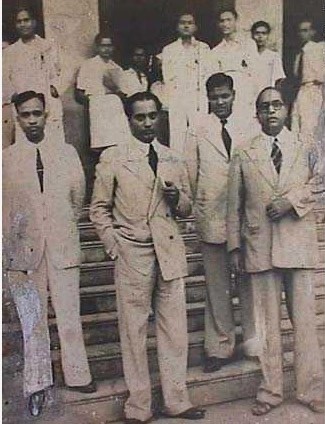
With Homi Bhabha at Siddharth College · Photo: Unknown author · Public domain (PD-India) · Wikimedia Commons The struggleSiddharth College opens in Bombay
Its first college, Siddharth College, opened on 20 June 1946.
From the chapter Party, Parliament and the Labour Ministry · 1936–1946
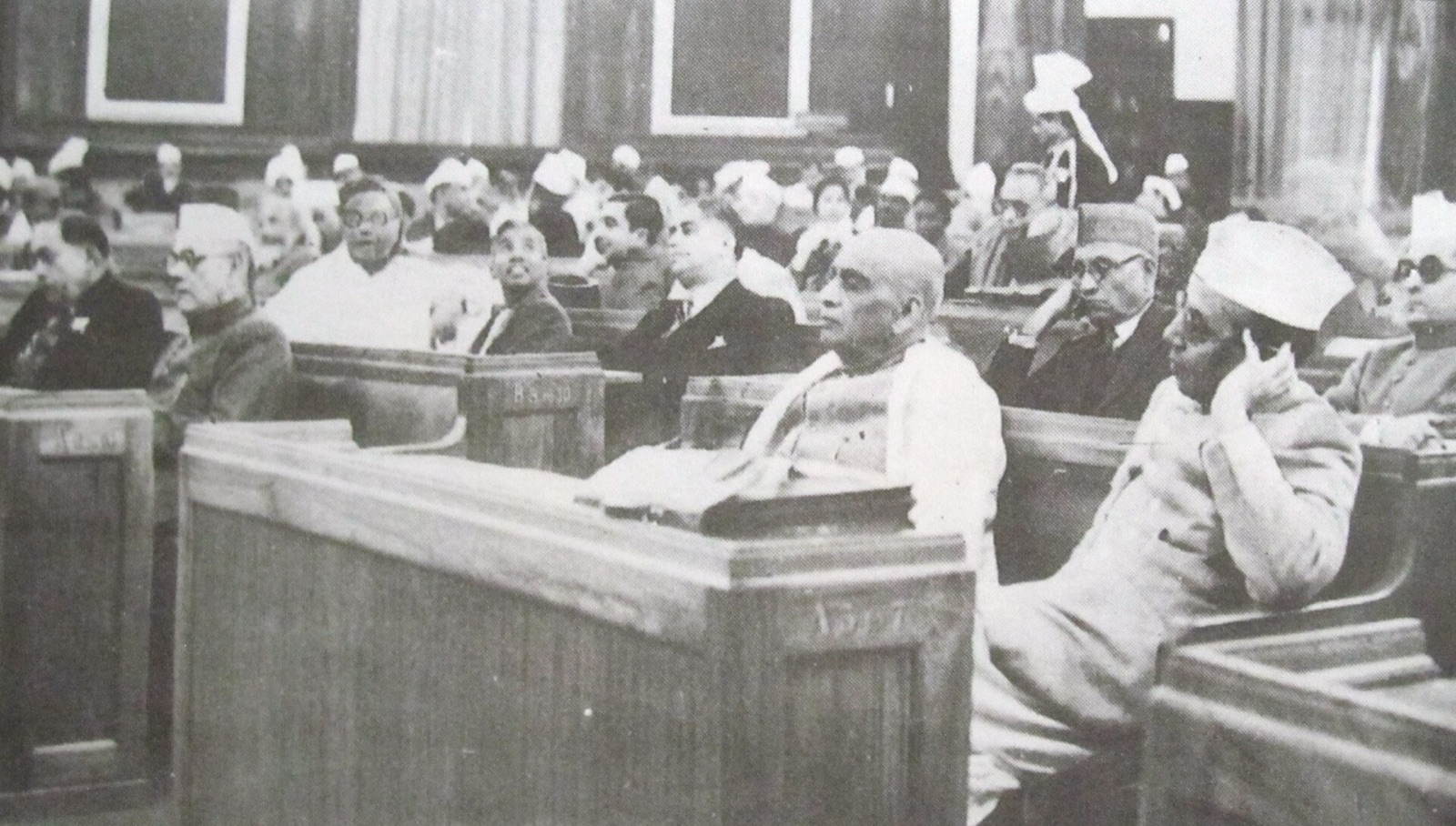
First day of the Constituent Assembly, 1946 · Photo: Unknown author · Public domain (PD-India) · Wikimedia Commons The struggleElected to the Constituent Assembly by the Bengal legislature
Members of the new Constituent Assembly were chosen by the provincial assemblies in July 1946. Unable to win enough support in Bombay, Dr.
From the chapter Party, Parliament and the Labour Ministry · 1936–1946
The Governor-General's Executive Council, 1944 · Photo: Unknown author · Public domain (PD-India) · Wikimedia Commons The struggleViceroy accepts the resignations of the Executive Council; his term as Labour Member ends
His term ended when the Viceroy accepted the Council's resignations on 24 August 1946. What Congress and Gandhi Have Done to the Untouchables (June 1945) began as a study of the 1937 election results.
From the chapter Party, Parliament and the Labour Ministry · 1936–1946
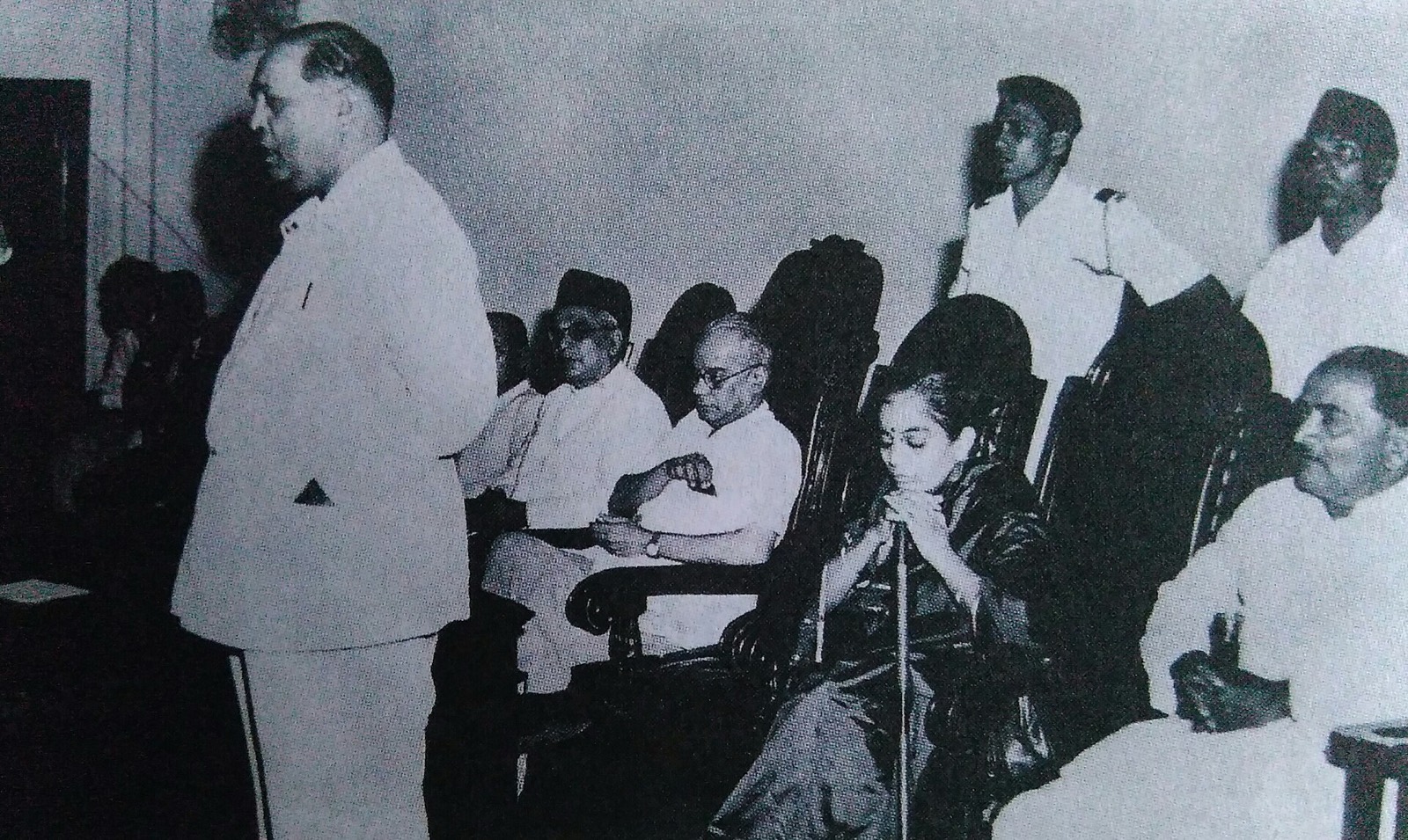
Speech at Cowasji Jehangir Hall, 1951 · Photo: Unknown author · Public domain (PD-India) · Wikimedia Commons The struggleSigns the preface of Who Were the Shudras?
(preface dated 10 October 1946) is dedicated to Jotiba Phule. It argues that the Shudras were once part of the Kshatriya (warrior) group and were pushed down after Brahmins refused them the sacred-thread ceremony.
From the chapter Party, Parliament and the Labour Ministry · 1936–1946
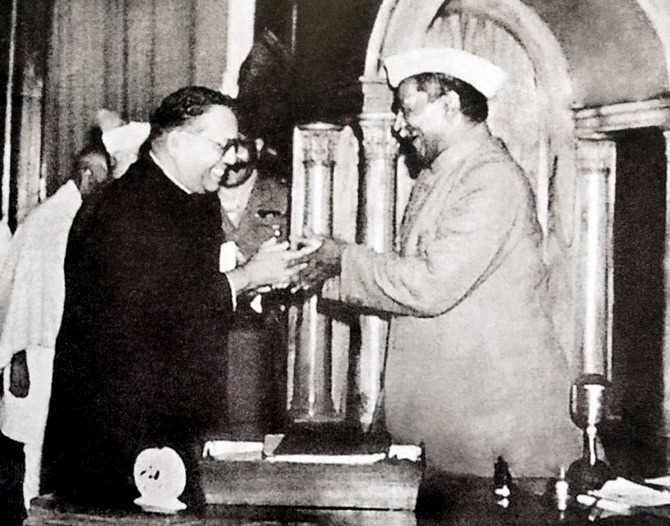
Presenting the final draft of the Constitution, 1949 · Photo: Unknown author · Public domain (PD-India) · Wikimedia Commons Constitution and Law MinisterConstituent Assembly meets for the first time; Dr. Ambedkar signs the register as a member from Bengal
The Constituent Assembly met for the first time on 9 December 1946, in the Constitution Hall in New Delhi. Its members had been elected by the provincial assemblies, not directly by the people.
From the chapter Making the Constitution · 1946–1950
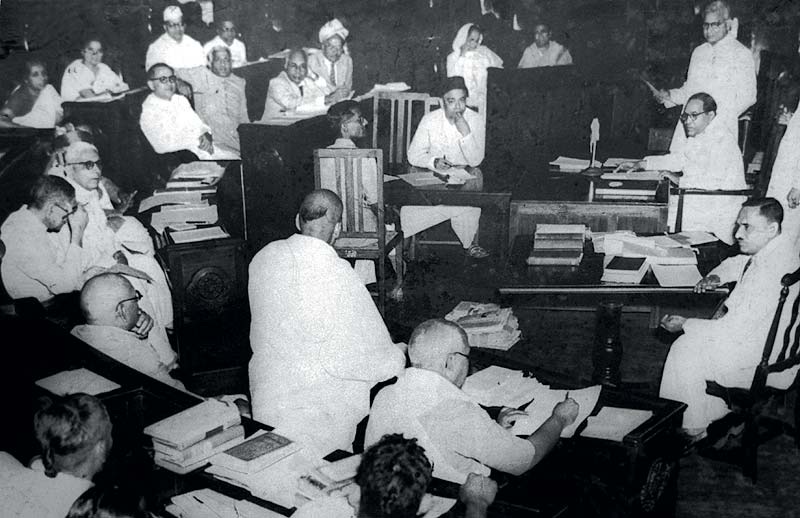
A Constituent Assembly meeting, 1950 · Photo: Unknown author · Public domain (PD-India) · Wikimedia Commons Constitution and Law MinisterConstituent Assembly meets
First sitting in the Constitution Hall, New Delhi, with Dr. Sachchidananda Sinha as temporary Chairman. Dr. Ambedkar signs the register as a member from Bengal.
From the chapter The Constitution
Presenting the final draft of the Constitution, 1949 · Photo: Unknown author · Public domain (PD-India) · Wikimedia Commons Constitution and Law MinisterRajendra Prasad elected President of the Assembly
Dr. Rajendra Prasad becomes the permanent Chairman (President) of the Constituent Assembly.
From the chapter The Constitution
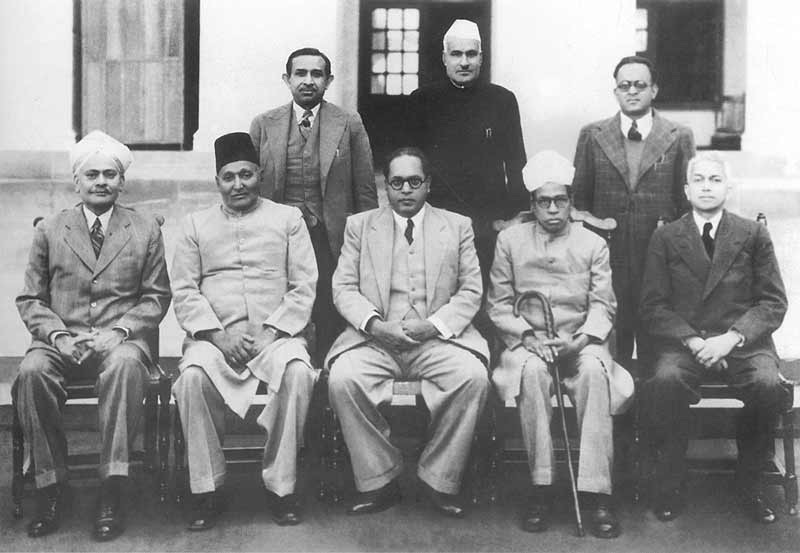
The Drafting Committee, 1947 · Photo: Unknown author · Public domain (PD-India) · Wikimedia Commons Constitution and Law MinisterObjectives Resolution moved
Jawaharlal Nehru moves the resolution setting out the aims of the Constitution.
From the chapter The Constitution
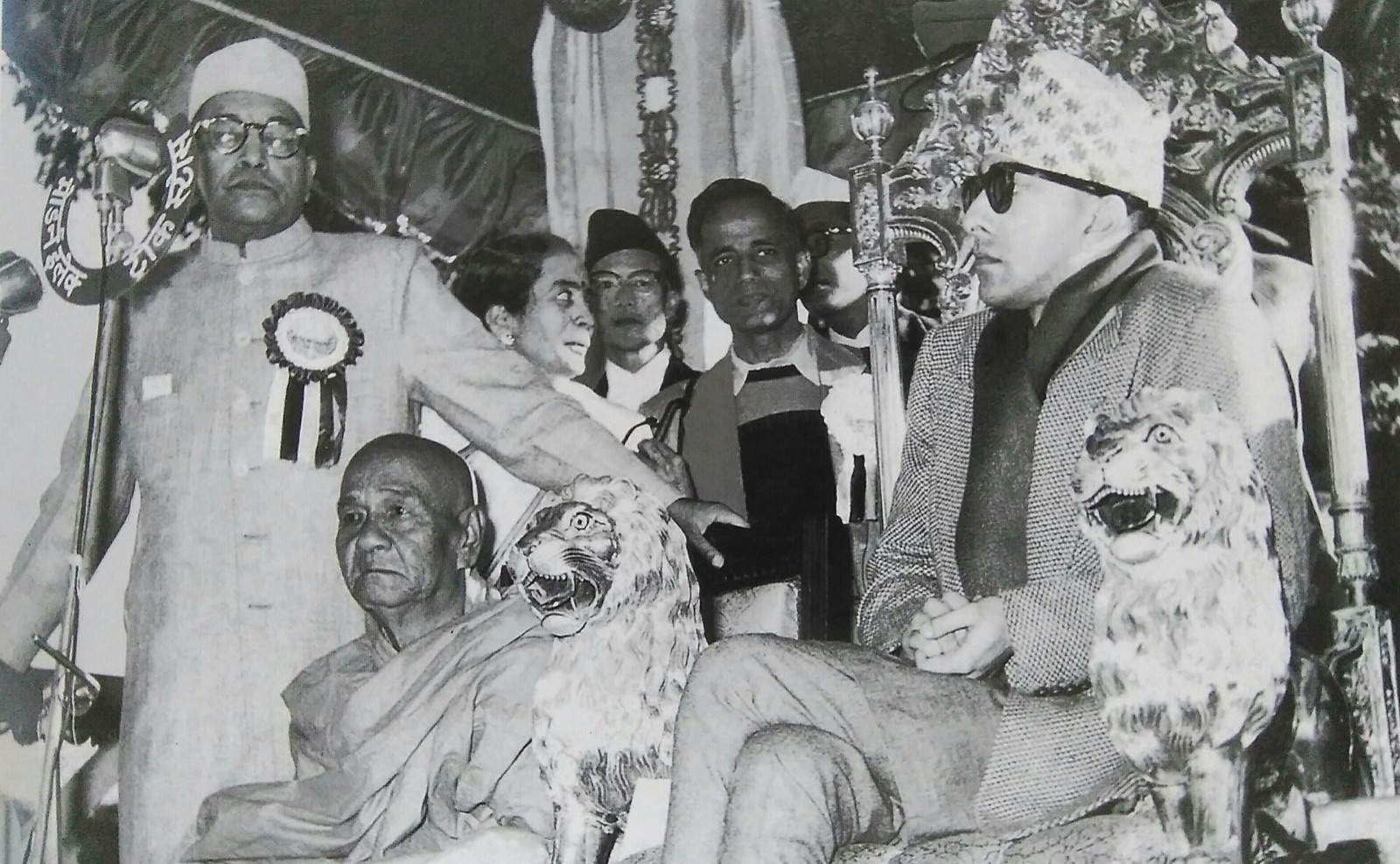
"The Buddha and Karl Marx" speech, Kathmandu, 1956 · Photo: Unknown author · Public domain (PD-India) · Wikimedia Commons Constitution and Law MinisterFirst speech in the Assembly: 'nothing in the world will prevent this country from becoming one'
In December 1946 a group of Indians sat down in New Delhi to write the rules for a free country. Three years later they had produced one of the longest constitutions in the world.
From the chapter Making the Constitution · 1946–1950
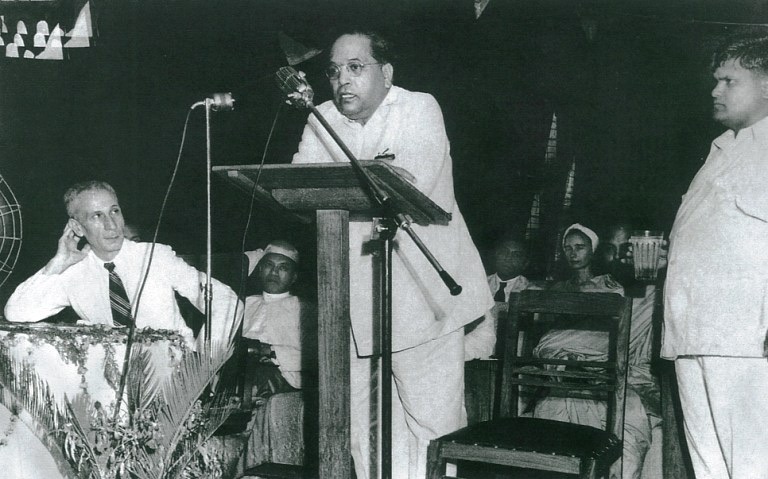
Buddha Jayanti speech, New Delhi, 1951 · Photo: Unknown author · Public domain (PD-India) · Wikimedia Commons Constitution and Law MinisterDr. Ambedkar's first speech
He criticises the resolution for listing rights without remedies, but says nothing will prevent India 'from becoming one'.
From the chapter The Constitution
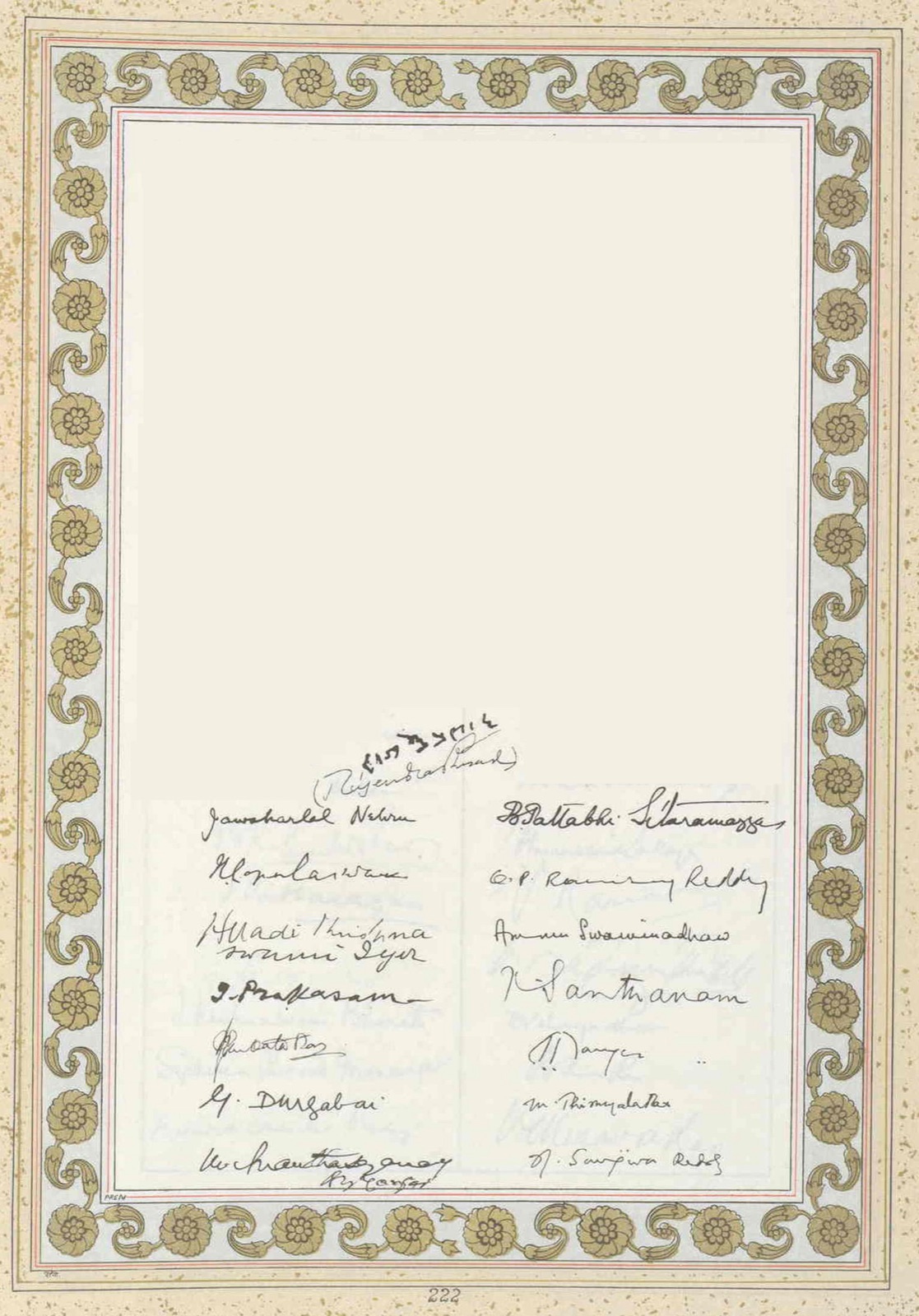
First page of signatures in the original Constitution · Photo: Constituent Assembly of India · Public domain (PD-India, EdictGov-India) · Wikimedia Commons Constitution and Law MinisterObjectives Resolution adopted, all members standing
The Objectives Resolution was adopted on 22 January 1947, with all members standing. In 1947 he also served on the committees on fundamental rights and minorities.
From the chapter Making the Constitution · 1946–1950
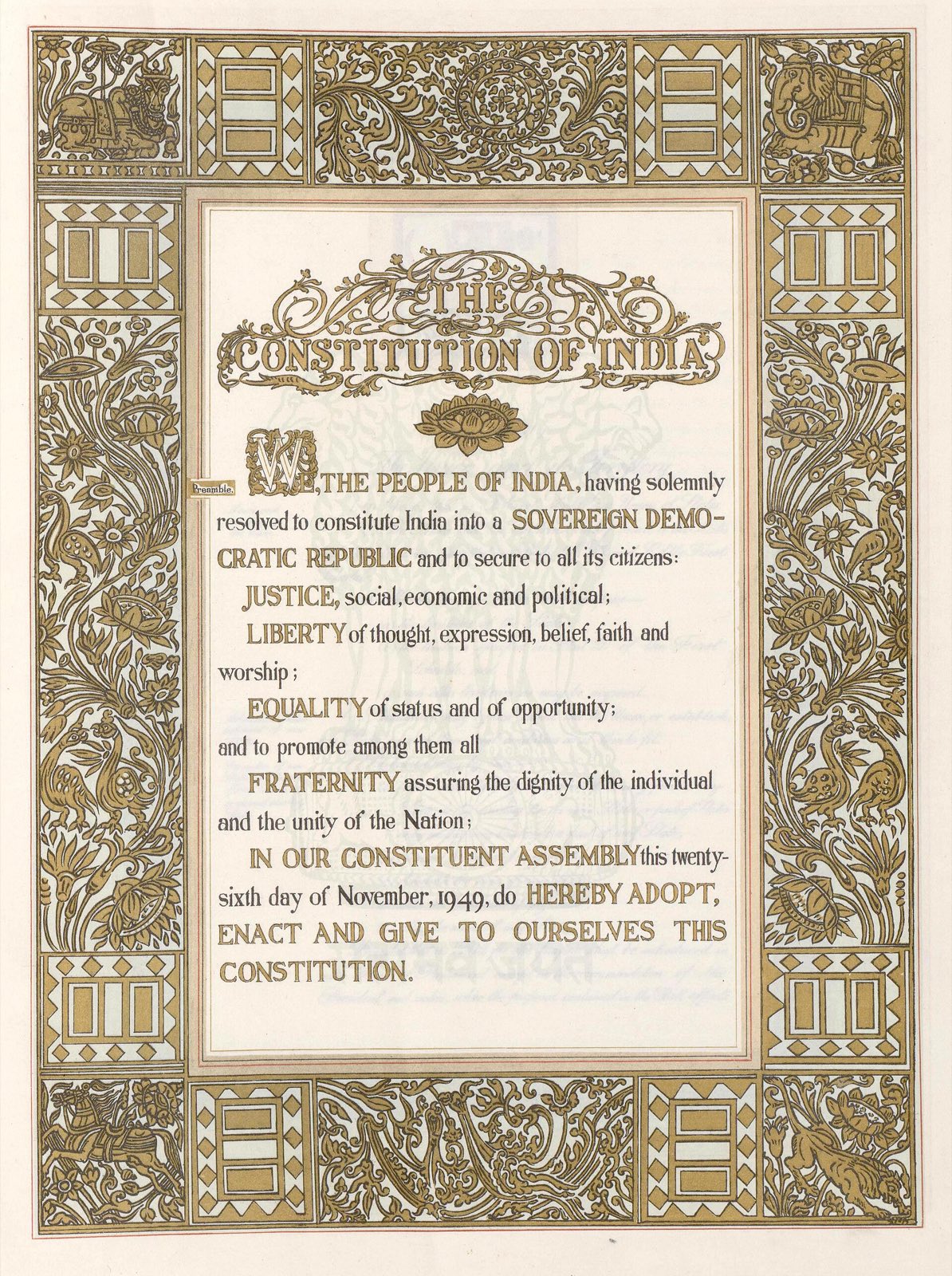
The Preamble in the original Constitution · Photo: Prem Behari Narain Raizada (calligraphy) and Beohar Rammanohar Sinha (illumination) · Public domain (PD-India) · Wikimedia Commons Constitution and Law MinisterObjectives Resolution adopted
Adopted with all members standing. Its ideas later shaped the Preamble.
From the chapter The Constitution
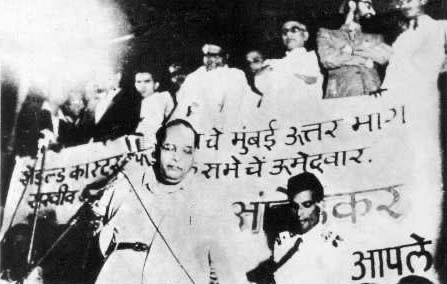
Election meeting, January 1952 · Photo: Unknown author · Public domain (PD-India) · Wikimedia Commons Constitution and Law MinisterSigns the preface of States and Minorities
States and Minorities (preface dated 15 March 1947) was written for the Federation to give to the Constituent Assembly. It is drafted as articles of a constitution: fundamental rights, minority rights, safeguards for Scheduled Castes, and state ownership of key industries and farmland.
From the chapter Party, Parliament and the Labour Ministry · 1936–1946
Conference on the Hindu Code Bill, 1950 · Photo: Unknown author · Public domain (PD-India) · Wikimedia Commons Constitution and Law MinisterHindu Code Bill is introduced in the central legislature
The Bill was introduced on 11 April 1947. Ambedkar explained what was new:
From the chapter Law Minister and Opposition Voice · 1947–1956
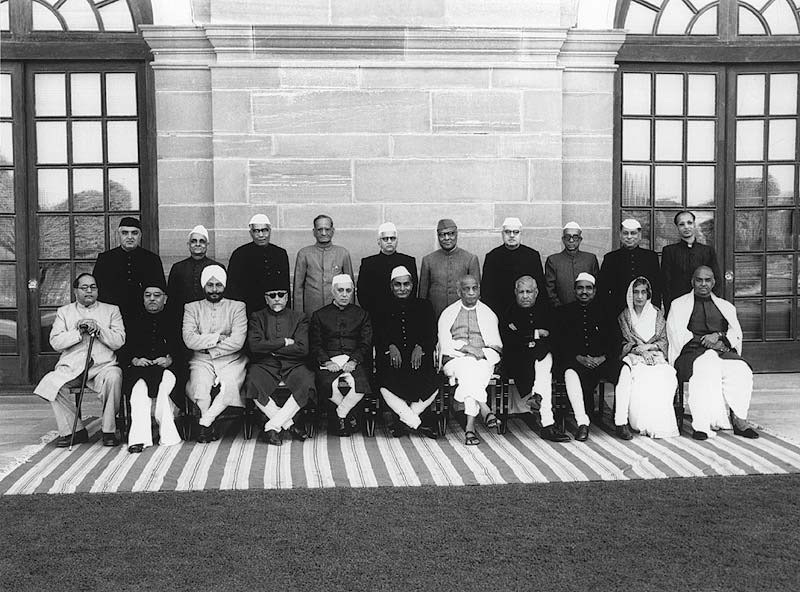
President Rajendra Prasad with the Union Cabinet, 1950 · Photo: Unknown author · Public domain (PD-India) · Wikimedia Commons Constitution and Law MinisterRajendra Prasad asks Bombay's Premier B. G. Kher to elect Dr. Ambedkar again
On 30 June 1947 its President, Dr. Kher, the head of the Bombay government.
From the chapter Making the Constitution · 1946–1950
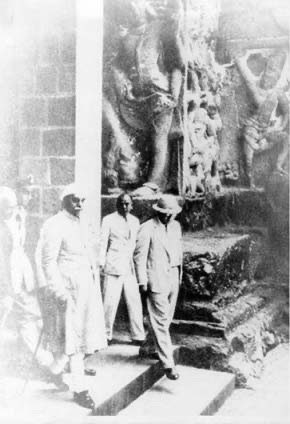
With Rajendra Prasad at Ellora, 1950 · Photo: Unknown author · Public domain (PD-India) · Wikimedia Commons Constitution and Law MinisterPrasad asks Bombay to re-elect Dr. Ambedkar
After the partition of Bengal ended his membership, Rajendra Prasad writes to B. G. Kher that the Assembly 'should not be deprived of his services'.
From the chapter The Constitution
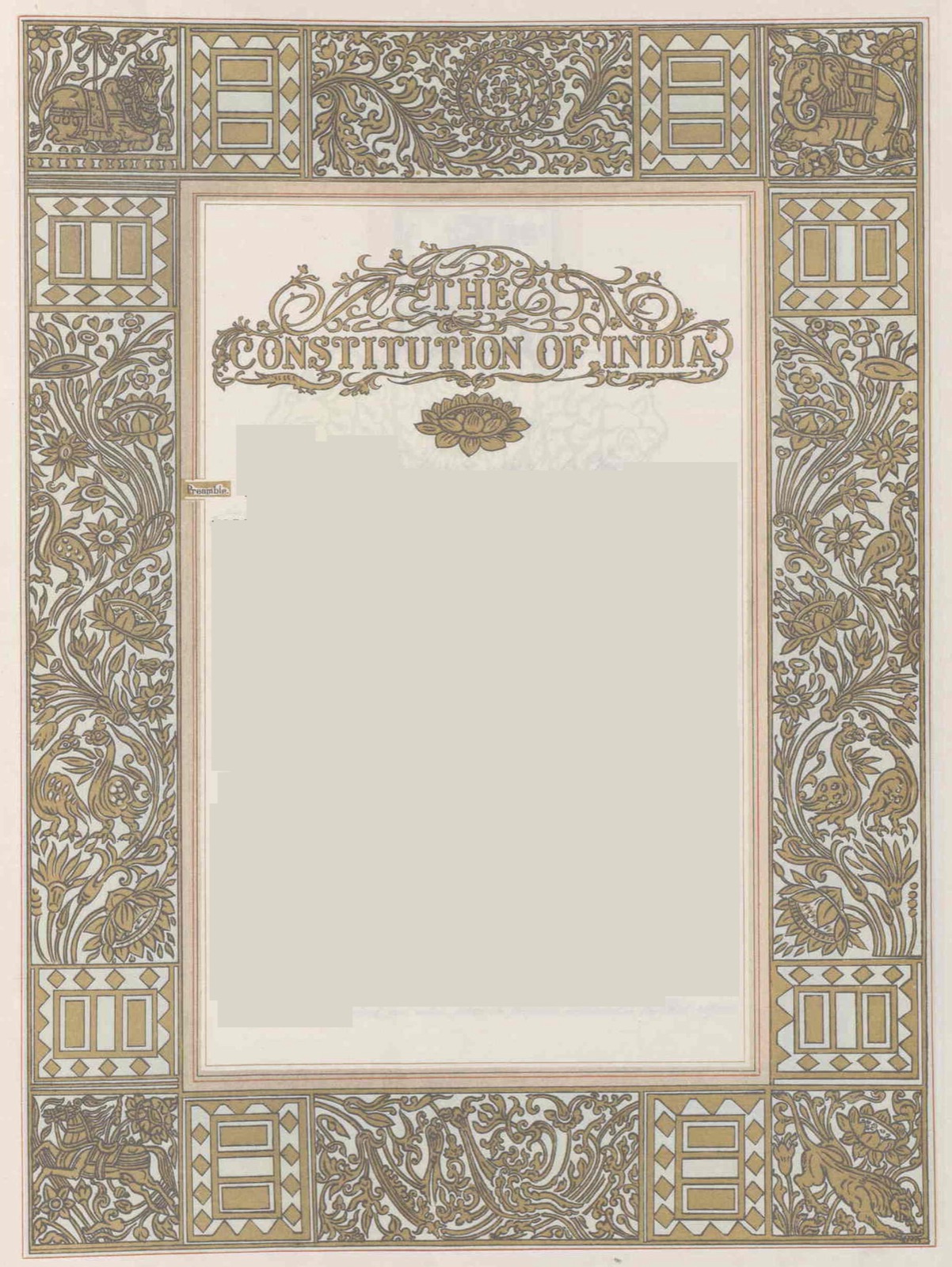
Title page of the original Constitution · Photo: Constituent Assembly of India · Public domain (PD-India, EdictGov-India) · Wikimedia Commons Constitution and Law MinisterTakes his seat again, now as a member from Bombay
He was elected from Bombay and took his seat again on 14 July 1947. On 15 August 1947, the day India became independent, he joined Jawaharlal Nehru's first cabinet as Law Minister.
From the chapter Making the Constitution · 1946–1950
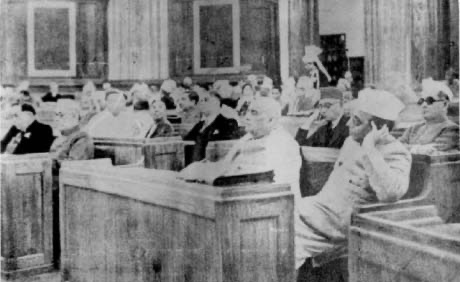
Ambedkar in the Assembly, 1949 · Photo: Unknown author · Public domain (PD-India) · Wikimedia Commons Constitution and Law MinisterReturns as a member from Bombay
Presents his credentials and signs the register as a Bombay member.
From the chapter The Constitution
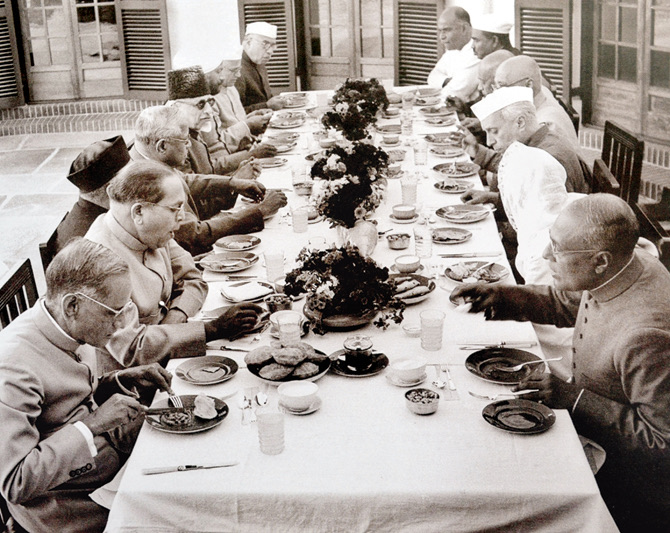
With Nehru's cabinet, June 1948 · Photo: Unknown author · Public domain (PD-India) · Wikimedia Commons Constitution and Law MinisterBecomes Minister of Law in Nehru's first cabinet
In August 1947 he accepted Prime Minister Jawaharlal Nehru's invitation to become Minister of Law in the first cabinet. In a letter of 30 July 1947, Nehru wrote that Ambedkar had agreed to join but felt that Law alone would not give him enough work.
From the chapter Law Minister and Opposition Voice · 1947–1956
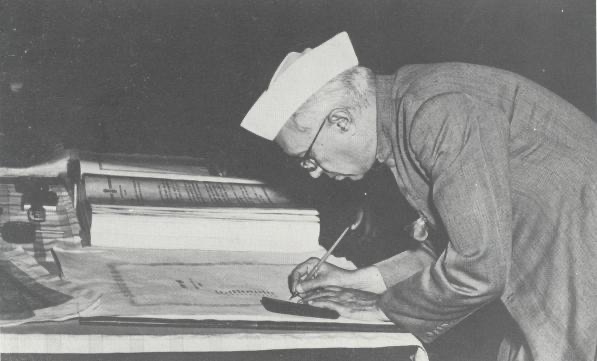
Nehru signing the Constitution, 24 January 1950 · Photo: Unknown author · Public domain (PD-India) · Wikimedia Commons Constitution and Law MinisterJoins independent India's first cabinet as Law Minister
On 15 August 1947, the day India became independent, he joined Jawaharlal Nehru's first cabinet as Law Minister. For the next two years he did two big jobs at the same time: running the Law Ministry and leading the drafting of the Constitution.
From the chapter Making the Constitution · 1946–1950
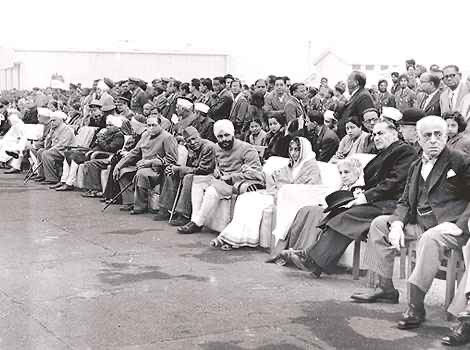
India's first Republic Day parade, 1950 · Photo: Unknown author · Public domain (PD-India) · Wikimedia Commons Constitution and Law MinisterBecomes Law Minister
Joins Nehru's first cabinet on the day of independence.
From the chapter The Constitution
Presenting the final draft of the Constitution, 1949 · Photo: Unknown author · Public domain (PD-India) · Wikimedia Commons Constitution and Law MinisterAssembly appoints the seven-member Drafting Committee
On 29 August 1947 the Assembly appointed a Drafting Committee of seven members. They were Alladi Krishnaswami Ayyar, N.
From the chapter Making the Constitution · 1946–1950
The Drafting Committee, 1947 · Photo: Unknown author · Public domain (PD-India) · Wikimedia Commons Constitution and Law MinisterDrafting Committee appointed
Seven members named: Alladi Krishnaswami Ayyar, N. Gopalaswami Ayyangar, B. R. Ambedkar, K. M. Munshi, Saiyid Mohd. Saadulla, B. L. Mitter and D. P. Khaitan.
From the chapter The Constitution
A Constituent Assembly meeting, 1950 · Photo: Unknown author · Public domain (PD-India) · Wikimedia Commons Constitution and Law MinisterDrafting Committee holds its first meeting
On 29 August 1947 the Assembly appointed a Drafting Committee of seven members. They were Alladi Krishnaswami Ayyar, N.
From the chapter Making the Constitution · 1946–1950
The Drafting Committee, 1947 · Photo: Unknown author · Public domain (PD-India) · Wikimedia Commons Constitution and Law MinisterDrafting Committee's first meeting
The Committee begins work; it would sit for 141 days. Its members chose Dr. Ambedkar as Chairman (the exact day of that choice is not recorded in our sources).
From the chapter The Constitution
First day of the Constituent Assembly, 1946 · Photo: Unknown author · Public domain (PD-India) · Wikimedia Commons Constitution and Law MinisterScrutiny of B. N. Rau's draft begins
The Committee starts going through the draft prepared by the Constitutional Adviser.
From the chapter The Constitution
Presenting the final draft of the Constitution, 1949 · Photo: Unknown author · Public domain (PD-India) · Wikimedia Commons Constitution and Law MinisterSends the Draft Constitution to the Assembly's President with a covering letter
The Draft Constitution of February 1948 Ambedkar sent the finished Draft to the Assembly's President with a covering letter.
From the chapter Making the Constitution · 1946–1950
The Preamble in the original Constitution · Photo: Prem Behari Narain Raizada (calligraphy) and Beohar Rammanohar Sinha (illumination) · Public domain (PD-India) · Wikimedia Commons Constitution and Law MinisterDraft Constitution submitted
Dr. Ambedkar sends the Draft to the President of the Assembly with a covering letter explaining the main changes.
From the chapter The Constitution
Title page of the original Constitution · Photo: Constituent Assembly of India · Public domain (PD-India, EdictGov-India) · Wikimedia Commons Constitution and Law MinisterDraft Constitution published in the Gazette of India for public comment
The Draft was printed in the Gazette of India on 26 February 1948 so that everyone could read it. It had 315 articles and 8 Schedules.
From the chapter Making the Constitution · 1946–1950
First page of signatures in the original Constitution · Photo: Constituent Assembly of India · Public domain (PD-India, EdictGov-India) · Wikimedia Commons Constitution and Law MinisterDraft published in the Gazette of India
Printed 'for general information' so that the public, governments and courts could comment.
From the chapter The Constitution
Conference on the Hindu Code Bill, 1950 · Photo: Unknown author · Public domain (PD-India) · Wikimedia Commons Constitution and Law MinisterExplains the Hindu Code Bill; it is sent to a Select Committee
It went to a Select Committee on 9 April 1948. The House agreed to take it up on 19 December 1949, gave it no time in 1950, and began voting on it clause by clause only in February 1951.
From the chapter Law Minister and Opposition Voice · 1947–1956
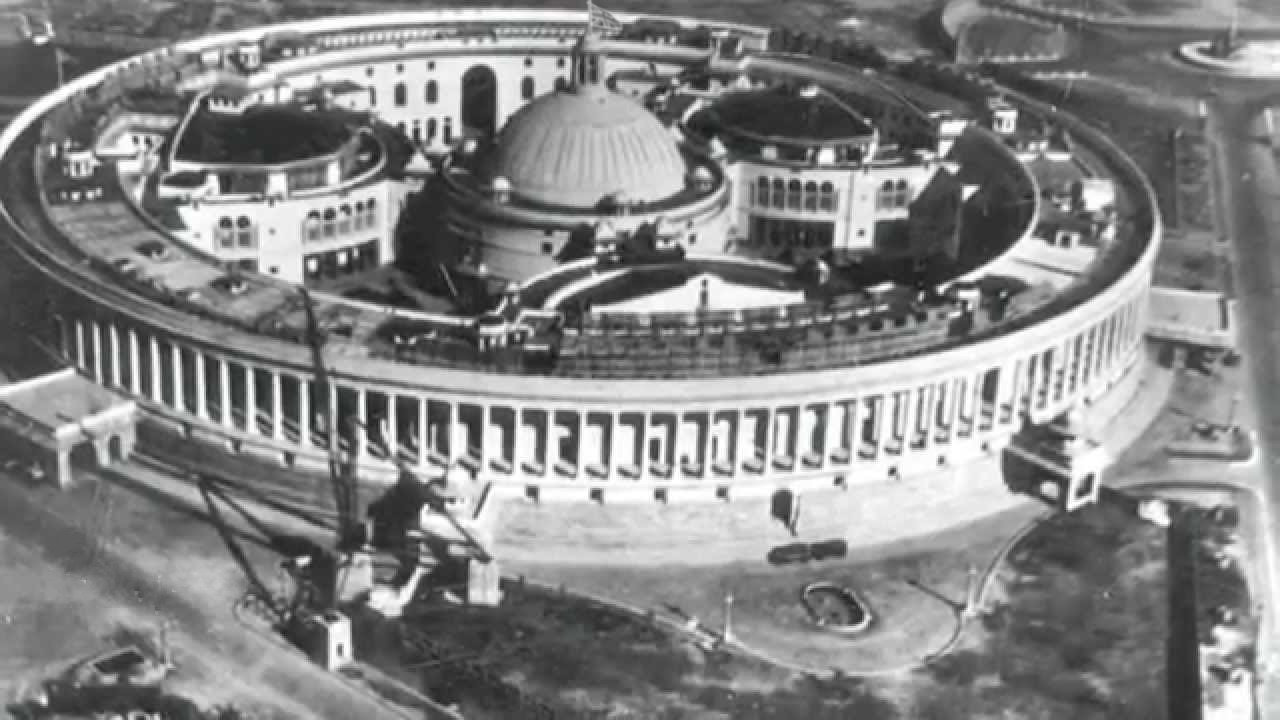
Parliament House, New Delhi, 1926 · Photo: Unknown photographer (National Archives of India) · CC0 · Wikimedia Commons Constitution and Law MinisterIntroduces the Draft Constitution in the Assembly
From 15 November 1948 to 17 October 1949 the Assembly went through the Draft clause by clause. About 7,635 amendments were proposed and 2,473 were actually moved.
From the chapter Making the Constitution · 1946–1950
Ambedkar in the Assembly, 1949 · Photo: Unknown author · Public domain (PD-India) · Wikimedia Commons Constitution and Law MinisterDraft introduced in the Assembly
Dr. Ambedkar moves that the Draft be taken into consideration and explains its main features.
From the chapter The Constitution
India's first Republic Day parade, 1950 · Photo: Unknown author · Public domain (PD-India) · Wikimedia Commons Constitution and Law MinisterT. T. Krishnamachari says the burden of drafting 'fell on Dr. Ambedkar'
Ambedkar, Constituent Assembly, 4 November 1948 From 15 November 1948 to 17 October 1949 the Assembly went through the Draft clause by clause.
From the chapter Making the Constitution · 1946–1950
Nehru signing the Constitution, 24 January 1950 · Photo: Unknown author · Public domain (PD-India) · Wikimedia Commons Constitution and Law MinisterT. T. Krishnamachari's remark
He tells the House that, with other members absent, 'the burden of drafting this constitution fell on Dr. Ambedkar'.
From the chapter The Constitution
The Preamble in the original Constitution · Photo: Prem Behari Narain Raizada (calligraphy) and Beohar Rammanohar Sinha (illumination) · Public domain (PD-India) · Wikimedia Commons Constitution and Law MinisterSecond reading begins
The Assembly starts discussing the Draft clause by clause; this continues until 17 October 1949.
From the chapter The Constitution
Title page of the original Constitution · Photo: Constituent Assembly of India · Public domain (PD-India, EdictGov-India) · Wikimedia Commons Constitution and Law MinisterDirective Principles explained
Dr. Ambedkar says the Directive Principles set 'economic democracy' as the ideal.
From the chapter The Constitution
Ambedkar in the Assembly, 1949 · Photo: Unknown author · Public domain (PD-India) · Wikimedia Commons Constitution and Law MinisterDraft article 11 abolishing untouchability (now Article 17) is adopted
Introducing the Draft: 4 November 1948 President, Sir, I introduce the Draft Constitution as settled by the Drafting Committee and move that it be taken into consideration".
From the chapter Making the Constitution · 1946–1950
First day of the Constituent Assembly, 1946 · Photo: Unknown author · Public domain (PD-India) · Wikimedia Commons Constitution and Law MinisterUntouchability abolished in the Draft
Draft article 11 (now Article 17) is adopted to cries of 'Mahatma Gandhi ki Jai'.
From the chapter The Constitution
A Constituent Assembly meeting, 1950 · Photo: Unknown author · Public domain (PD-India) · Wikimedia Commons Constitution and Law MinisterEquality of opportunity and reservations
Dr. Ambedkar explains draft article 10 (now Article 16): reservations must be 'confined to a minority of seats'.
From the chapter The Constitution
First page of signatures in the original Constitution · Photo: Constituent Assembly of India · Public domain (PD-India, EdictGov-India) · Wikimedia Commons Constitution and Law MinisterCalls draft article 25 (now Article 32) 'the very soul of the Constitution and the very heart of it'
On 9 December 1948 he spoke about draft article 25, which became Article 32. It lets anyone go straight to the Supreme Court if their fundamental rights are violated:
From the chapter Making the Constitution · 1946–1950
India's first Republic Day parade, 1950 · Photo: Unknown author · Public domain (PD-India) · Wikimedia Commons Constitution and Law MinisterRight to constitutional remedies adopted
Draft article 25 (now Article 32) is adopted after Dr. Ambedkar calls it 'the very soul of the Constitution and the very heart of it'.
From the chapter The Constitution
Nehru signing the Constitution, 24 January 1950 · Photo: Unknown author · Public domain (PD-India) · Wikimedia Commons Constitution and Law Minister'Due process' debate
On draft article 15 (now Article 21) Dr. Ambedkar sets out both sides and leaves the choice to the House; 'procedure established by law' stays.
From the chapter The Constitution
Parliament House, New Delhi, 1926 · Photo: Unknown photographer (National Archives of India) · CC0 · Wikimedia Commons Constitution and Law MinisterAmendment procedure and SC/ST lists adopted
Draft articles 304, 300A and 300B (now Articles 368, 341 and 342) are approved.
From the chapter The Constitution
The Preamble in the original Constitution · Photo: Prem Behari Narain Raizada (calligraphy) and Beohar Rammanohar Sinha (illumination) · Public domain (PD-India) · Wikimedia Commons Constitution and Law MinisterPreamble adopted; clause-by-clause reading ends
From 15 November 1948 to 17 October 1949 the Assembly went through the Draft clause by clause. About 7,635 amendments were proposed and 2,473 were actually moved.
From the chapter Making the Constitution · 1946–1950
Title page of the original Constitution · Photo: Constituent Assembly of India · Public domain (PD-India, EdictGov-India) · Wikimedia Commons Constitution and Law MinisterPreamble adopted
The Preamble is added to the Constitution on the last day of the second reading.
From the chapter The Constitution
Ambedkar in the Assembly, 1949 · Photo: Unknown author · Public domain (PD-India) · Wikimedia Commons Constitution and Law MinisterThird reading begins
The Assembly meets for the final reading of the revised Draft.
From the chapter The Constitution
A Constituent Assembly meeting, 1950 · Photo: Unknown author · Public domain (PD-India) · Wikimedia Commons Constitution and Law MinisterClosing speech with three warnings for Indian democracy
From 15 November 1948 to 17 October 1949 the Assembly went through the Draft clause by clause. About 7,635 amendments were proposed and 2,473 were actually moved.
From the chapter Making the Constitution · 1946–1950
First page of signatures in the original Constitution · Photo: Constituent Assembly of India · Public domain (PD-India, EdictGov-India) · Wikimedia Commons Constitution and Law MinisterClosing speech
Dr. Ambedkar shares the credit and gives three warnings: use constitutional methods, avoid hero-worship, build social democracy.
From the chapter The Constitution
First day of the Constituent Assembly, 1946 · Photo: Unknown author · Public domain (PD-India) · Wikimedia Commons Constitution and Law MinisterConstitution adopted by the Constituent Assembly
Ambedkar, Constituent Assembly, 25 November 1949 Adoption, signing and the new Republic
From the chapter Making the Constitution · 1946–1950
Nehru signing the Constitution, 24 January 1950 · Photo: Unknown author · Public domain (PD-India) · Wikimedia Commons Constitution and Law MinisterConstitution adopted
The motion 'That the Constitution as settled by the Assembly be passed' is adopted; the President signs it.
From the chapter The Constitution
Conference on the Hindu Code Bill, 1950 · Photo: Unknown author · Public domain (PD-India) · Wikimedia Commons Constitution and Law MinisterLarge protest rally in Delhi against the Hindu Code Bill
An All-India Anti-Hindu Code Bill Committee formed in March 1949, and Swami Karpatri led meetings across the country. At protests organised in Delhi in December 1949, including by the RSS, effigies of Nehru and Ambedkar were burned.
From the chapter Law Minister and Opposition Voice · 1947–1956
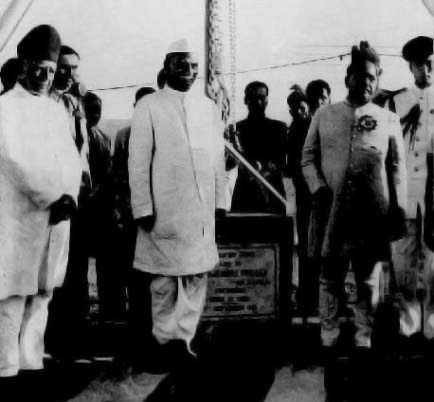
Foundation of Milind College, 1950 · Photo: Unknown author · Public domain (PD-India) · Wikimedia Commons Constitution and Law MinisterMilind College opens in Aurangabad
Milind College, Aurangabad (1950) In 1950 his People's Education Society opened Milind College of Arts and Milind College of Science in Aurangabad.
From the chapter Law Minister and Opposition Voice · 1947–1956
First page of signatures in the original Constitution · Photo: Constituent Assembly of India · Public domain (PD-India, EdictGov-India) · Wikimedia Commons Constitution and Law MinisterMembers sign the handwritten English and Hindi copies
On 24 January 1950 the members met one last time to sign. Prasad said there were three copies: one in English "completely hand-written and illuminated by artists", one printed in English, and one hand-written in Hindi.
From the chapter Making the Constitution · 1946–1950
First day of the Constituent Assembly, 1946 · Photo: Unknown author · Public domain (PD-India) · Wikimedia Commons Constitution and Law MinisterMembers sign the Constitution
Members sign the handwritten English and Hindi copies and a printed English copy. Rajendra Prasad is elected first President of India.
From the chapter The Constitution
India's first Republic Day parade, 1950 · Photo: Unknown author · Public domain (PD-India) · Wikimedia Commons Constitution and Law MinisterConstitution comes into force; India becomes a republic
Two days later, on 26 January 1950, the Constitution came fully into force and India became a republic. Who wrote the beautiful handwritten copy?
From the chapter Making the Constitution · 1946–1950
The Drafting Committee, 1947 · Photo: Unknown author · Public domain (PD-India) · Wikimedia Commons Constitution and Law MinisterConstitution comes into force
India becomes a republic. Article 394 calls this day 'the commencement of this Constitution'.
From the chapter The Constitution
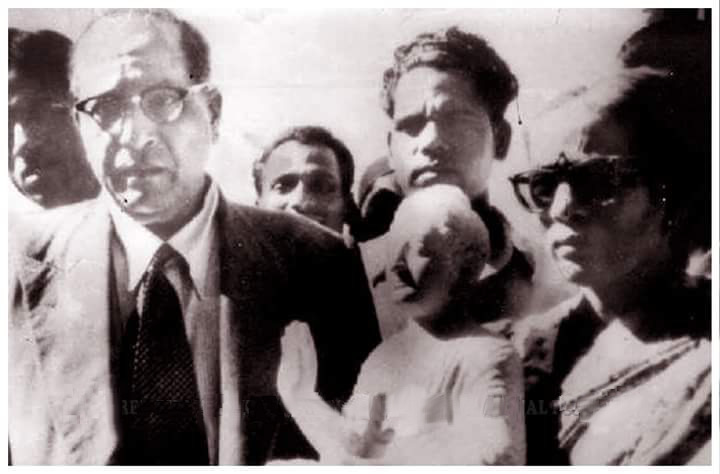
Installing a Buddha statue at Dehu Road, 1955 · Photo: Unknown author · Public domain (PD-India) · Wikimedia Commons Dhamma and last days'Buddha and the Future of His Religion' appears in the Maha Bodhi journal, Calcutta
In May 1950 he published an essay called "Buddha and the Future of His Religion" in the Maha Bodhi, the journal of the Maha Bodhi Society in Calcutta. It is one of the clearest short explanations of his thinking.
From the chapter The Road to Buddhism · 1935–1956
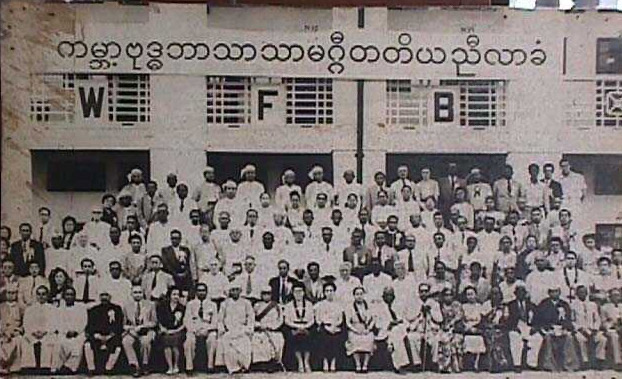
World Fellowship of Buddhists conference, Sri Lanka, 1950 · Photo: Unknown author · Public domain (PD-India) · Wikimedia Commons Dhamma and last daysReaches Colombo; attends the first World Fellowship of Buddhists conference at Kandy (25 May–6 June) as an observer
The World Fellowship of Buddhists (WFB) was holding its first conference at Kandy from 25 May to 6 June 1950, with delegates from 27 countries. He told the gathering: "I am an interested observer, not a delegate." He had come, he said, to watch Buddhist ceremonies and to see whether Buddhism there was a living force.
From the chapter The Road to Buddhism · 1935–1956
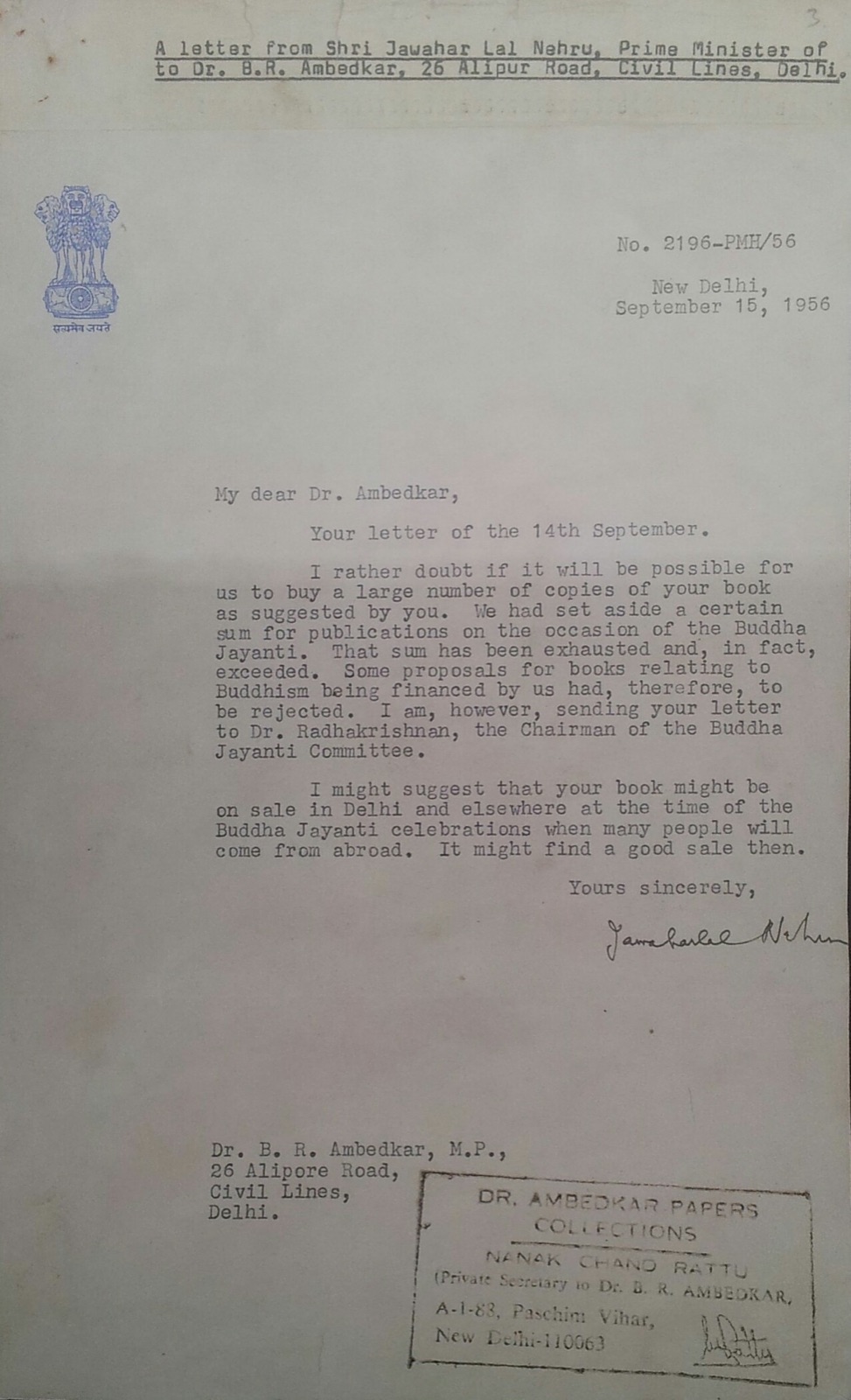
Letter from Nehru to Ambedkar, 1956 · Photo: Unknown author · Public domain (PD-India) · Wikimedia Commons Constitution and Law MinisterHands his resignation to Prime Minister Nehru
In September 1951 he first proposed passing only the marriage and divorce part, then dropped the Bill for that session. Ambedkar was told the reason was lack of time.
From the chapter Law Minister and Opposition Voice · 1947–1956
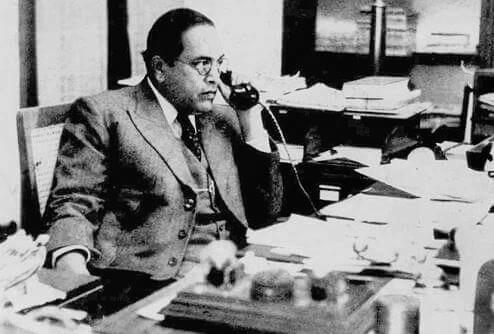
Law Minister at his office, 1950 · Photo: Unknown author · Public domain (PD-India) · Wikimedia Commons Constitution and Law MinisterReleases his statement explaining the resignation
— Statement on his resignation, 10 October 1951 He added that leaving inequality "between class and class, between sex and sex" untouched while passing economic laws was "to build a palace on a dung heap".
From the chapter Law Minister and Opposition Voice · 1947–1956
Election meeting, January 1952 · Photo: Unknown author · Public domain (PD-India) · Wikimedia Commons Dhamma and last daysLoses the Lok Sabha election in Bombay City North
In 1952 he was elected to the Council of States, now the Rajya Sabha, as a member from Bombay. His recorded speeches there run from 19 May 1952 to 1 May 1956.
From the chapter Law Minister and Opposition Voice · 1947–1956
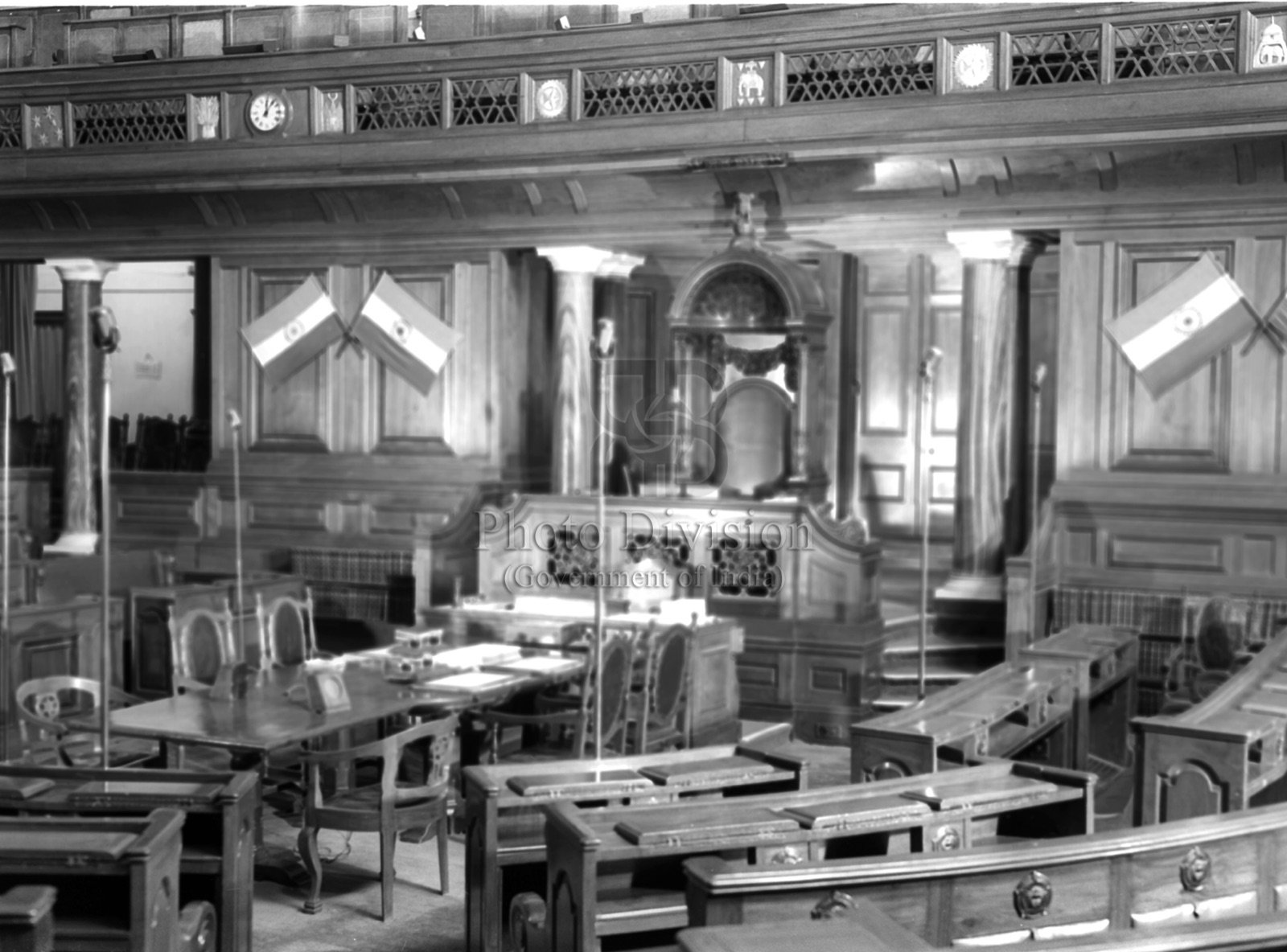
Chamber of the House of the People, 1953 · Photo: Photo Division, Govt. of India · Public domain (PD-India) · Wikimedia Commons Dhamma and last daysFiles an election petition with Ashoka Mehta
Two election defeats (1952 and 1954) For India's first general election, his Federation refused alliances with the Hindu Mahasabha, the RSS and the Communist Party, and joined hands with the Socialist Party.
From the chapter Law Minister and Opposition Voice · 1947–1956
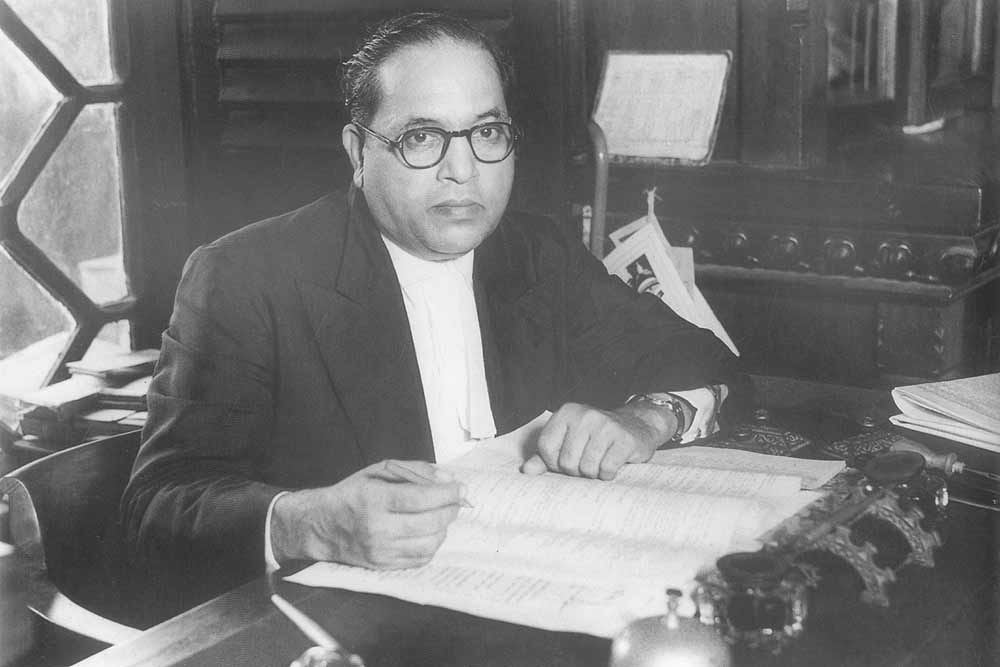
Ambedkar in 1950 · Photo: Unknown author · Public domain (PD-India) · Wikimedia Commons Dhamma and last daysFirst recorded speech in the Council of States (Rajya Sabha)
In 1952 he was elected to the Council of States, now the Rajya Sabha, as a member from Bombay. His recorded speeches there run from 19 May 1952 to 1 May 1956.
From the chapter Law Minister and Opposition Voice · 1947–1956
At Columbia University with Wallace Stevens, 1952 · Photo: Unknown author · Public domain (PD-India) · Wikimedia Commons Dhamma and last daysReceives an honorary Doctor of Laws (LLD) at Columbia's Commencement
In January 1952 Columbia renewed an earlier offer to give him an honorary Doctor of Laws (LLD), a degree given to honour someone's life work. Ambedkar agreed, but wrote that the trip would cost him nearly Rs. 15,000.
From the chapter Columbia University · 1913–1916
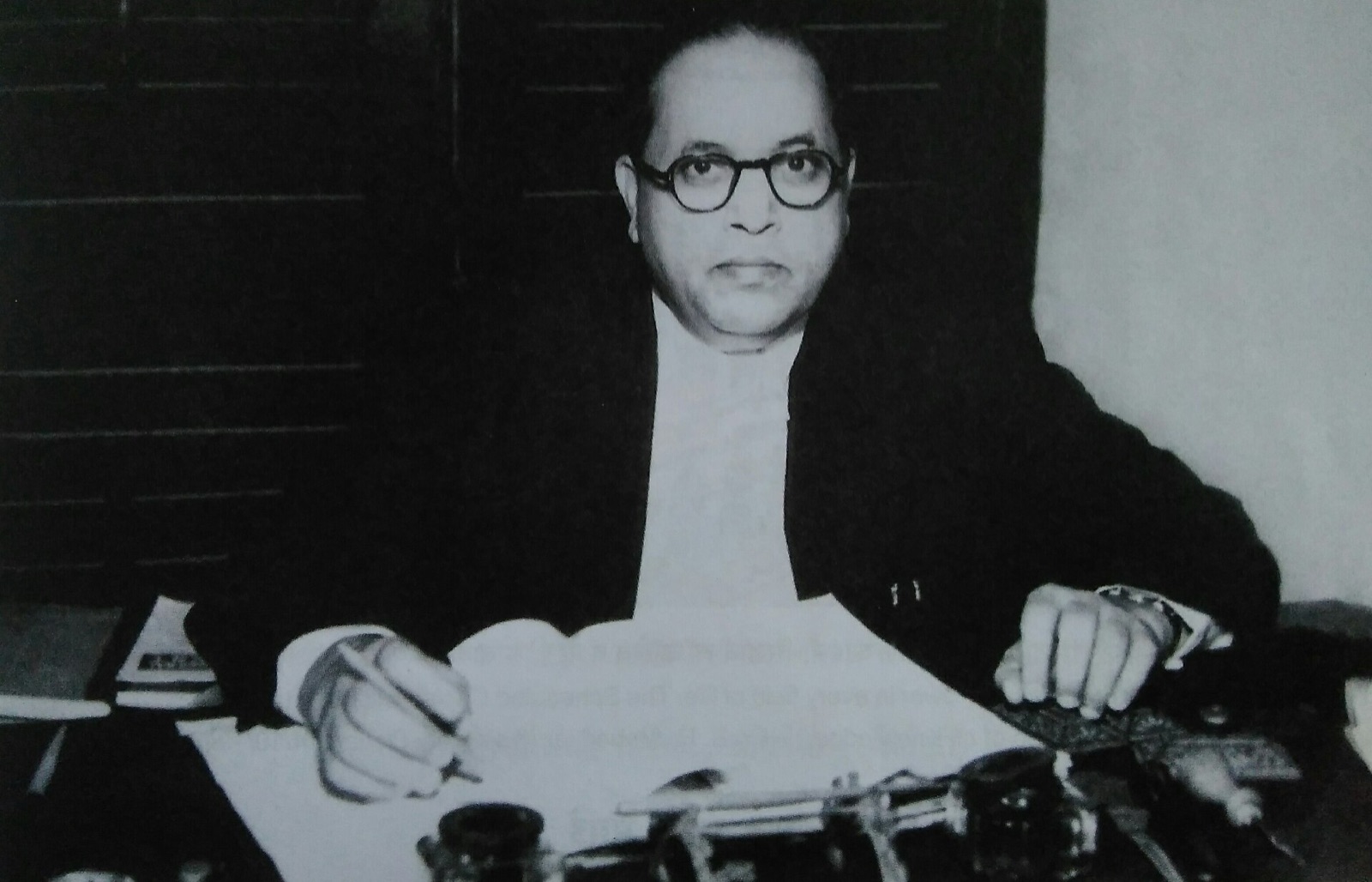
In the People's Education Society office · Photo: Unknown photographer (c. 1950); uploaded to Commons by Sandesh Hiwale (संदेश हिवाळे) · CC BY-SA 4.0 · Wikimedia Commons Dhamma and last daysLecture in Poona on the conditions for democracy
— Poona lecture, 22 December 1952 Thoughts on Linguistic States (1955)
From the chapter Law Minister and Opposition Voice · 1947–1956
Chamber of the House of the People, 1953 · Photo: Photo Division, Govt. of India · Public domain (PD-India) · Wikimedia Commons Dhamma and last daysLoses the Bhandara Lok Sabha by-election
In 1954 he contested a Lok Sabha by-election in Bhandara (now in Maharashtra) and lost again to the Congress, by about 8,000 to 8,700 votes. In 1952 he was elected to the Council of States, now the Rajya Sabha, as a member from Bombay.
From the chapter Law Minister and Opposition Voice · 1947–1956
World Buddhist Conference, Rangoon, 1954 · Photo: Unknown author · Public domain (PD-India) · Wikimedia Commons Dhamma and last daysSpeaks at the World Buddhist conference in Rangoon, Burma, and sets out a plan for reviving Buddhism in India
He went to Rangoon (Yangon) twice in 1954: in May for Buddha Jayanti celebrations, and in December for the third World Buddhist conference. For the Burmese Buddhist council he wrote a plan for reviving Buddhism in India.
From the chapter The Road to Buddhism · 1935–1956
Installing a Buddha statue at Dehu Road, 1955 · Photo: Unknown author · Public domain (PD-India) · Wikimedia Commons Dhamma and last daysInstalls a Buddha image at a new vihara at Dehu Road near Pune
Back home, on 25 December 1954, he installed a Buddha image brought from Rangoon at a new vihara (Buddhist temple) at Dehu Road near Pune. The Buddhist Society of India, 1955
From the chapter The Road to Buddhism · 1935–1956
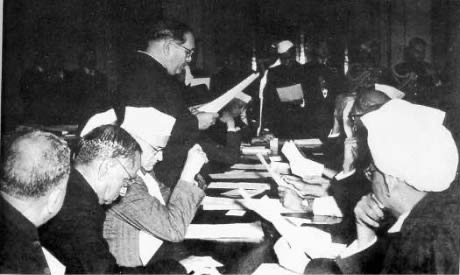
Sworn in as Law Minister, 1947 · Photo: Unknown author · Public domain (PD-India) · Wikimedia Commons Dhamma and last daysHindu Marriage Act passed, the first part of the Hindu Code to become law
Most of his ideas later became law in separate Acts, including the Hindu Marriage Act, 1955 and the Hindu Succession Act, 1956. Two further Acts in 1956 covered guardianship, adoption and maintenance.
From the chapter Law Minister and Opposition Voice · 1947–1956
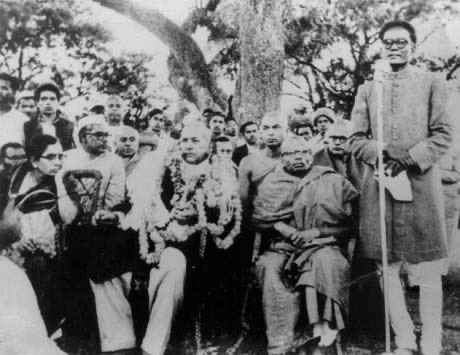
At Sarnath, November 1956 · Photo: Unknown author · Public domain (PD-India) · Wikimedia Commons Dhamma and last daysRegisters the Buddhist Society of India (Bharatiya Bauddha Mahasabha) in Bombay
The Buddhist Society of India, 1955 Ambedkar registered the Buddhist Society of India, known in Marathi and Hindi as the Bharatiya Bauddha Mahasabha.
From the chapter The Road to Buddhism · 1935–1956
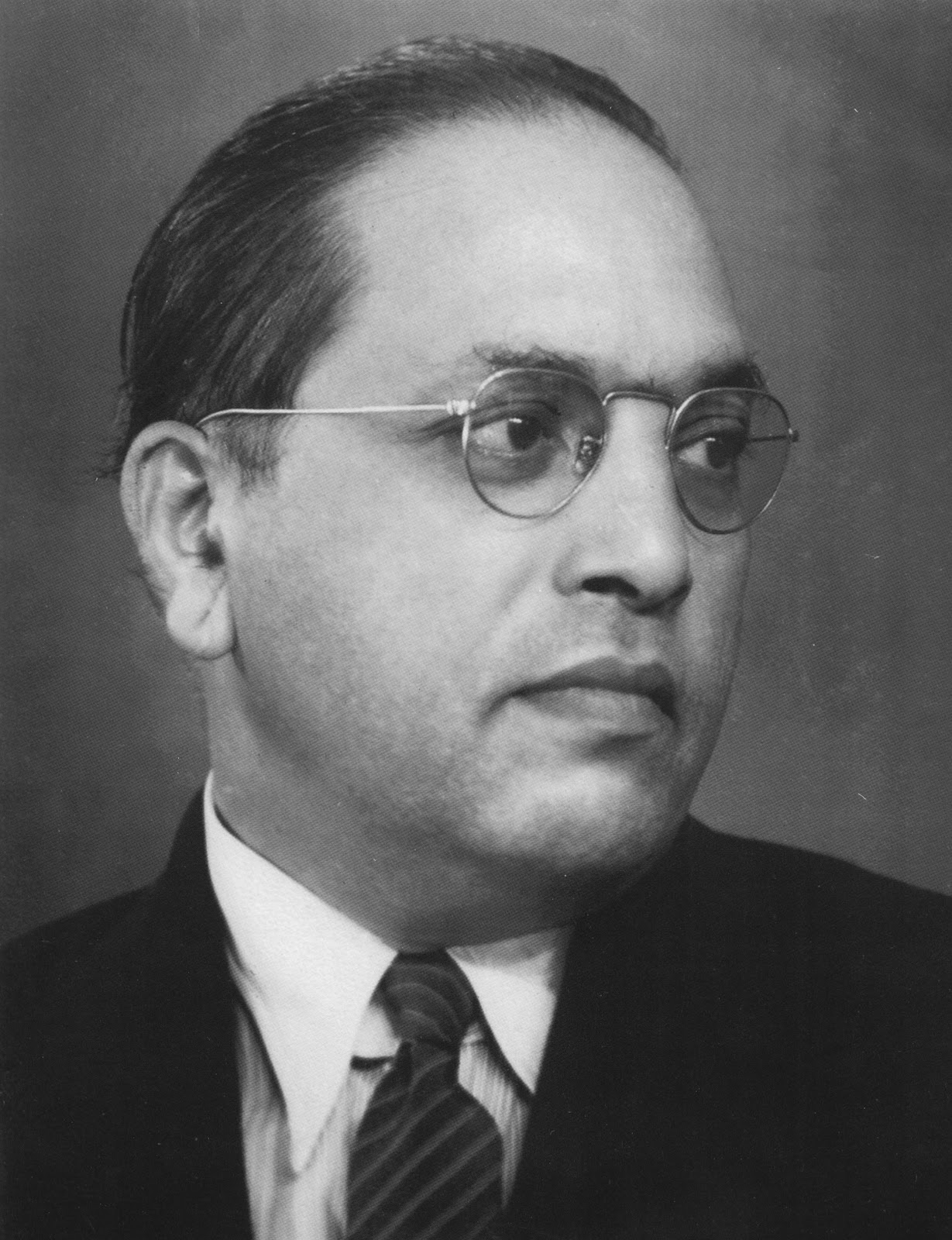
Portrait of Dr. Ambedkar · Photo: Unknown author · Public domain (PD-India, PD-India-URAA) · Wikimedia Commons Dhamma and last daysSigns the preface of Thoughts on Linguistic States
Thoughts on Linguistic States (1955) When the States Reorganisation Commission proposed redrawing India's states by language, he replied with a short book.
From the chapter Law Minister and Opposition Voice · 1947–1956
Chamber of the House of the People, 1953 · Photo: Photo Division, Govt. of India · Public domain (PD-India) · Wikimedia Commons Dhamma and last daysSpeaks in the Rajya Sabha on the States Reorganisation Bill
His recorded speeches there run from 19 May 1952 to 1 May 1956. He spoke on the new Andhra State, foreign policy, the Untouchability (Offences) Bill and the reorganisation of states.
From the chapter Law Minister and Opposition Voice · 1947–1956
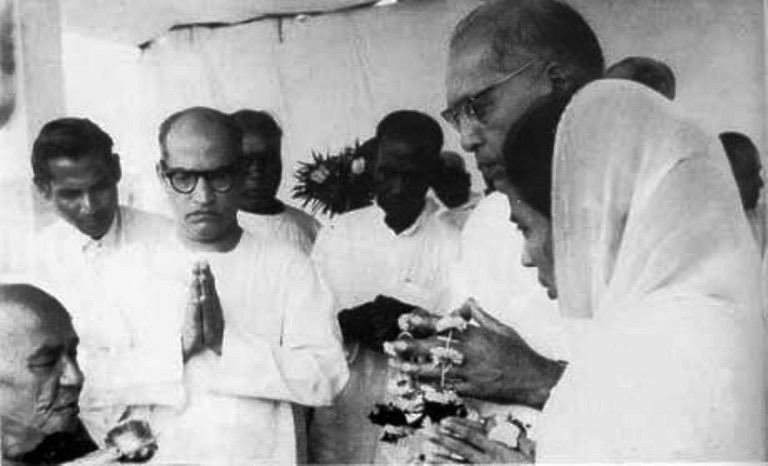
Accepting Buddhism, 14 October 1956 · Photo: Unknown author · Public domain (PD-India) · Wikimedia Commons Dhamma and last daysBBC talk 'Why I like Buddhism'
In a BBC talk on 12 May 1956 he summed up why he preferred Buddhism: "it gives three principles in combination which no other religion does". These were prajna (understanding), karuna (love) and samata (equality).
From the chapter The Road to Buddhism · 1935–1956
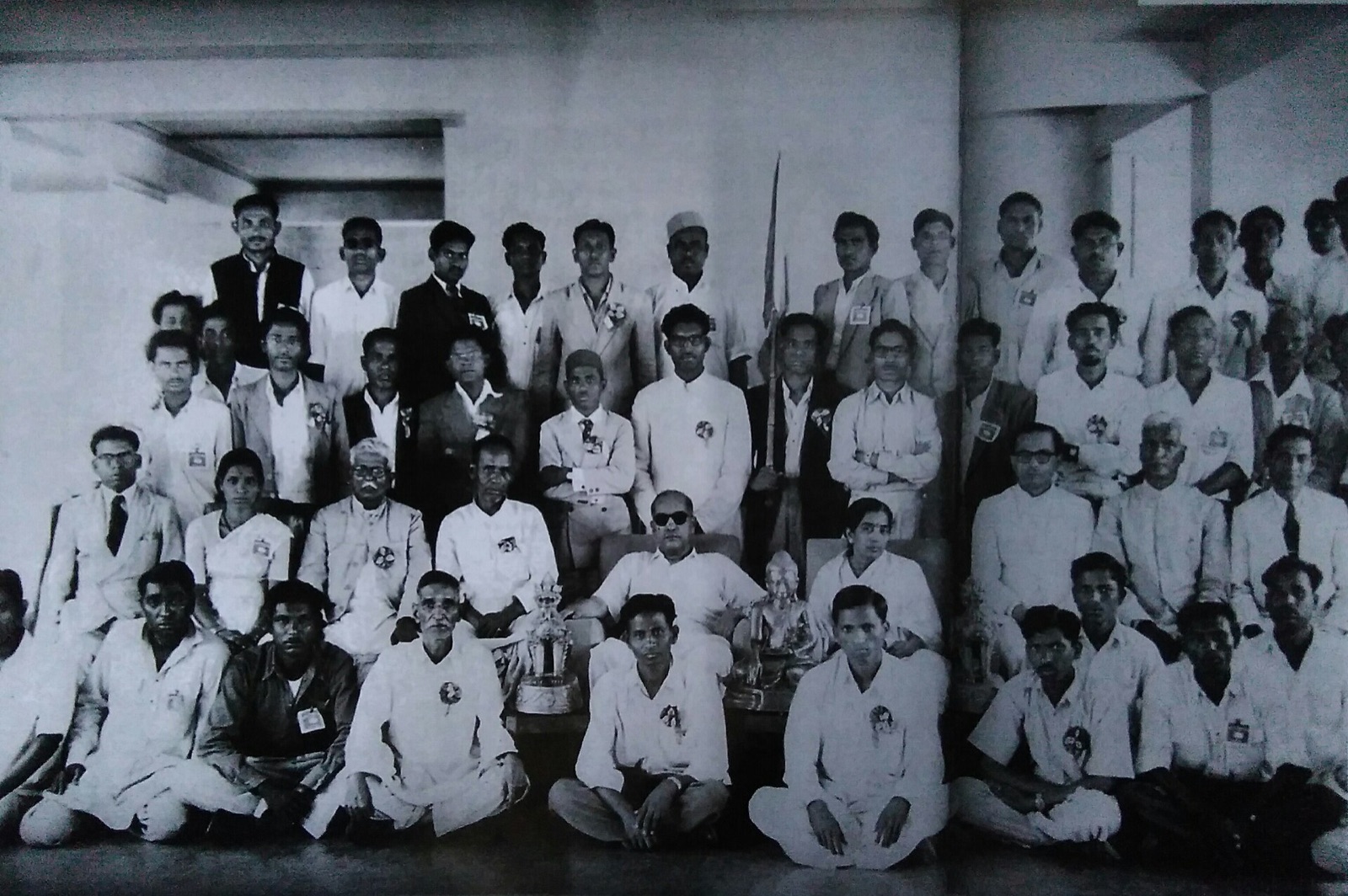
With the organising committee, Nagpur, 1956 · Photo: Unknown author · Public domain (PD-India) · Wikimedia Commons Dhamma and last daysAnnounces that his conversion will take place at Nagpur on Dussehra, 14 October 1956
On 23 September 1956 he announced from Delhi that his conversion would take place at Nagpur on Dussehra, 14 October 1956. The official account also calls the day Ashoka Vijayadashami, the name his followers use for it.
From the chapter The Road to Buddhism · 1935–1956
Scheduled Castes Federation election manifesto, 1946 · Photo: Unknown author · Public domain (PD-India) · Wikimedia Commons Dhamma and last daysScheduled Castes Federation executive decides to form a Republican Party
On 30 September 1956 the Federation's executive, meeting at his Delhi home, decided to dissolve itself and form a new "Republican Party". The historian Eleanor Zelliot described the idea as bringing the Untouchables into a larger group.
From the chapter Law Minister and Opposition Voice · 1947–1956
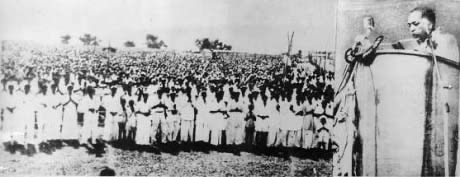
The great crowd at Nagpur, 1956 · Photo: Unknown author · Public domain (PD-India) · Wikimedia Commons Dhamma and last daysDhamma Diksha at Nagpur (Ashoka Vijayadashami): conversion of Dr. and Mrs. Ambedkar and a vast crowd; the 22 vows
On 23 September 1956 he announced from Delhi that his conversion would take place at Nagpur on Dussehra, 14 October 1956. The official account also calls the day Ashoka Vijayadashami, the name his followers use for it.
From the chapter The Road to Buddhism · 1935–1956
Accepting Buddhism, 14 October 1956 · Photo: Unknown author · Public domain (PD-India) · Wikimedia Commons Dhamma and last daysSpeech at Nagpur explaining why he chose Buddhism; another large group converts
"Why Was Nagpur Chosen?" (Columbia University) — Eleanor Zelliot and Rekha Damle's translation of his 15 October 1956 speech. The Buddha and His Dhamma, full text (Columbia University) — with the unpublished preface and introduction.
From the chapter The Road to Buddhism · 1935–1956
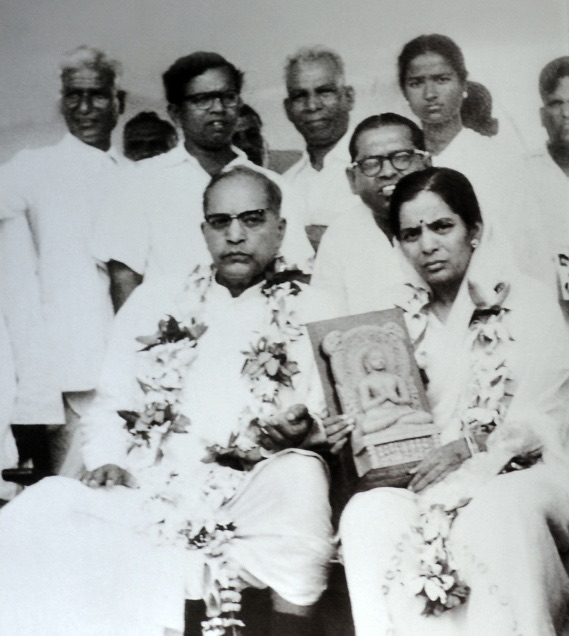
With Savita Ambedkar holding a Buddha statue, 1956 · Photo: Unknown author · Public domain (PD-India) · Wikimedia Commons Dhamma and last daysSecond conversion ceremony at Chanda (today's Chandrapur)
On 23 September 1956 he announced from Delhi that his conversion would take place at Nagpur on Dussehra, 14 October 1956. The official account also calls the day Ashoka Vijayadashami, the name his followers use for it.
From the chapter The Road to Buddhism · 1935–1956
"The Buddha and Karl Marx" speech, Kathmandu, 1956 · Photo: Unknown author · Public domain (PD-India) · Wikimedia Commons Dhamma and last daysFlies from Patna to Kathmandu for the Fourth World Fellowship of Buddhists conference
According to Keer, he flew from Patna to Kathmandu on 14 November 1956, carrying the manuscripts of his unfinished books so he could work on the way. King Mahendra of Nepal opened the conference on 15 November.
From the chapter The Final Days · November–December 1956
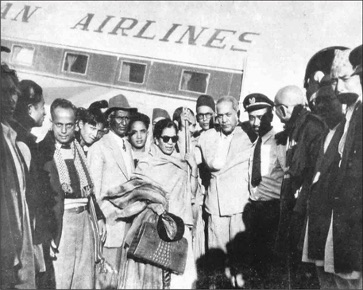
Leaving for Kathmandu, November 1956 · Photo: Unknown author · Public domain (PD-India) · Wikimedia Commons Dhamma and last daysKing Mahendra of Nepal opens the conference
King Mahendra of Nepal opened the conference on 15 November. At the opening session the delegates gave him a great ovation.
From the chapter The Final Days · November–December 1956
"The Buddha and Karl Marx" speech, Kathmandu, 1956 · Photo: Unknown author · Public domain (PD-India) · Wikimedia Commons Dhamma and last daysSpeech 'Buddha or Karl Marx' at Kathmandu
According to Keer, he flew from Patna to Kathmandu on 14 November 1956, carrying the manuscripts of his unfinished books so he could work on the way. King Mahendra of Nepal opened the conference on 15 November.
From the chapter The Final Days · November–December 1956
At Sarnath, November 1956 · Photo: Unknown author · Public domain (PD-India) · Wikimedia Commons Dhamma and last daysReturns to Delhi by air after visiting Varanasi and Buddhist holy places
He reached Delhi by air on 30 November 1956. The last days at 26 Alipur Road
From the chapter The Final Days · November–December 1956
"The Buddha and Karl Marx" speech, Kathmandu, 1956 · Photo: Unknown author · Public domain (PD-India) · Wikimedia Commons Dhamma and last daysCompletes the manuscript of 'The Buddha or Karl Marx' (date per Columbia timeline)
On the morning of 6 December 1956, his wife went to wake him and found that he had died in his sleep. He had died on the night of 5 December or early on 6 December.
From the chapter The Final Days · November–December 1956
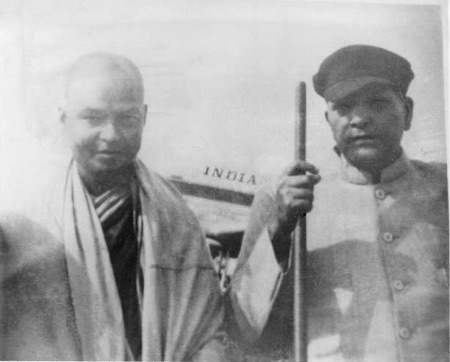
At Varanasi airport, 30 November 1956 · Photo: Unknown author · Public domain (PD-India) · Wikimedia Commons Dhamma and last daysLast visit to the Rajya Sabha (Council of States)
On 4 December he went to the Rajya Sabha (then called the Council of States) for the last time. That evening he dictated letters inviting two Maharashtra leaders, Acharya P.
From the chapter The Final Days · November–December 1956
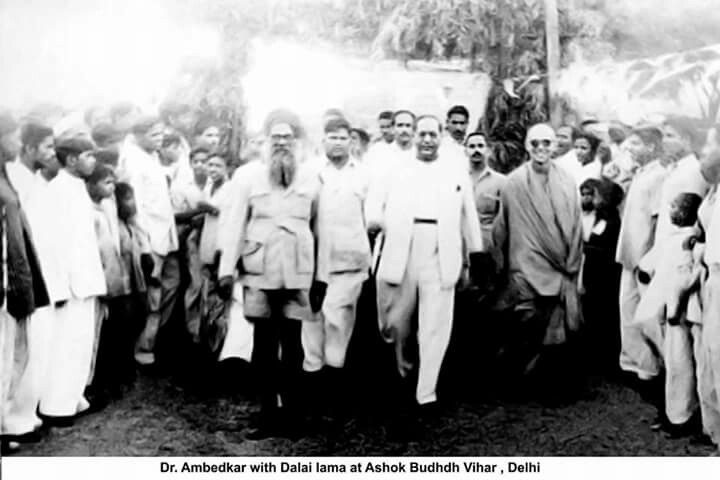
With the Dalai Lama in Delhi, 1956 · Photo: Unknown author · Public domain (PD-India) · Wikimedia Commons Dhamma and last daysDies in his sleep at 26 Alipur Road, Delhi
On the morning of 6 December 1956, his wife went to wake him and found that he had died in his sleep. He had died on the night of 5 December or early on 6 December.
From the chapter The Final Days · November–December 1956
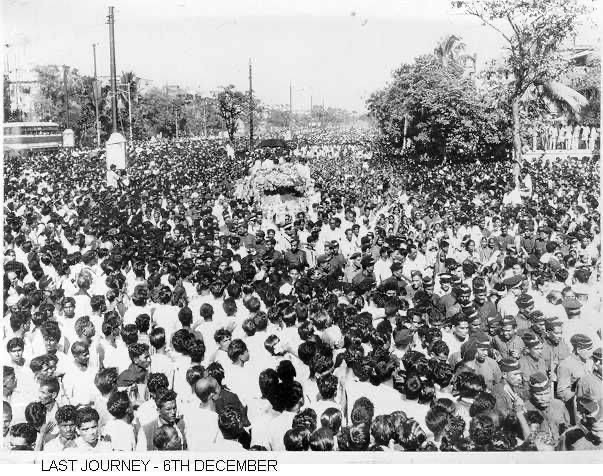
"Last Journey": crowds at the funeral procession, 1956 · Photo: Unknown author · Public domain (PD-India) · Wikimedia Commons LegacyFuneral procession in Bombay and cremation at Dadar Chowpatty; mass conversions at the cremation ground
Cremation at Dadar, 7 December 1956 The funeral procession started at 1.50 p.m.
From the chapter The Final Days · November–December 1956
Siddharth College building, 1946 · Photo: Unknown author · Public domain (PD-India) · Wikimedia Commons LegacyThe Buddha and His Dhamma is published after his death (Siddharth College Publication, Bombay)
It appeared in 1957 as "Siddharth College Publication: I". In the unpublished preface he wrote: "I claim no originality for the book.
From the chapter The Road to Buddhism · 1935–1956
Blue flag of the Republican Party of India · Photo: Gppande · Public domain (PD-self) · Wikimedia Commons LegacyThe Scheduled Castes Federation is turned into the Republican Party of India, as he had planned
After his death his followers formed the Republican Party of India (RPI) in 1957. His biographer Dhananjay Keer was critical.
From the chapter Legacy · 1956–today
Letter from Nehru to Ambedkar, 1956 · Photo: Unknown author · Public domain (PD-India) · Wikimedia Commons LegacyThe Buddha and His Dhamma is published in Bombay
His book The Buddha and His Dhamma was published in 1957. It became like a gospel for the new Buddhists.
From the chapter Legacy · 1956–today
Blue flag of the Republican Party of India · Photo: Gppande · Public domain (PD-self) · Wikimedia Commons LegacyRepublican Party of India is formally founded, after his death
His followers formally founded the Republican Party of India on 3 October 1957. Who introduced the Hindu Code Bill.
From the chapter Law Minister and Opposition Voice · 1947–1956
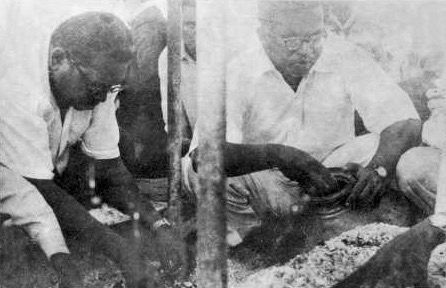
Collecting the ashes at Chaitya Bhoomi, 1956 · Photo: Unknown author · Public domain (PD-India) · Wikimedia Commons LegacyChaitya Bhoomi memorial at Dadar inaugurated by Meera Ambedkar (date per Forward Press)
Forward Press says it was inaugurated on 5 December 1971 by Meera Ambedkar, his daughter-in-law. His death anniversary is called Mahaparinirvan Din (or Diwas).
From the chapter The Final Days · November–December 1956
Speech at Cowasji Jehangir Hall, 1951 · Photo: Unknown author · Public domain (PD-India) · Wikimedia Commons LegacyDalit Panther launched in Bombay (date given by co-founder J. V. Pawar; others give a later date)
In 1972, young Ambedkarite Buddhists in Bombay, many of them poets, formed the Dalit Panther. Its founders included Namdeo Dhasal, J.
From the chapter Legacy · 1956–today
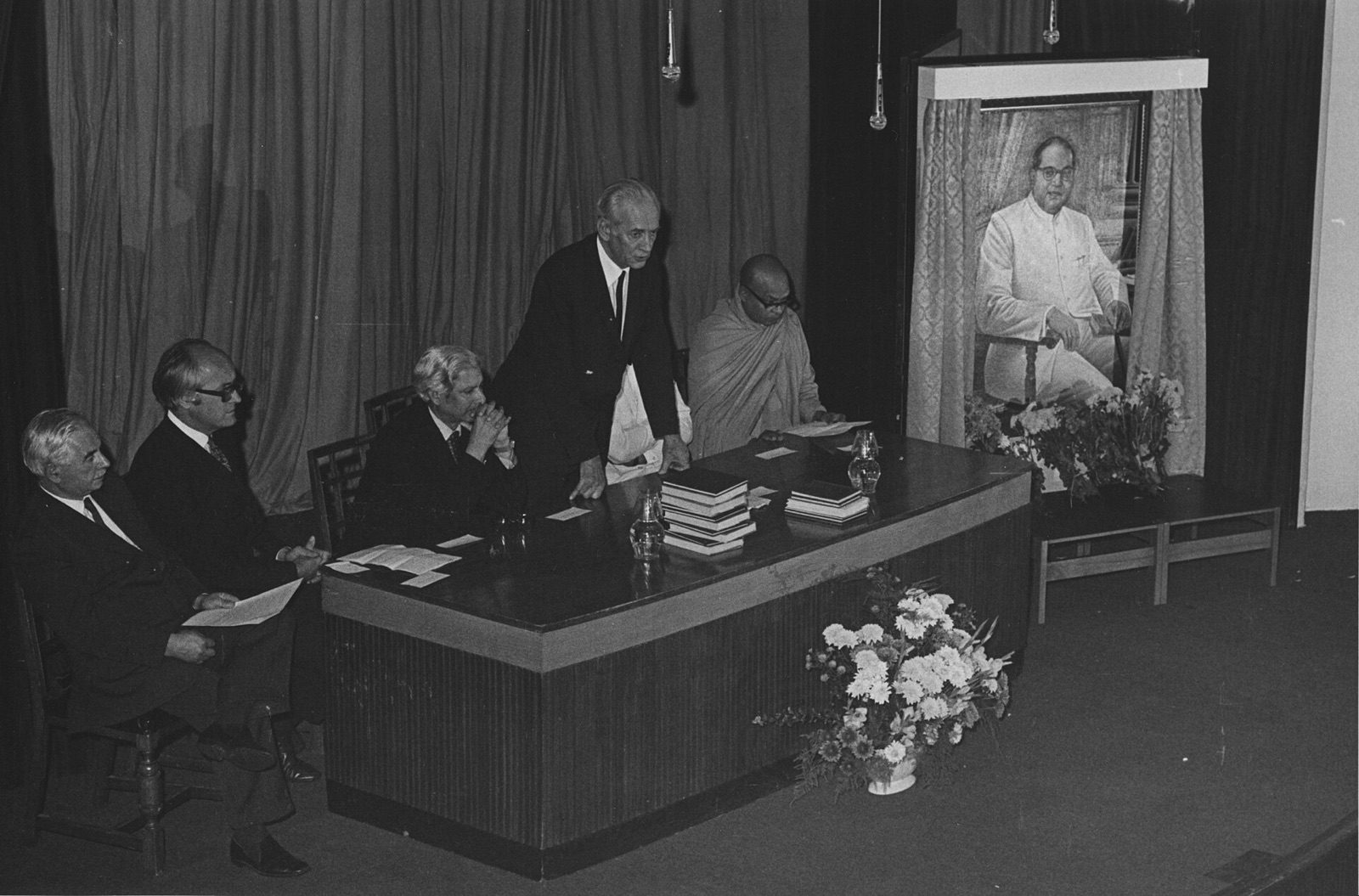
Portrait of Ambedkar presented to the LSE, 1973 · Photo: LSE Library (photographer unknown) · No known copyright restrictions (Flickr Commons) · Wikimedia Commons LegacyNamantar (renaming) movement for Marathwada University begins
In 1978 a campaign began to rename Marathwada University after Dr. It was called the Namantar ("renaming") movement.
From the chapter Legacy · 1956–today
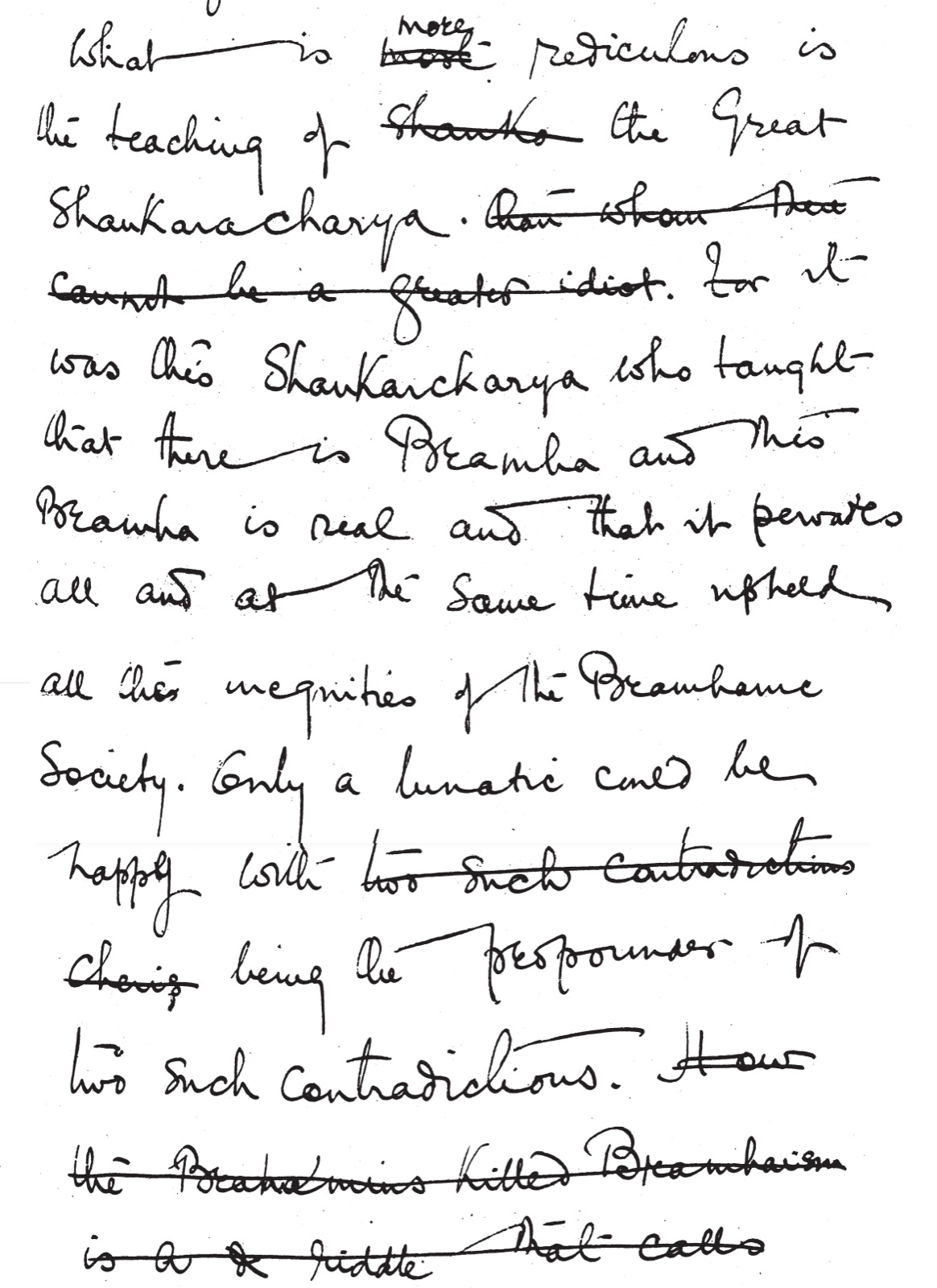
Manuscript of Riddles in Hinduism · Photo: B. R. Ambedkar (manuscript) · Public domain (PD-India, PD-1996) · Wikimedia Commons LegacyGovernment of Maharashtra begins publishing Dr. Babasaheb Ambedkar: Writings and Speeches
On 14 April 1979 the Education Department of the Government of Maharashtra began publishing Dr. Babasaheb Ambedkar: Writings and Speeches (BAWS).
From the chapter Legacy · 1956–today
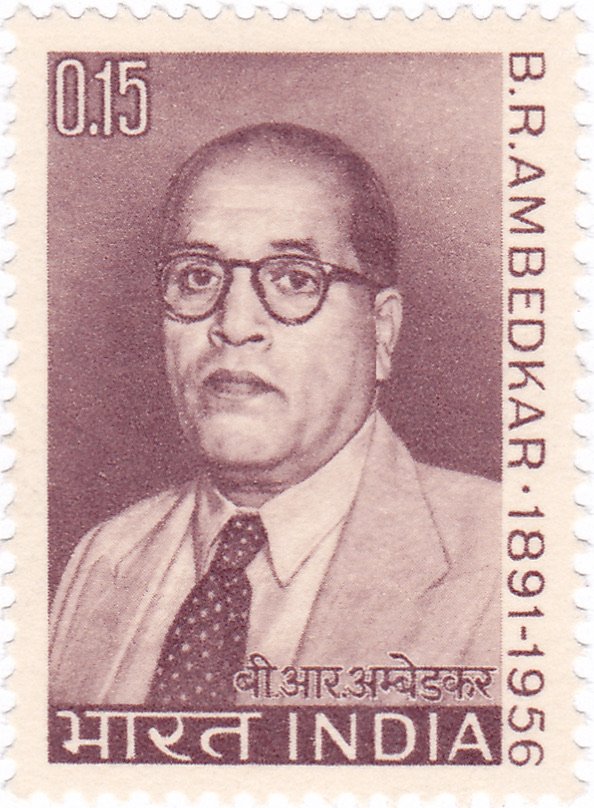
India Post stamp, 1966 · Photo: India Post, Government of India · GODL-India (Government Open Data License – India) · Wikimedia Commons LegacyAwarded the Bharat Ratna, India's highest civilian honour, after his death
In 1990, more than thirty years after his death, India gave him the Bharat Ratna, its highest civilian award. The central government calls five places linked to his life the Panchteerth ("five places of pilgrimage").
From the chapter Legacy · 1956–today
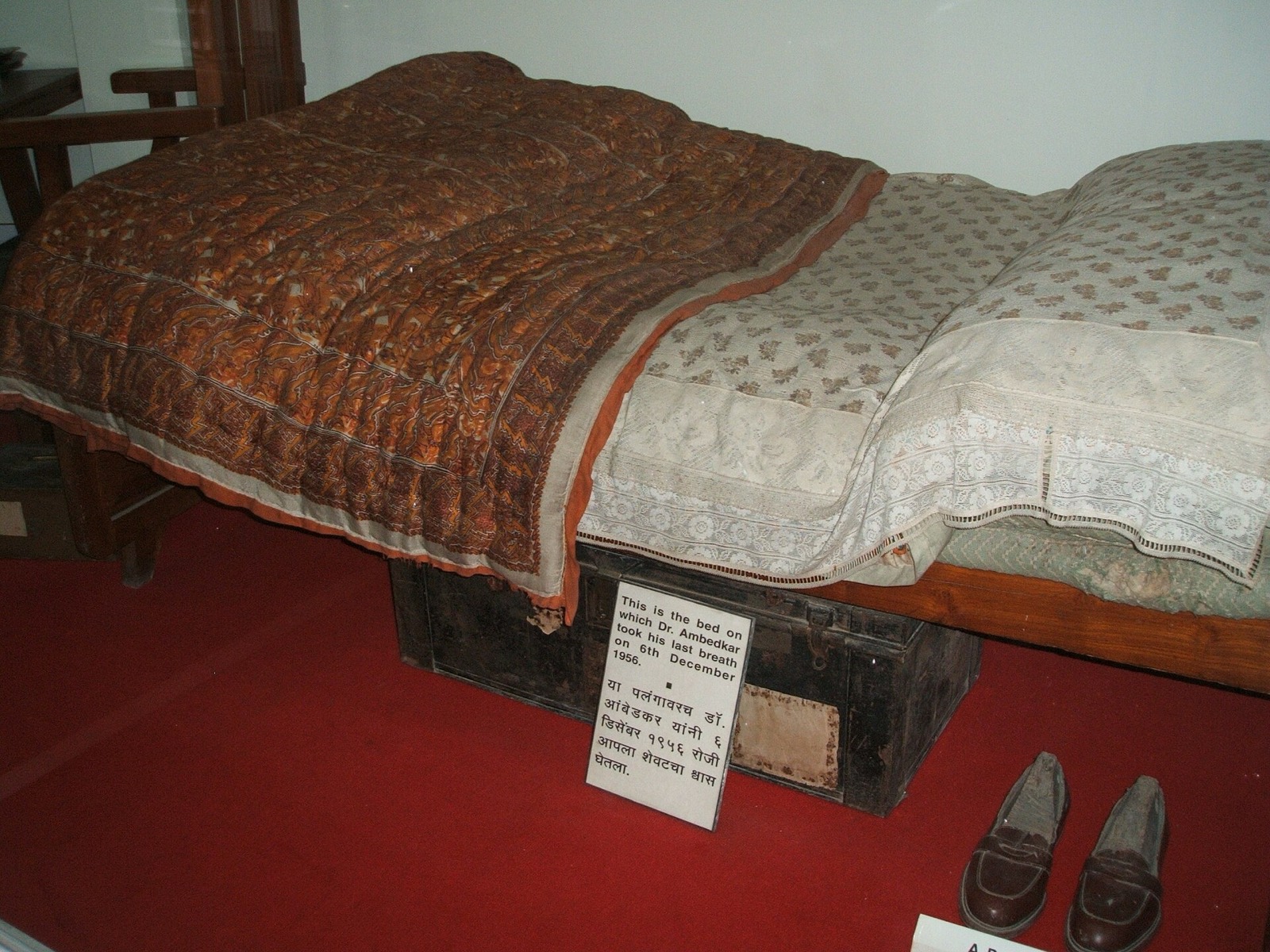
Bed shown in the Pune museum · Photo: shankar s. · CC BY 2.0 · Wikimedia Commons LegacyMarathwada University renamed Dr. Babasaheb Ambedkar Marathwada University
After 16 years, on 14 January 1994, a compromise was reached. Babasaheb Ambedkar Marathwada University, adding his name instead of replacing the old one.
From the chapter Legacy · 1956–today
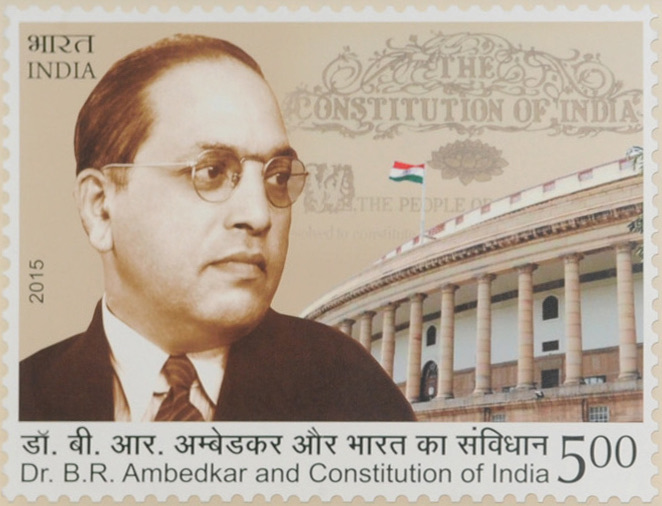
India Post stamp on Ambedkar and the Constitution, 2015 · Photo: India Post / Ministry of Communications, Government of India (via PIB) · GODL-India (Government Open Data License – India) · Wikimedia Commons LegacyOriginals placed in sealed cases
Nitrogen-filled glass cases made by CSIR-NPL and the Getty Conservation Institute are installed in the Parliament Library.
From the chapter The Constitution
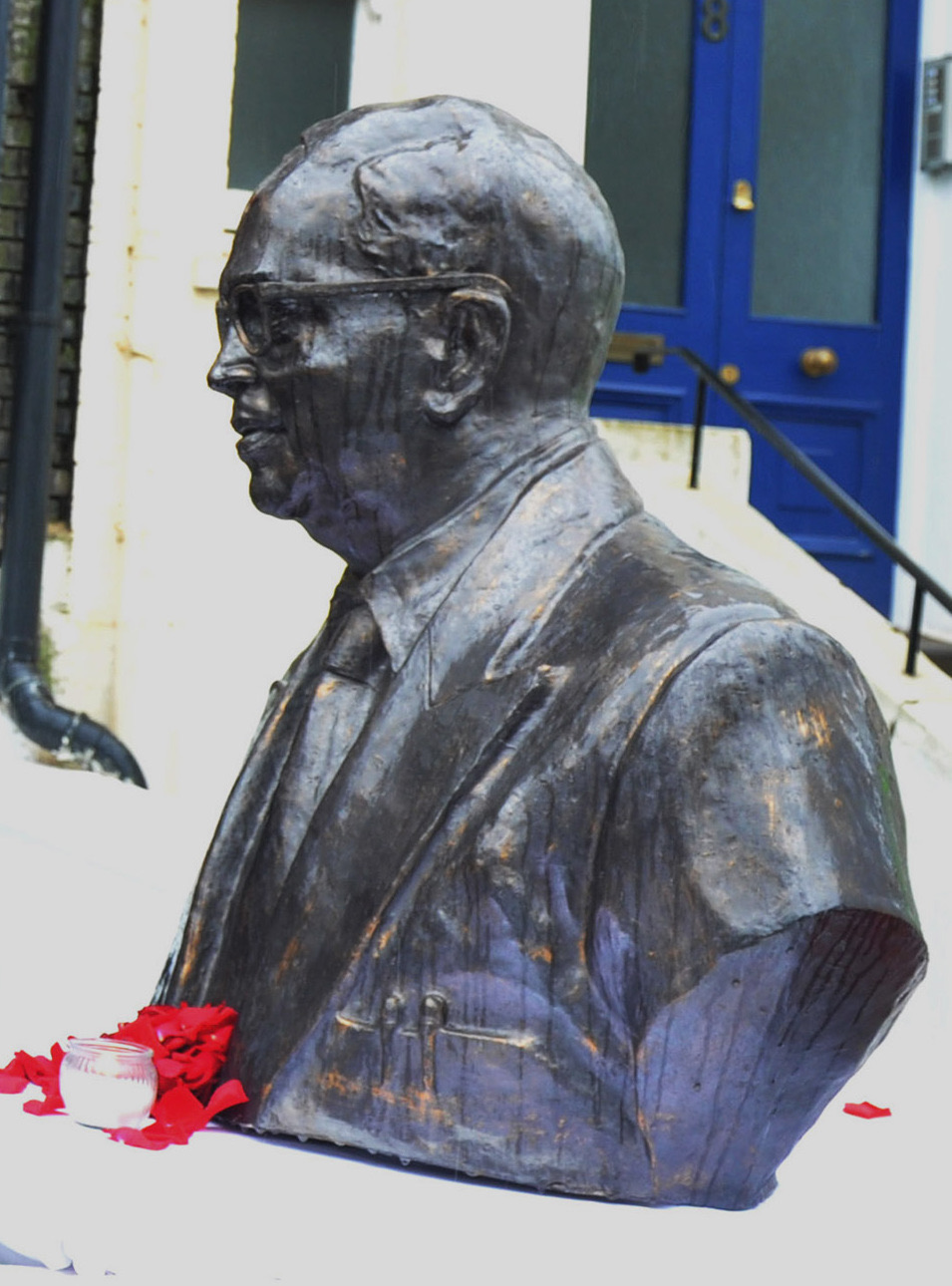
Bust of Ambedkar at the London memorial · Photo: Prime Minister's Office, Government of India (via PIB) · GODL-India (Government Open Data License – India) · Wikimedia Commons LegacyA bronze bust of Dr. Ambedkar is presented to Columbia's Lehman Library
On 24 October 1995 a bronze bust of him was presented to Columbia's Lehman Library. It was donated by the Federation of Ambedkarite and Buddhist Organisations UK.
From the chapter Columbia University · 1913–1916
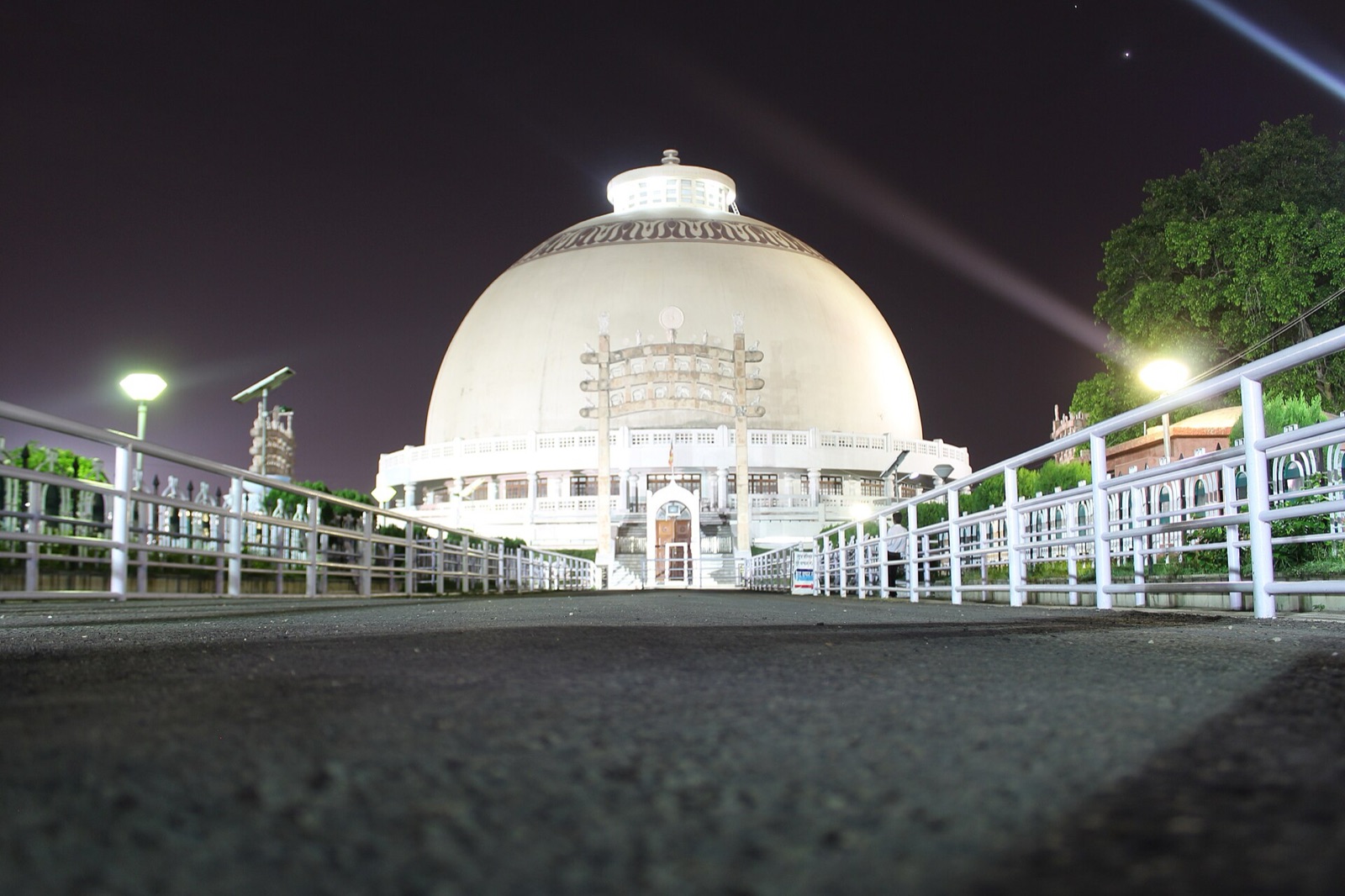
Deekshabhoomi, Nagpur · Photo: Mahendra Dayare · CC BY-SA 4.0 · Wikimedia Commons LegacyStupa at Deekshabhoomi, Nagpur, inaugurated by President K. R. Narayanan
It was inaugurated on 18 December 2001 by President K. The memorial at his cremation site in Dadar draws lakhs of visitors every 6 December.
From the chapter Legacy · 1956–today
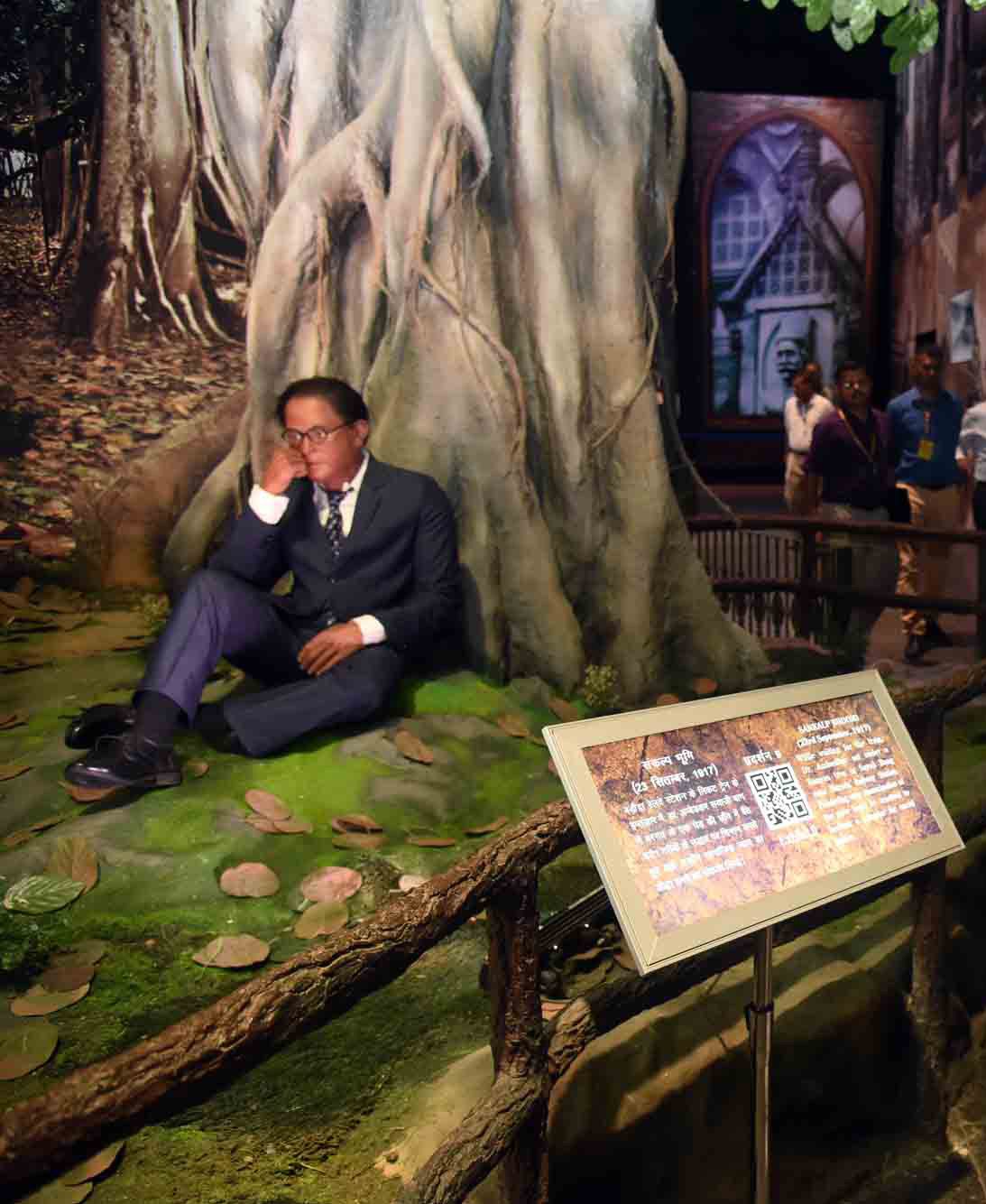
Statue at the Dr. Ambedkar National Memorial, Delhi · Photo: Vice President's Secretariat, Government of India (via PIB) · GODL-India (Government Open Data License – India) · Wikimedia Commons Legacy26 Alipur Road dedicated to the nation as Dr. Ambedkar's Mahaparinirvan Sthal
The house at 26 Alipur Road was dedicated to the nation on 2 December 2003. Ambedkar National Memorial, shaped like an open book, opened there on 13 April 2018.
From the chapter The Final Days · November–December 1956
Dr. Ambedkar International Centre, New Delhi · Photo: Sidheeq · CC BY-SA 3.0 · Wikimedia Commons Legacy26 Alipur Road, Delhi, dedicated to the nation
Dedicated to the nation in 2003. A new memorial shaped like an open book, in honour of his role in drafting the Constitution, opened on 13 April 2018.
From the chapter Legacy · 1956–today
India Post stamp on Ambedkar and the Constitution, 2015 · Photo: India Post / Ministry of Communications, Government of India (via PIB) · GODL-India (Government Open Data License – India) · Wikimedia Commons LegacyGovernment decides to celebrate 26 November every year as Constitution Day
Since 2015 India has celebrated 26 November, the day the Constitution was adopted, as Constitution Day, or Samvidhan Divas. The government chose to start it in Dr.
From the chapter Making the Constitution · 1946–1950
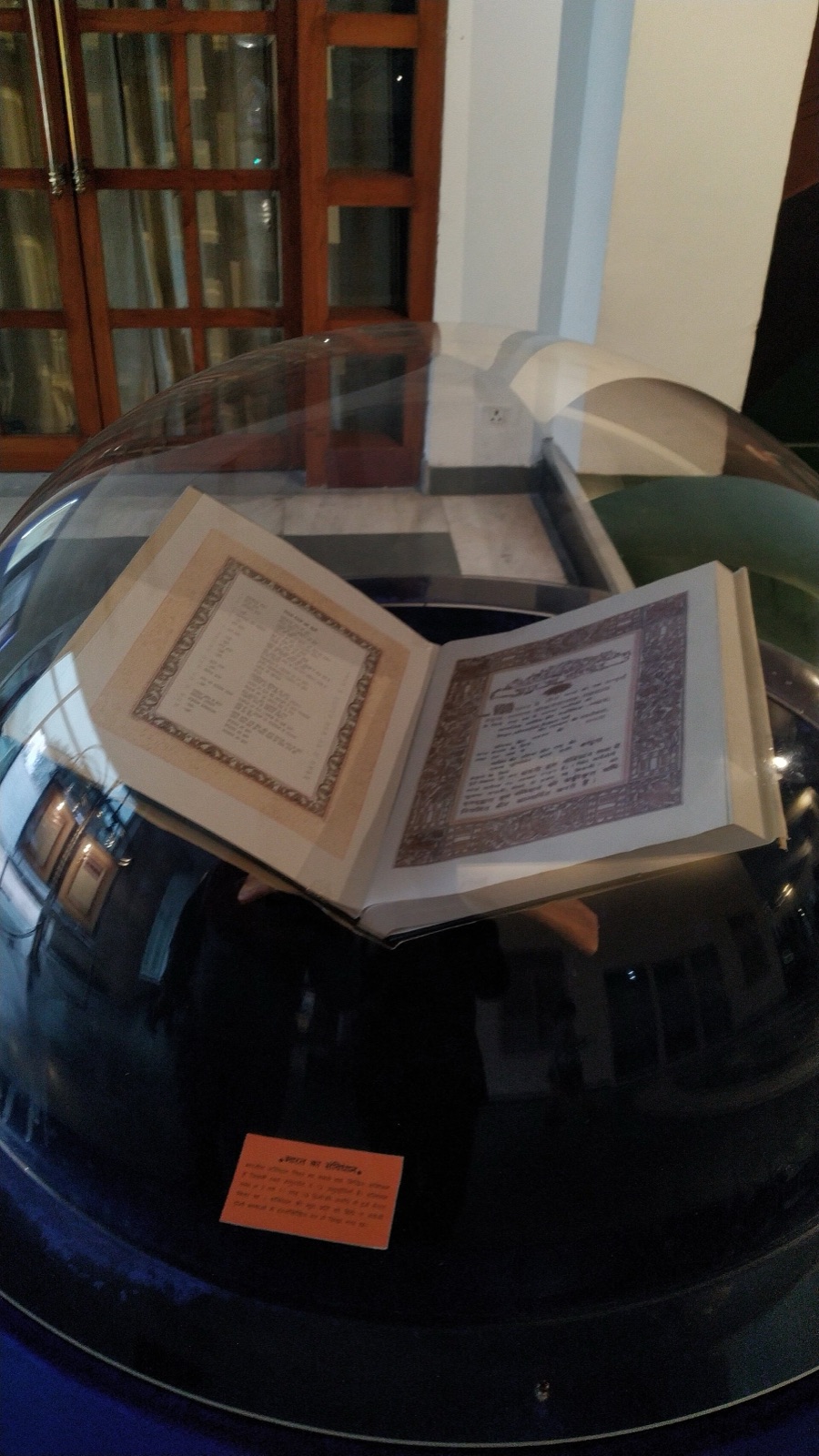
Constitution of India on display · Photo: Pur 0 0 · CC0 · Wikimedia Commons LegacyConstitution Day begins
The Government decides to celebrate 26 November every year as Constitution Day, in Dr. Ambedkar's 125th birth-anniversary year.
From the chapter The Constitution
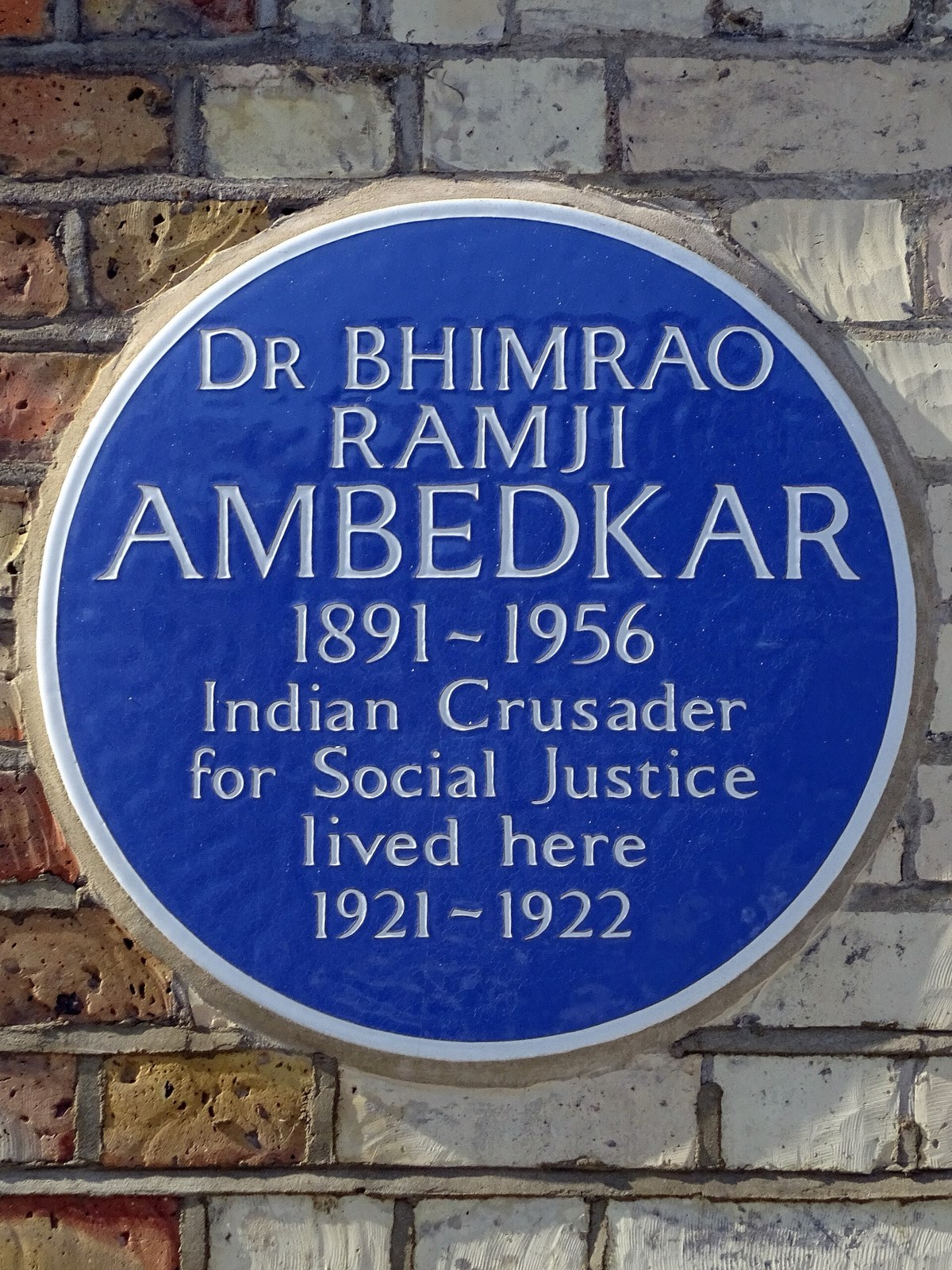
Blue plaque at 10 King Henry's Road · Photo: Spudgun67 · CC BY-SA 4.0 · Wikimedia Commons Legacy10 King Henry's Road bought on behalf of the Government of Maharashtra
On 24 September 2015 the house was bought on behalf of the Government of Maharashtra to become a memorial. Camden Council refused permission to use the home as a museum.
From the chapter London, Baroda and London Again · 1916–1923
10 King Henry's Road, London · Photo: Spudgun67 · CC BY-SA 4.0 · Wikimedia Commons LegacyDr. Ambedkar Memorial at King Henry's Road, London, inaugurated
Ambedkar "pursued his quest for knowledge", was inaugurated on 14 November 2015. His birthplace in Madhya Pradesh is part of the same list.
From the chapter Legacy · 1956–today
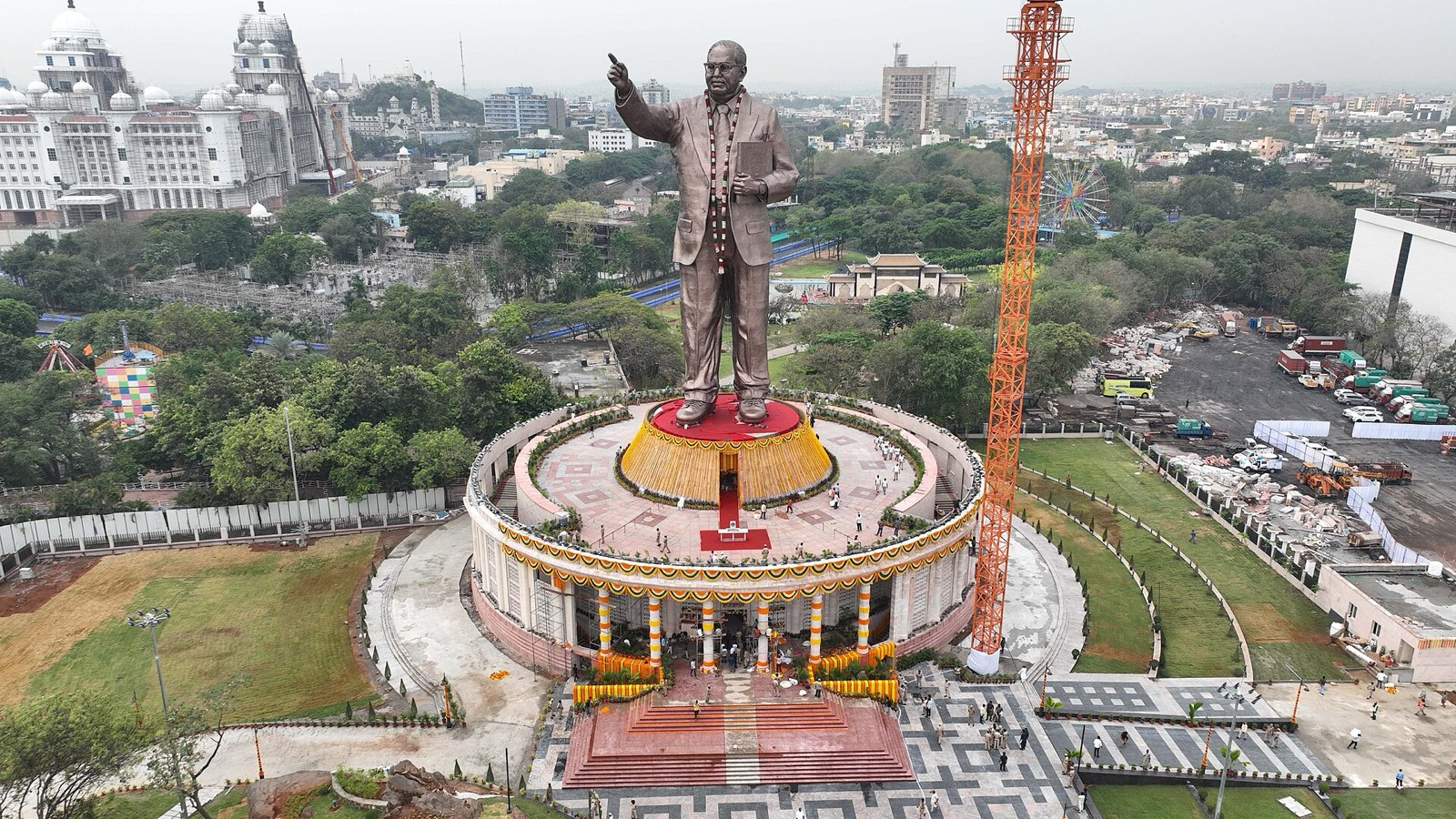
125-foot statue of Ambedkar, Hyderabad · Photo: Pranayraj1985 · CC BY-SA 4.0 · Wikimedia Commons LegacyFirst observance of his birth anniversary at UN Headquarters, New York
The United Nations marked his birth anniversary for the first time on 13 April 2016, at an event in New York on fighting inequality. The UNDP head, Helen Clark, called him "an icon for marginalised people in India and in other countries", according to the news agency PTI.
From the chapter Legacy · 1956–today
Dr. Ambedkar International Centre, New Delhi · Photo: Sidheeq · CC BY-SA 3.0 · Wikimedia Commons LegacyDr. Ambedkar International Centre opens at 15 Janpath, New Delhi
Ambedkar International Centre at 15 Janpath, with a library and research centre, opened on 7 December 2017. Ambedkar stand in towns and cities all over India.
From the chapter Legacy · 1956–today
Statue at the Dr. Ambedkar National Memorial, Delhi · Photo: Vice President's Secretariat, Government of India (via PIB) · GODL-India (Government Open Data License – India) · Wikimedia Commons LegacyDr. Ambedkar National Memorial opens at 26 Alipur Road
A new memorial shaped like an open book, in honour of his role in drafting the Constitution, opened on 13 April 2018. Ambedkar Memorial at King Henry's Road, which the Prime Minister called the place where Dr.
From the chapter Legacy · 1956–today
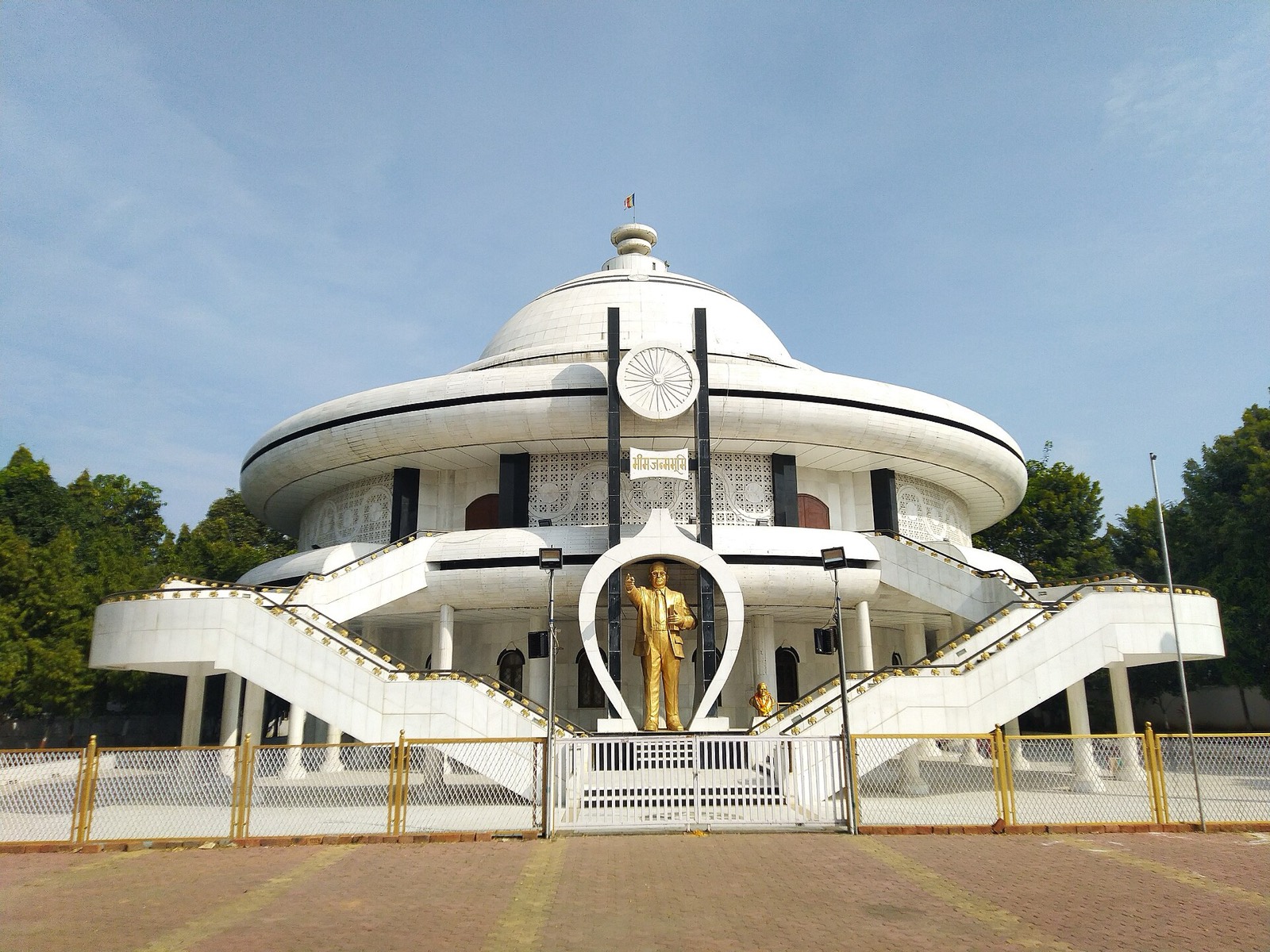
Bhim Janmabhoomi memorial, Mhow · Photo: Shraddha rahul waghmare · CC BY-SA 4.0 · Wikimedia Commons LegacyBritish Columbia, Canada, marks Dr. B.R. Ambedkar Equality Day
British Columbia in Canada declared 14 April 2021 "Dr. New York City proclaimed 14 April 2025 "Dr Bhimrao Ramji Ambedkar Day".
From the chapter Legacy · 1956–today
Chaitya Bhoomi, 2024 · Photo: Shishirdasika · CC BY-SA 4.0 · Wikimedia Commons LegacySeattle becomes the first US city to ban caste discrimination
In February 2023 Seattle became the first city in the United States to ban caste discrimination. Ambedkarite groups welcomed the move, while some Hindu American groups opposed it.
From the chapter Legacy · 1956–today
125-foot statue of Ambedkar, Hyderabad · Photo: Pranayraj1985 · CC BY-SA 4.0 · Wikimedia Commons Legacy125-foot statue unveiled beside Hussain Sagar, Hyderabad
A 125-foot statue on a 50-foot pedestal beside Hussain Sagar lake, unveiled on 14 April 2023 by Telangana Chief Minister K. The "Statue of Social Justice": a 125-foot bronze statue on an 81-foot base, 206 feet in all, unveiled on 19 January 2024 by Andhra Pradesh Chief Minister Y.
From the chapter Legacy · 1956–today
Statue of Ambedkar at Koyasan University, Japan · Photo: Prabuddha TV · CC BY-SA 4.0 · Wikimedia Commons Legacy19-foot 'Statue of Equality' unveiled in Accokeek, Maryland, USA
A 19-foot "Statue of Equality" by sculptor Ram Sutar, unveiled on 14 October 2023 near Washington, D.C.. Columbia University, where he studied, gave him an honorary doctorate in 1952.
From the chapter Legacy · 1956–today
Statue of Social Justice, Vijayawada · Photo: Mr Nerd 96 · CC BY-SA 4.0 · Wikimedia Commons Legacy'Statue of Social Justice' (125-foot statue on an 81-foot base) unveiled in Vijayawada
The "Statue of Social Justice": a 125-foot bronze statue on an 81-foot base, 206 feet in all, unveiled on 19 January 2024 by Andhra Pradesh Chief Minister Y. A 19-foot "Statue of Equality" by sculptor Ram Sutar, unveiled on 14 October 2023 near Washington, D.C..
From the chapter Legacy · 1956–today
Blue plaque at 10 King Henry's Road · Photo: Spudgun67 · CC BY-SA 4.0 · Wikimedia Commons LegacyNew York City proclaims 'Dr Bhimrao Ramji Ambedkar Day'
New York City proclaimed 14 April 2025 "Dr Bhimrao Ramji Ambedkar Day". His birthday, 14 April, is celebrated as Ambedkar Jayanti or Bhim Jayanti, with huge processions.
From the chapter Legacy · 1956–today
Statue of Social Justice from the air · Photo: Saiphani02 · CC BY-SA 4.0 · Wikimedia Commons LegacySmart India Hackathon brief SIH26096 (Ministry of Social Justice) calls for a digital archive of his scattered works
— Ministry of Social Justice and Empowerment, Smart India Hackathon 2026 brief SIH26096 Our own research for this website shows why:
From the chapter Legacy · 1956–today


